




01. Edit your free npma 33 form online
Type text, add images, blackout confidential details, add comments, highlights and more.

Type text, add images, blackout confidential details, add comments, highlights and more.

Draw your signature, type it, upload its image, or use your mobile device as a signature pad.

Send form npma 33 pdf via email, link, or fax. You can also download it, export it or print it out.
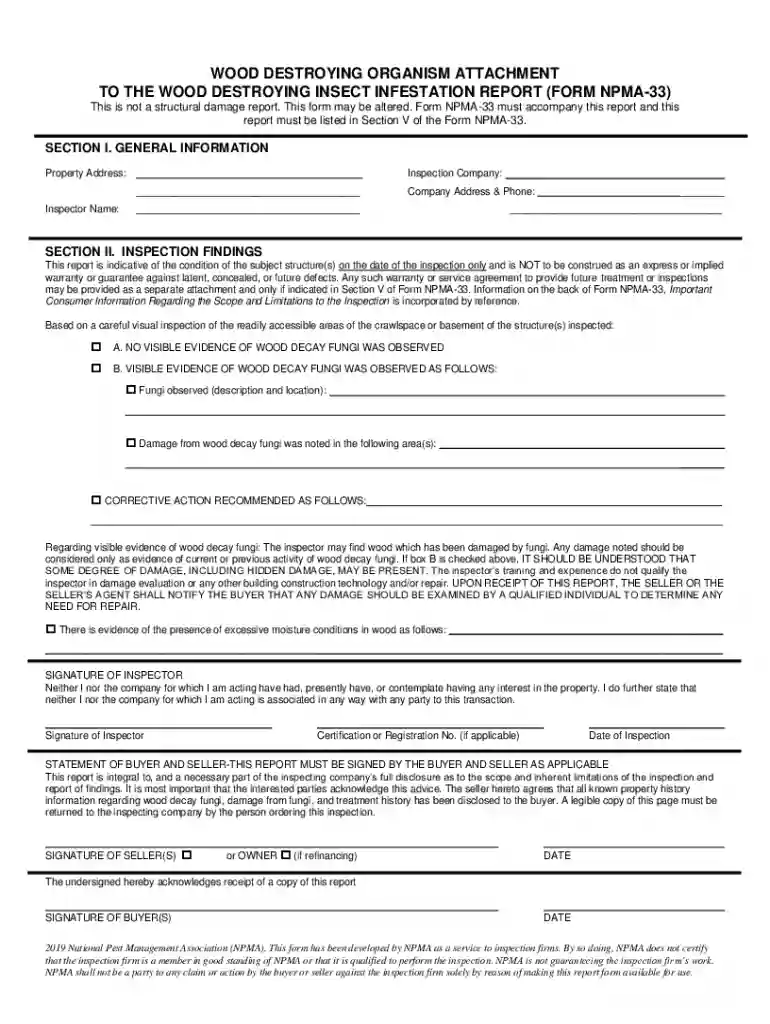
Form NPMA-33, or the Wood Destroying Insect Infestation Report, is a crucial document used in real estate transactions to assess wood pest infestations. This form serves as an important tool for buyers and sellers alike by documenting the presence of wood-destroying organisms and the conditions that may facilitate such infestations. A thorough understanding of this report ensures that all parties are informed about the pest health of a property, crucial for making informed decisions.
The NPMA-33 form provides a standardized report regarding inspections for wood-destroying insects and organisms, such as termites, carpenter ants, and wood-boring beetles. This form is essential during property transfers, as it outlines critical findings and recommendations concerning potential pests that could affect the integrity of the structure. It is important to note that this report is not a structural damage report; instead, it focuses on infestation risk and visible evidence.
To ensure the accurate completion of the NPMA-33 form, follow these steps:
Accurate and honest reporting on Form NPMA-33 is essential for several reasons:
Several parties typically utilize Form NPMA-33:


While the NPMA-33 is well-established, variations and related documents also exist that cater to different needs:
Navigating the intricacies of Form NPMA-33 is vital for all parties involved in real estate transactions. Understanding its purpose, how to complete it correctly, and the importance of the documented findings can significantly influence the buying and selling process. Insight into the reporting process helps prevent future issues related to wood-destroying insects and maintains the structural integrity of properties.
We've got more versions of the free npma 33 form form. Select the right free npma 33 form version from the list and start editing it straight away!
At DocHub, your data security is our priority. We follow HIPAA, SOC2, GDPR, and other standards, so you can work on your documents with confidence.
infestation, damage, repair, and treatment history has been disclosed to the buyer. Form NPMA-33(9/01/04) 2004 National Pest ManagementRead more
Neither the inspecting company nor the inspector has had, presently has, or contemplates having any interest in the property inspected. Form NPMA-33 (7/01/19) Read more
Overview. Polyethylene terephthalate (PET) is a widely used plastic that persists in aquatic environments due to its chemical stability.Read more


