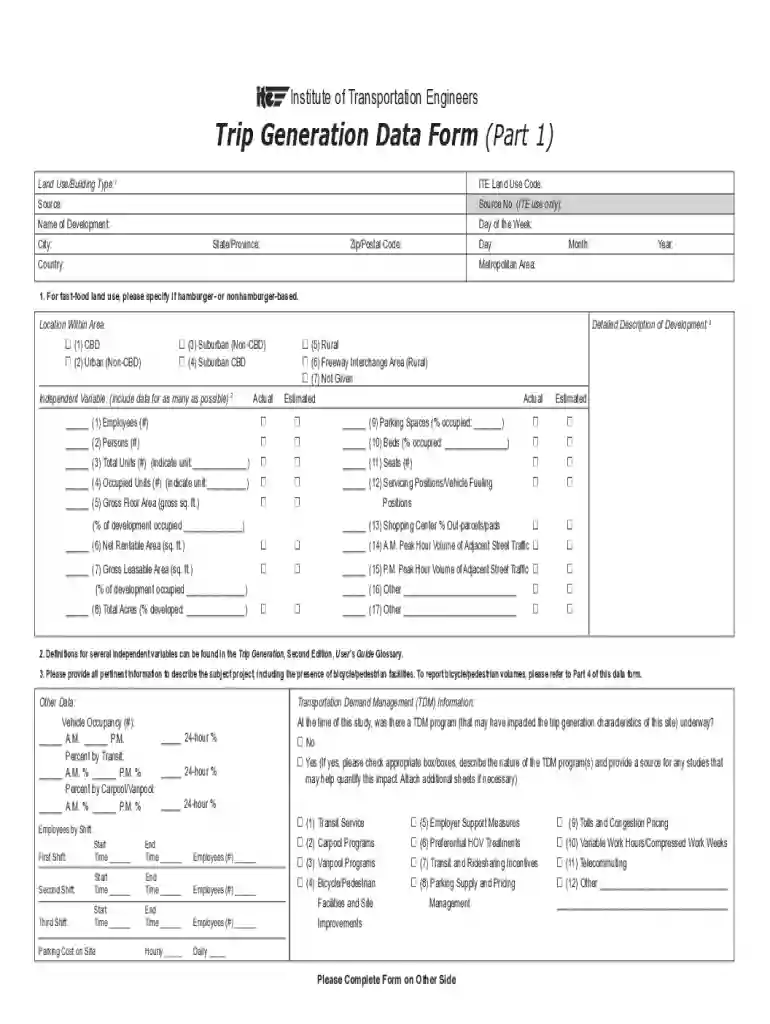
Definition and Purpose of the ITE Trip Generation Manual PDF
The ITE Trip Generation Manual is a comprehensive resource published by the Institute of Transportation Engineers. It serves as an essential tool for transportation planners and engineers, providing empirical data on vehicle trips generated by various land uses. The manual categorizes land uses, such as residential, commercial, educational, and recreational facilities, and provides corresponding trip generation rates. This data is crucial for planning transportation infrastructure and understanding the potential impact of new developments on traffic patterns.
The 11th edition of the manual includes updated methodologies and provides more extensive examples compared to earlier editions, including the tenth. It is designed to aid users in estimating the number of trips a specific land use generates per unit of measurement, facilitating important decisions regarding road capacity, traffic management, and environmental assessments.
How to Use the ITE Trip Generation Manual PDF Download
To effectively use the ITE Trip Generation Manual, start by downloading the PDF version, ensuring you have access to the latest data. Here’s a simple guide on how to navigate and utilize this manual:
- Familiarize Yourself with the Structure: The manual is organized by land use types, each section providing trip generation rates, methodologies, and for some uses, case studies showcasing real-world applications.
- Identify Relevant Land Uses: Use the table of contents or index to locate the land use type you are analyzing. Each entry typically includes a summary of findings, data tables, and applicable footnotes.
- Apply the Trip Generation Rates: Once you identify the trip generation rates relevant to your land use, apply these figures to your specific scenario, whether it’s for a planning study, traffic impact assessment, or development proposal.
- Review Methodological Standards: Familiarize yourself with the methodologies outlined in the manual, which provide guidelines for calculating adjustments based on local conditions, time of day, and specific characteristics of the site.
Important Elements of Trip Generation Analysis
- Trip Generation Rates: These are numerical metrics that represent the estimated number of trips per unit of land use.
- Land Use Codes: Each land use category has specific codes for easy reference.
- Adjustment Factors: These can be applied to account for unique site characteristics, such as proximity to transit or mixed-use environments.
How to Obtain the ITE Trip Generation Manual PDF Download
Individuals and organizations interested in acquiring the ITE Trip Generation Manual can do so through several avenues:
- Purchase from ITE: The manual can be bought directly from the Institute of Transportation Engineers' website in PDF format or hard copy.
- Library Access: Some university or public libraries may have copies of the manual available for reference or digital lending.
- Online Platforms: Certain educational and transportation planning websites may offer downloadable versions or excerpts, though ensure these align with ITE's licensing agreements.
Considerations for Obtaining the Manual
- Edition Selection: Ensure you are downloading the most current edition, as updates typically enhance data accuracy.
- Free Versions: Occasionally, summaries or excerpts may be distributed for educational or research purposes, though these may not contain the comprehensive data found in full editions.
Steps for Completing the ITE Trip Generation Manual PDF Download
Once you have procured the ITE Trip Generation Manual in PDF format, follow these steps to ensure proper utilization:
- Ensure Compatibility: Verify that your PDF reader is up to date to facilitate easy navigation and viewing of graphs and tables.
- Start with an Overview: Read the introductory sections that outline the manual’s objectives, methodologies, and how to interpret the provided data.
- Follow the Flow: Work through the sections pertinent to your project in a systematic manner, ensuring you are not skipping necessary context or adjustments.
- Document Your Findings: As you extract relevant data, consider taking notes directly in the PDF or cross-referencing in an external document for clarity in analysis.
Additional Tips for Efficient Navigation
- Bookmarks: Utilize the PDF bookmarking feature for quick access to frequently referenced sections.
- Notes: Consider highlighting key points and using comment features for future reference.
Examples of Using the ITE Trip Generation Manual PDF Download
Various scenarios illustrate the application of the ITE Trip Generation Manual in transportation planning and traffic studies:
- Residential Development: A city planning department can use the trip generation rates for single-family homes versus multi-family units to project traffic impact on nearby roads.
- Retail Center Analysis: For a proposed shopping center, developers can estimate the anticipated daily vehicle trips to support traffic signal planning and road enhancements.
- Educational Institutions: Schools can assess potential traffic impacts during peak hours by referencing trip generation rates specific to student enrollment levels.
Real-World Applications in Development Planning
- Comparative Studies: Municipalities can conduct studies comparing trip generation before and after development to justify road improvements or public transport investments.
- Environmental Assessments: Agencies may utilize the data for environmental impact statements during the review of permits and compliance for new developments.
Key Elements of the ITE Trip Generation Manual PDF
The ITE Trip Generation Manual includes several critical elements that professionals should be aware of:
- Land Use Categories: Detailed classifications for various types of land use, each with specific trip generation characteristics.
- Data Tables: Comprehensive tables that provide empirical data on trip generation rates, along with adjustments for different conditions.
- Methodology Description: Clear guidelines outlining how data was collected and analyzed, giving credibility and context to the findings.
Understanding the Data Format
- Trip Generation Rates: Expressed in terms of trips per day or per hour, depending on the analysis needs.
- Statistical Confidence: Many entries include statistical metrics indicating the reliability of the data.
Legal Use of the ITE Trip Generation Manual PDF Download
Utilizing the ITE Trip Generation Manual must adhere to necessary legal and ethical guidelines:
- Copyright Compliance: Ensure that the manual is obtained through official channels to respect copyright laws and ITE's distribution rights.
- Usage Rights: Review the licensing agreements outlined with the manual to understand permissible uses, particularly regarding redistribution or modifications.
Professional Responsibilities
- Proper Citations: Always reference the ITE Trip Generation Manual in reports or studies where it has been utilized to lend professional integrity.
- Data Integrity: When applying the manual's data, accurately represent the information without misinterpretation, ensuring transparency in reporting.
Implications for Urban Planning
The use of the ITE Trip Generation Manual directly impacts local infrastructure planning and policy decisions, reinforcing the importance of professional adherence to legal standards when featuring data in public documents.
Summary
The ITE Trip Generation Manual is an essential resource for transportation planning and traffic impact assessments. By understanding its definition, application, procurement methods, and legal considerations, planners and engineers can effectively utilize this comprehensive guide to support their projects and evaluate potential traffic implications.