Restraining order template 2026

Get Form
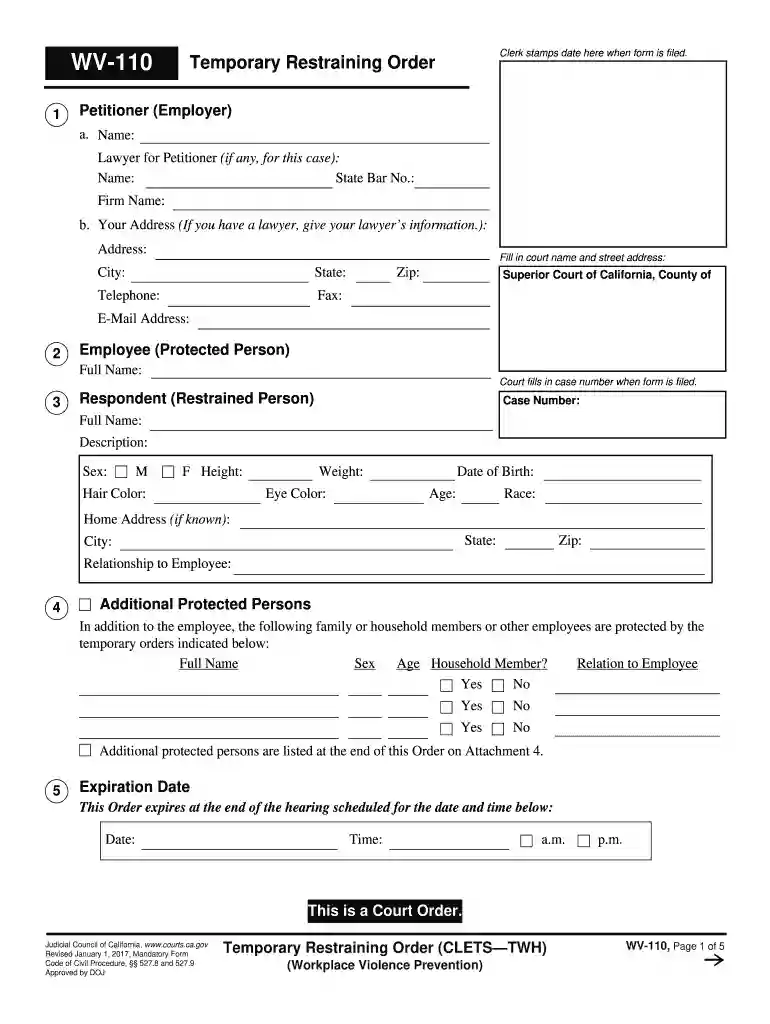
restraining order Preview on Page 1

Here's how it works

01. Edit your restraining order online
Type text, add images, blackout confidential details, add comments, highlights and more.

02. Sign it in a few clicks
Draw your signature, type it, upload its image, or use your mobile device as a signature pad.

03. Share your form with others
Send restraining order template via email, link, or fax. You can also download it, export it or print it out.

Definition and Meaning of a Restraining Order Template

A restraining order template is a legal document that individuals use to request a court order for protection against harassment, stalking, or domestic violence. This template provides a structured format that includes specific information about the parties involved, the nature of the threat, and the desired restrictions against the restrained party. It serves as a starting point to help petitioners articulate their needs clearly and concisely in a legal context.

Typically, the applicant (also known as the petitioner) is seeking protection from the respondent, who is the individual that the order is aimed against. Commonly included elements in a restraining order template are:

  • Personal Information: Names, addresses, and contact details of both the petitioner and respondent.
  • Relationship Details: Information on how the parties are connected, which can bolster the request for a restraining order.
  • Allegations of Harassment: Clear descriptions of the incidents that triggered the need for a restraining order.
  • Requested Protections: Specific requests such as prohibiting contact, maintaining a certain distance, or, in some cases, surrendering firearms.

Using a structured template not only helps streamline the legal process but also ensures that critical information is not overlooked, thus maximizing the chance for the order to be granted.

Key Elements of the Restraining Order Template

Understanding the key elements of a restraining order template is vital for effectively completing and filing the form. Below are essential components that must be included:

  • Introduction: A brief statement indicating the purpose of the restraining order, summarizing the reason for seeking this legal protection.
  • Parties Involved:
    • Petitioner's details: Full name, address, and relationship to the respondent.
    • Respondent's details: Full name and any known addresses or locations.
  • Nature of Abuse or Threat: A detailed account of incidents, including:
    • Dates and descriptions of specific events.
    • Any witnesses or supporting evidence (police reports, medical records).
  • Request for Provisions: Clearly outlined restrictions the petitioner desires, such as:
    • Orders for the restrained party to stay a certain distance.
    • Prohibitions against contacting the petitioner or visiting their home or workplace.
  • Duration of the Order: Indicating whether the order is temporary or permanent.
  • Signature Line: Space for the petitioner to sign and date the form, signifying their agreement with the information provided.

These elements should be precisely articulated to ensure the document accurately reflects the situation and fulfills court requirements.

Steps to Complete the Restraining Order Template

Filling out a restraining order template can seem daunting; however, following a systematic approach simplifies the process. Here are the steps involved:

  1. Gather Information: Collect all pertinent details related to the case, including personal information about both parties and documentation of incidents.
  2. Complete the Template:
    • Start with the petitioner’s information.
    • Fill in the respondent’s details.
    • Describe the nature of the abuse or harassment, providing specific instances.
    • Clearly articulate the desired protections and restrictions.
  3. Proofread: Review the completed form carefully for any errors or missing information to ensure clarity and accuracy.
  4. Consult an Attorney (if necessary): Consider seeking legal advice to ensure that the form meets state-specific requirements and strengthens the case.
  5. File the Form: Submit the completed restraining order template to the appropriate court, along with any required fees or additional documents.
  6. Serve the Respondent: After filing, you’ll need to arrange for the respondent to be officially served with the restraining order, which can often be done through law enforcement or a process server.

Following these steps can help establish a stronger case for the requested order, enhancing the effectiveness of the legal action.

Legal Use of the Restraining Order Template

The legal use of a restraining order template involves understanding its purpose within the judicial system. Here are some critical aspects:

  • Court Submission: The document must be submitted to the appropriate court within a specific jurisdiction. Each state may have different rules regarding which forms are required and how they should be filed.
  • Legal Basis: The request for a restraining order often hinges on demonstrating credible threats or harassment that necessitate legal protection. The applicant must illustrate a clear need for the order.
  • Enforcement: Once granted, the restraining order becomes a legally binding document that law enforcement can enforce. Violations can lead to serious legal consequences for the respondent, such as arrest or additional legal penalties.
  • Variability by State: Legal definitions and processes for retraining orders may vary significantly by state. Templates may need to be adapted to meet specific state laws or court expectations, emphasizing the importance of local legal guidance.

By understanding the legal context, petitioners can ensure they are utilizing the restraining order template effectively and in compliance with the law.

Examples of Using the Restraining Order Template

Using an example can clarify how to effectively implement a restraining order template. Here are two scenarios:

  • Scenario One: Domestic Violence: An individual experiencing domestic violence can use the restraining order template to document specific incidents of abuse. They may include details about physical aggression, threats received, or controlling behaviors. The request for protection could involve prohibiting the respondent from coming within a certain distance of the petitioner’s home or workplace.

  • Scenario Two: Harassment: A person facing persistent harassment from a neighbor may use the template to outline instances of threats and unwanted contact. They would specifically detail when these incidents occurred and any witnesses present. The protective request could include a no-contact order along with a stipulation that the respondent vacate the shared premises.

These examples illustrate the template’s flexibility in addressing various reasons for seeking protection, clearly documenting the situation to maximize its effectiveness.

See more restraining order template versions

We've got more versions of the restraining order template form. Select the right restraining order template version from the list and start editing it straight away!
Versions Form popularity Fillable & printable
2023 4.8 Satisfied (122 Votes)
2014 4.1 Satisfied (52 Votes)
2012 4.4 Satisfied (701 Votes)
be ready to get more

Complete this form in 5 minutes or less

Get form

Got questions?

We have answers to the most popular questions from our customers. If you can't find an answer to your question, please contact us.
Contact us
A restraining order is a civil order of protection issued by the family court to any family or household member who has been subject to a continuous threat of present physical pain or physical injury, stalking, or a pattern of threatening by another family or household member, as defined by General Statutes 46b-38a (
Usually the way to begin is by filing a police report that details all instances of unwelcome interactions and/or trespasses and how they made you feel unsafe, threatened, etc. Then, with a copy of this police report, a person can use the Los Angeles court system website to print off emergency protective order forms.
Examples: I am asking the court to grant me a month/year injunction. I want no contact in person, at home, by phone, at work, by mail or through third parties. I would consider any contact in the future to be a violation. Tell the court why you would like the temporary restraining order injunction.
As the plaintiff requesting the protective order, you must prove that the abuser committed at least one act of domestic abuse against you. Alternatively, the abuser can agree to consent to the order without admitting to committing domestic abuse.
The specific elements you need to prove to get a restraining order vary from state to state, but in general, you need to show: A specific instance or instances of abuse or harassment (such as sexual assault by an intimate partner) The threat of violence or of further abusive behavior or harassment.

People also ask

The most common types of restraining orders in Los Angeles County are civil harassment restraining orders and domestic violence restraining orders. Civil harassment orders can be used for a wide variety of situations, such as when someone is: threatening you, acting violently towards you, or.

restraing order