






Definition and Meaning of the Volleyball Lineup Sheet
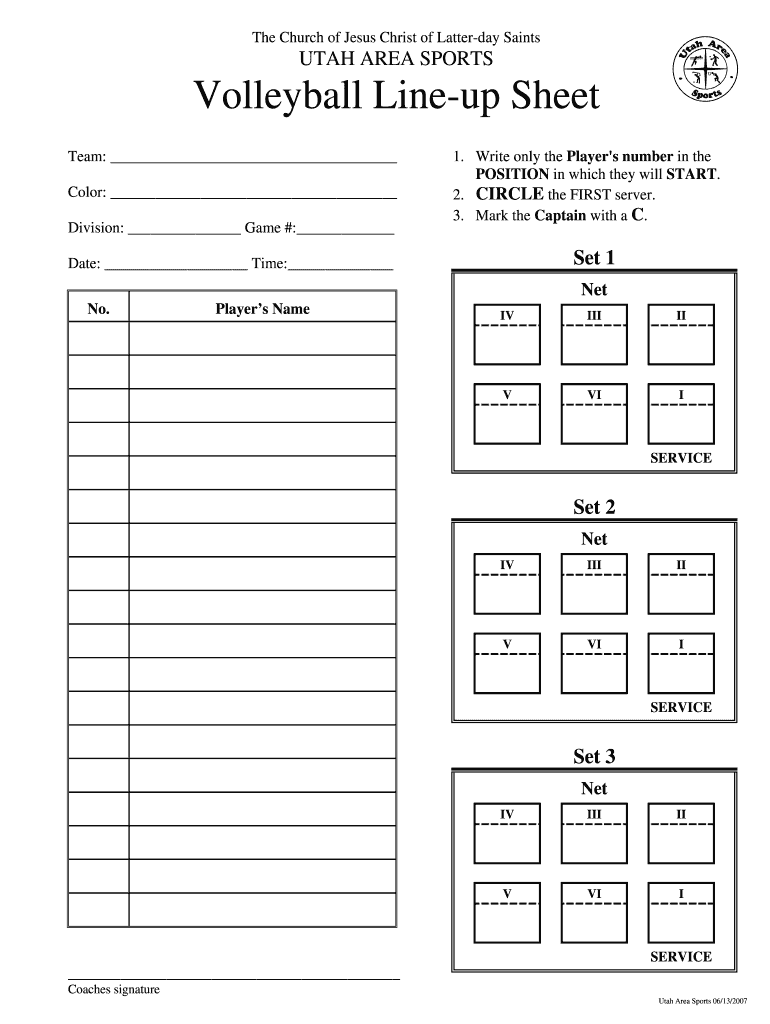
A volleyball lineup sheet is a critical document used in organized volleyball matches to record a team's roster, playing positions, and serving order. This sheet serves a functional purpose in both recreational and competitive environments, ensuring that all team members are accounted for and follow established regulations. The lineup sheet may also include spaces for coaches' signatures, indicating approval for the listed roster and serving order.
In the context of high school and collegiate sports, the volleyball lineup sheet often adheres to specific guidelines set by organizations like the National Federation of State High School Associations (NFHS) or the California Interscholastic Federation (CIF). These governing bodies stipulate the formalities and requirements for using the sheet, ensuring consistency among teams.
How to Use the Volleyball Lineup Sheet Effectively
Using a volleyball lineup sheet involves several steps that allow coaches and teams to maintain organization during matches. Here are essential practices for effective usage:
-
Preparation Before the Match: Ensure all players are aware of their designated positions and serving order before the game. This preparation minimizes confusion and helps the team execute strategy effectively.
-
Completing the Lineup Sheet: Fill out the sheet with all required player information, including names, jersey numbers, and positions. Pay attention to any regulations regarding player eligibility or substitutions specific to the league.
-
Serving Order: Clearly indicate the serving order, which is crucial in actual gameplay scenarios. This helps referees validate that the rules are followed and maintains the flow of the game.
-
Submission: Submit the lineup sheet to the match officials before the game starts. This step usually must occur within a stipulated timeframe, ensuring that the officials can verify it against their records.
-
In-Game Adjustments: If you need to make substitutions, ensure you update the lineup sheet accordingly and communicate changes to both the players and officials.
-
Post-Match Review: After the match, review the lineup sheet for accuracy and any additional notes from the game. This review helps teams learn from experiences and adjust future lineups.
How to Obtain a Volleyball Lineup Sheet
Acquiring a volleyball lineup sheet can be accomplished through several avenues. Here are some of the most common methods:
-
Team Resources: Many teams have pre-made templates for the volleyball lineup sheet. Coaches should check with their athletic department or administrators for access to official forms.
-
Online Templates: There are numerous free printable and editable volleyball lineup sheets available on the internet. Websites dedicated to sports resources often provide downloadable PDFs or Word documents that can be customized.
-
Software Solutions: Document editing platforms like DocHub enable users to create, edit, and manage volleyball lineup sheets swiftly. Coaches can use these tools to ensure accuracy and accessibility while maintaining compliance with regulations.
-
State Association Websites: State high school or volleyball associations may offer standardized lineup sheets on their websites, typically formatted to meet local regulations.
Steps to Complete the Volleyball Lineup Sheet
Completing a volleyball lineup sheet involves several detailed steps to ensure that all necessary information is accurately captured. Follow these outlined procedures:
-
Gather Player Information:
- Collect names, jersey numbers, and positions of all players who will participate in the match.
- Include both starters and any players who may be substituted into the game.
-
Confirm the Serving Order:
- Establish the serving order for the match, which dictates the sequence in which players will serve. This should be done in coordination with the coaching strategy.
-
Fill Out the Lineup Sheet:
- Write down each player's information in the designated sections of the lineup sheet in a clear and legible manner. Categories might include:
- Player Name
- Jersey Number
- Starting Position
- Serving Order Number
- Write down each player's information in the designated sections of the lineup sheet in a clear and legible manner. Categories might include:
-
Review for Accuracy:
- Double-check all filled information for correctness. Make sure that the lineup complies with any league or tournament rules governing player rosters.
-
Obtain Necessary Signatures:
- Ensure that the head coach signs the lineup sheet to confirm the accuracy of the information presented. Some competitions may require additional signatures from league representatives.
-
Submit the Completed Sheet:
- Provide the completed lineup sheet to the game officials prior to the match according to the guidelines specific to the event.
Key Elements of a Volleyball Lineup Sheet
A comprehensive volleyball lineup sheet encompasses several key elements to ensure proper documentation and adherence to rules. Understanding these components facilitates effective team management. The essential elements include:
-
Team Information:
- Team name, coach's name, and designation of the match (e.g., date and opponent).
-
Player Roster:
- Detailed sections listing all players’ names and their corresponding jersey numbers, allowing for easy identification during the game.
-
Position Designation:
- Clear indications of each player's position, such as outside hitter, setter, or libero, providing insight into the team’s tactical setup.
-
Serving Order:
- A specific order in which players will serve throughout each set, allowing referees to maintain the flow of the game effectively.
-
Coaching Verification:
- A space for the coach’s signature, confirming that the information is accurate and aligned with league requirements.
Understanding and utilizing these key elements effectively ensures smoother gameplay and compliance with standard protocols within organized volleyball contexts.