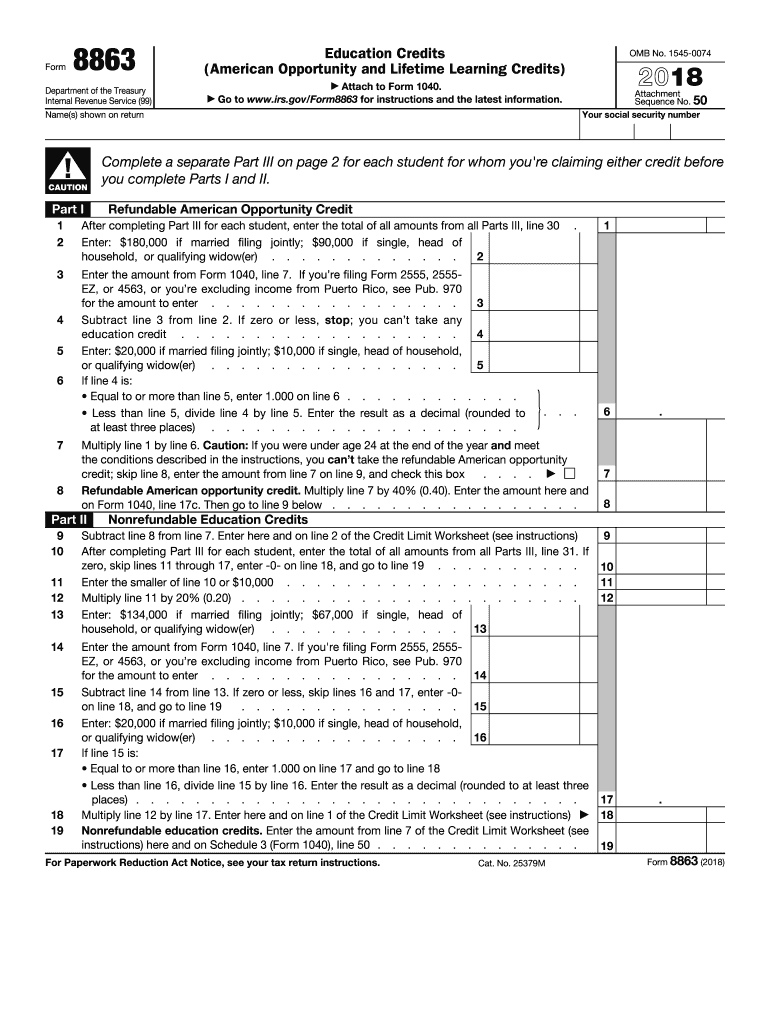







Definition and Purpose of Form 8863
Form 8863, titled "Education Credits (American Opportunity and Lifetime Learning Credits)," is utilized by U.S. taxpayers to claim education-related credits on their tax returns. This form translates specific higher education expenses into tax credits, reducing the overall tax burden. It primarily covers the American Opportunity Credit and the Lifetime Learning Credit. Each credit caters to different educational phases and expenses, fostering tax relief for individuals investing in educational advancements. The form mandates detailed reporting of both the taxpayer and the learning institution's information to authenticate the education expenses incurred within the tax year.
How to Use Form 8863
When using Form 8863, taxpayers must follow a structured approach to determine eligibility and calculate the applicable credits. The form comprises two parts; Part I assesses the refundable American Opportunity Credit, while Part II tackles the nonrefundable American Opportunity and the Lifetime Learning Credit. To ensure accuracy:
- Collect all relevant documentation from eligible education institutions.
- Fill Part I for each student, indicating qualifying expenses and calculating credits.
- Proceed with Part II if eligible for the Lifetime Learning Credit.
- Review the form for completeness and consistency before submission alongside the 1040 or 1040A tax return.
Key Steps
- Identify all qualified education expenses, such as tuition and required fees.
- Analyze taxpayer's income to ensure it falls within the credit's income limitations.
- Input correct personal and educational institution identification numbers where required.
How to Obtain Form 8863
Form 8863 can be acquired through multiple channels:
- IRS Website: Direct download is available from the official IRS website in PDF format.
- Tax Software Providers: Platforms like TurboTax or H&R Block often include the form as part of their offerings.
- Tax Professionals: Engaging a tax advisor or CPA can also facilitate obtaining and completing the form.
Steps to Complete Form 8863
Successfully completing Form 8863 entails several meticulous steps:
- Gather Required Information: Obtain Form 1098-T from the educational institution, detailing expenses.
- Income Verification: Confirm Modified Adjusted Gross Income (MAGI) to ensure eligibility.
- Fill Part I: Apply for the American Opportunity Credit for qualifying students.
- Complete Part II: If applicable, use this section for the Lifetime Learning Credit.
- Reconcile Total Credits: Review all entries and ensure accurate calculations align with MAGI thresholds.
Examples and Scenarios
- A college student enrolled in an undergraduate program may qualify for the American Opportunity Credit if tuition, books, and equipment costs are covered.
- An adult learner attending accredited online courses for career advancement can potentially claim the Lifetime Learning Credit.
Eligibility Criteria for Form 8863
The eligibility for using Form 8863 hinges on several factors:
- Educational Institution: The taxpayer or their dependents must be enrolled at an accredited post-secondary institution.
- Relationship to Student: The taxpayer can be the student or a parent/legal guardian claiming the credit.
- Income Thresholds: Only taxpayers with MAGI below set limits qualify for these credits.
- Enrollment Status: Eligible students may use the American Opportunity Credit only if pursuing a degree or recognized credential.


Key Elements and Requirements of Form 8863
Incorporating specific components ensures the comprehensive filing of Form 8863:
- Qualified Expenses: Only expenses such as tuition and required course materials are considered.
- Form 1098-T Requirement: Institutions must provide this form, summarizing tuition paid for the tax year.
- Income Clarity: Clearly defined income levels impact eligibility and credit amounts.
- Dependent Claims: Taxpayers claiming credits for dependents must adhere to claimed individual rules.
Filing Deadlines and Important Dates
Understanding critical timelines ensures compliance and maximizes credit potential:
- Filing Deadline: The regular tax return deadline, often April 15, applies unless extensions are filed.
- Educational Timeline: Costs must pertain to educational activities undertaken within the respective tax year.
- Extension Implications: File for a tax return extension if unable to compile all supporting documents by the April deadline.
IRS Guidelines and Compliance for Form 8863
Abiding by IRS stipulations maximizes the benefits of Form 8863 while ensuring lawful adherence:
- Accurate Reporting: Ensure all calculations and data entries comply with IRS guidelines to avoid penalties.
- Audit Preparedness: Retain educational and financial records for potential audit verification.
- Timely Submission: Late filing can incite loss of credit eligibility; punctuality is paramount.
Understanding and correctly filing Form 8863 can significantly optimize tax savings associated with educational expenditures. By following IRS protocols and accurately documenting qualified expenses, taxpayers contribute to a smoother, stress-free filing process, while potentially securing substantial tax relief.