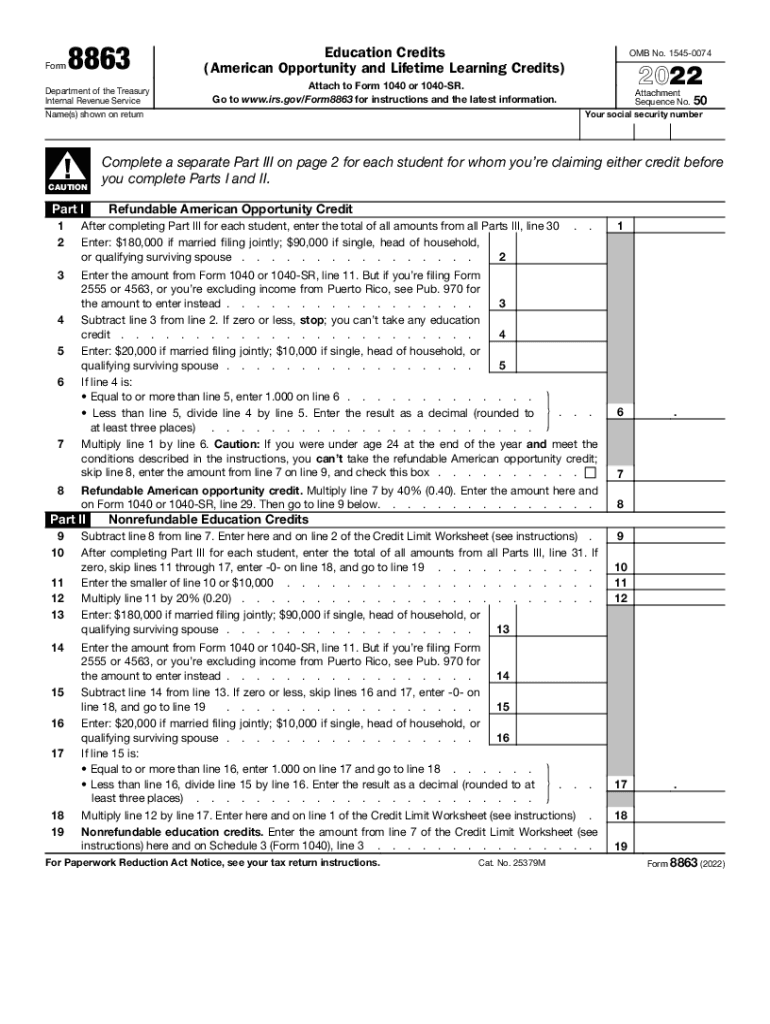







Understanding Form 8863 for Education Credits
Form 8863 is crucial for claiming education credits on your tax return, specifically the American Opportunity Credit and the Lifetime Learning Credit. These credits help offset the costs of higher education by reducing the amount of tax owed. The form provides detailed instructions on calculating both refundable and nonrefundable credits, requiring specific information about each student and their academic institution.
Eligibility Criteria for Education Credits
Determining eligibility for the American Opportunity Credit and Lifetime Learning Credit is essential before completing Form 8863. The American Opportunity Credit applies to the first four years of post-secondary education, available to students pursuing a degree or recognized credential. Key criteria include that a student must be enrolled at least half-time for one academic period beginning in the tax year. Meanwhile, the Lifetime Learning Credit offers more flexibility but covers only 20% of the first $10,000 of qualified education expenses, with no minimum enrollment requirement.


Step-by-Step Guide to Completing Form 8863
- Gather Documents: Start by collecting necessary documents such as the Form 1098-T from the educational institution, which lists tuition payments and scholarships.
- Complete Personal Information: Fill out your name and Social Security Number to ensure accurate processing.
- Enter Student Information: List each student for whom you are claiming the credit, including their educational institution and enrollment details.
- Calculate Your Credits: Use Part I of the form for the American Opportunity Credit and Part II for the Lifetime Learning Credit. Follow instructions to compute the credits based on your expenses.
Important Terms Related to Form 8863
Understanding critical terms is vital when filling out Form 8863. Concepts such as "qualified education expenses," "half-time enrollment," and "eligible educational institution" often impact eligibility and credit computation. Familiarize yourself with these definitions, as detailed in the IRS instructions for the form, to ensure compliance and maximize your credit.
Filing Deadlines and Important Dates
Timeliness is critical when submitting tax forms, including Form 8863. Typically, you should file this form by the April tax deadline, coinciding with your federal income tax return submission. Extensions are available but often require prior application; understanding these deadlines can prevent late-filing penalties and ensure that credits are applied promptly.
Required Documents for Form 8863
Several documents are needed to accurately complete Form 8863. These include:
- Form 1098-T: Issued by the educational institution to detail tuition expenses.
- Receipts for Books and Supplies: Related directly to courses.
- Financial Aid Statements: If applicable, showing scholarships and grants.
Keeping these documents organized helps streamline the form completion process and supports any potential audit.
Submission Methods for Form 8863
Form 8863 can be submitted as part of your federal tax return, which may be filed electronically or by mail. Electronic filing through IRS e-file or using tax preparation software like TurboTax simplifies the process and often speeds up refunds. If filing by mail, ensure all required forms and schedules are included.
Taxpayer Scenarios: Students and Parents
Form 8863 can be used by both students and their parents, depending on who claims the student as a dependent. Parents often claim education credits for dependent undergraduate students, whereas self-filing graduate students might benefit from submitting this form independently. Each scenario requires careful consideration to ensure optimal tax outcomes and compliance with IRS requirements.