




01. Edit your waiver of rights sample online
Type text, add images, blackout confidential details, add comments, highlights and more.

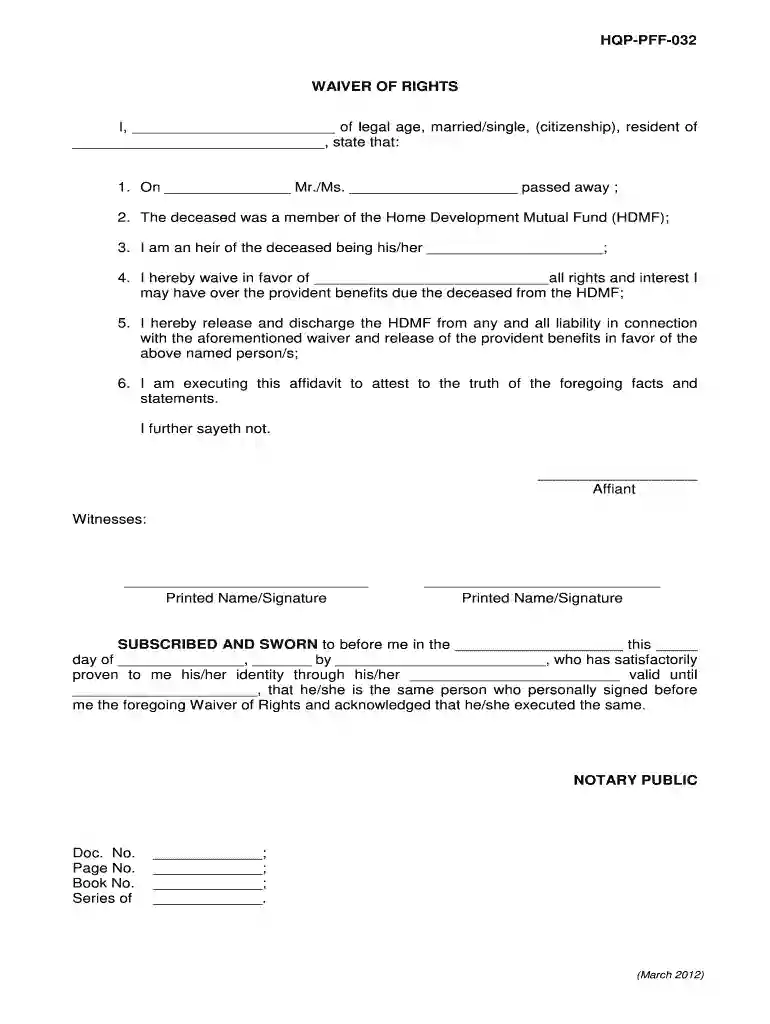
Type text, add images, blackout confidential details, add comments, highlights and more.

Draw your signature, type it, upload its image, or use your mobile device as a signature pad.

Send waiver of rights via email, link, or fax. You can also download it, export it or print it out.
A waiver of rights sample is a legal document that represents a formal agreement to relinquish certain legal rights or claims. This document is commonly used in situations where an individual wishes to voluntarily forego their right to certain benefits or entitlements. In the context of property or inheritance, for instance, an heir might use a waiver of rights form to decline their entitlement to assets from a deceased relative in favor of another designated individual. The waiver serves to protect the organization or individual offering the benefits from future claims or disputes.
Understanding the legal definitions and implications involved in a waiver of rights sample is crucial. This sample typically includes specific details, such as:
Being informed about the legal language and format of the waiver of rights sample can help ensure that it meets all necessary legal requirements.
Using a waiver of rights sample entails several important steps to ensure its effectiveness and legality. First, identify the specific rights being waived. For instance, if an heir is waiving their rights to a deceased member’s property benefits, these should be clearly defined within the document.
Understanding how to properly fill out and utilize the waiver of rights sample is critical in preventing misunderstandings and ensuring that the document holds up in legal contexts.
Completing a waiver of rights sample accurately is essential for its validity. Here’s a step-by-step guide to ensure thoroughness and compliance with legal standards.
Gather Relevant Information:
Draft the Document:
Detail the Waiver:
Finalize:
Review for Legal Compliance:
Following these steps can help create a legally binding waiver of rights sample that is enforceable and clear in its intent.
Various individuals and organizations may utilize a waiver of rights sample depending on their specific needs. Some typical users include:
Understanding who commonly uses waiver of rights samples helps clarify the document's purpose and the contexts in which it can be applied.


The effectiveness of a waiver of rights sample lies in its key components, each serving a distinct purpose in the document's legal strength.
Including these elements ensures that the waiver of rights sample is thorough and legally sound, thereby facilitating a clear understanding among the parties involved.
We've got more versions of the waiver of rights sample form. Select the right waiver of rights sample version from the list and start editing it straight away!
At DocHub, your data security is our priority. We follow HIPAA, SOC2, GDPR, and other standards, so you can work on your documents with confidence.
No waiver of any obligation or right of either Party shall be effective unless in writing, executed by the Party against whom it is being enforced. Other thanRead more
BY SIGNING THIS DOCUMENT I HEREBY WAIVE CERTAIN LEGAL RIGHTS, INCLUDING THE RIGHT TO SUE ADTALEM. GLOBAL EDUCATION INC AND ROSS UNIVERSITY SCHOOL OFRead more


