






Understanding the Purpose of Form 1065 K-1
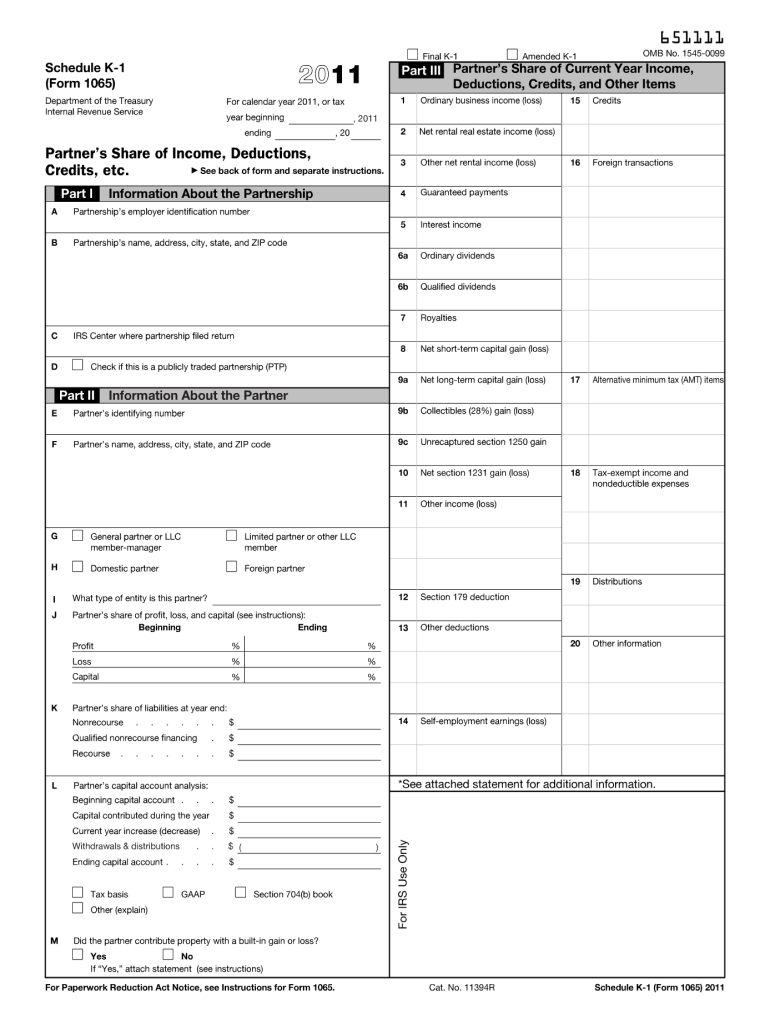
Form 1065 Schedule K-1 is a tax document used to report a partner's distributive share of income, credits, and deductions in a partnership's tax year. Specifically, the 2011 version of this form assists in detailing a partner's share of the partnership's income, which needs to be included on their individual or other tax returns. The form reflects the financial activity of the partnership and how it translates to individual partners.
Key Objectives
- Ensures each partner reports their share of partnership income or losses.
- Facilitates accurate tax reporting for federal purposes.
- Provides clarity on the partner's share of credits and deductions.
How to Use Form 1065 K-1 2011
Correct usage of the 1065 K-1 form is essential for compliance with IRS requirements. Partners must reflect the details outlined in this form in their individual tax returns, aligning with sections dedicated to pass-through income.
Using the Form
- Receive Form: Each partner should receive a completed Form 1065 K-1 from the partnership.
- Review for Accuracy: Ensure that all personal details and financial data accurately reflect your earnings and tax credits as derived from the partnership.
- Include in Personal Taxes: Integrate the information into your personal tax filing, under the relevant sections dealing with partnership income.
Points to Consider
- Check for accuracy in the allocation and distribution of income and deductions.
- Understand how specific figures affect your tax liability.
Steps to Complete the Form 1065 K-1 2011
Completing the Schedule K-1 involves several structured steps, focusing on accurately reporting the partner's share of the financial transactions within the partnership.
Detailed Process
- Gather Information: Collect all necessary financial statements and allocations made during the tax year.
- Enter Partner Information: Provide accurate details about each partner, including names and tax identification numbers.
- Report Share of Income: Utilize Part III of the form to document each partner’s share of income and credits.
- Review Deduction Allocations: Double-check all deduction allocations to ensure they abide by the partnership agreement.
- Finalize and Send: Once completed, distribute individual forms to respective partners for their tax filings.
Who Typically Uses the Form 1065 K-1 2011
The Schedule K-1 is primarily used within partnerships, but it extends to any collaborative business setup that uses a flow-through tax system.


Individuals and Entities
- Business Partners: Each entity involved in a partnership utilizes this form to reflect their share of earnings.
- LLC Members: Those in limited liability companies often use K-1 forms, especially those considered as partnerships for tax purposes.
Important Terms Related to Form 1065 K-1 2011
Understanding terminologies used in the form is crucial for accurate communication and reporting.
Key Definitions
- Distributive Share: Portion of profits allotted to a partner based on the agreement.
- Pass-Through Entities: Structures where income is passed directly to owners, bypassing traditional corporate tax layers.
- Deductions and Credits: Financial reductions which partners claim on taxes, directly impacting taxable income.
Form Submission Methods for Form 1065 K-1 2011
There are multiple ways to submit a completed form, ensuring flexibility and compliance with IRS standards.
Submission Options
- Electronic Filing: Many partnerships choose electronic submissions, offering speed and security.
- Mail: Traditional mailing through the postal system remains a valid method.
Consideration
- Online filing often expedites processing and reduces paperwork errors.
IRS Guidelines for Form 1065 K-1 2011
The IRS provides specific instructions concerning completion and submission of Schedule K-1, which partners should adhere to.
Compliance Details
- Timely Submission: Follow IRS deadlines to avoid penalties.
- Accuracy of Information: Ensure all reported figures align with the IRS codes and partnership agreements.
Business Entity Types Applicable to Form 1065 K-1 2011
Form 1065 K-1 is relevant for specific business structures operating as or with similar tax treatment to partnerships.
Eligible Entities
- Partnerships: Directly use this form for their tax filings.
- LLCs: Operate similarly to partnerships but offer different liability coverages.
Practical Scenarios
- A multi-member LLC or a traditional partnership will use these forms to allocate shares of profits or losses to each member.