






Understanding the Song Split Agreement
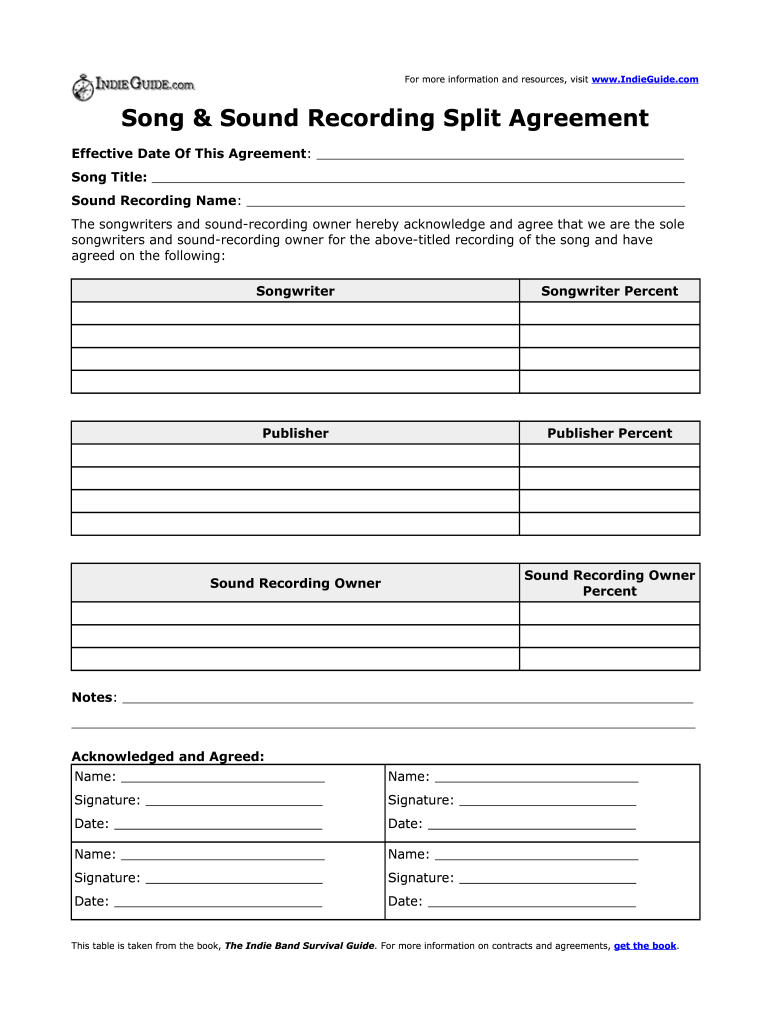
A song split agreement is a legally binding document that outlines the ownership distribution of a song's rights among songwriters, publishers, and owners of sound recordings. This essential agreement ensures that all contributors are fairly compensated according to their contributions to the song. By specifying how profits from sales, licensing, and other use of the song will be allocated, a split agreement helps prevent disputes and confusion among parties involved in the music creation process.
Key Components of a Song Split Agreement
-
Parties Involved: The agreement should clearly name all contributors, including songwriters, producers, and anyone else who played a role in the song's creation. Identifying all parties prevents misunderstandings regarding rights ownership.
-
Ownership Percentages: The split agreement must delineate the specific percentage of ownership for each contributor. This includes how royalties will be divided based on contributions such as writing lyrics, composing music, or producing the final recording.
-
Responsibilities and Rights: Each party's responsibilities, such as how they manage copyright registrations, and their rights regarding future use of the song, need to be clearly defined. This could include decisions about licensing the song, recording versions, or approving changes to lyrics or melody.
-
Payment Terms: The agreement should specify how and when payments will be distributed among the parties. This could include upfront payments, royalty splits, and handling of income from various sources such as streaming services, radio plays, or performance royalties.
-
Dispute Resolution: It is important to outline a method for resolving disputes that may arise under the agreement. This could involve mediation, arbitration, or legal action, providing a clear path for addressing conflicts without lengthy litigation.
How to Create a Song Split Agreement
-
Document Existing Contributions: Before drafting the agreement, gather information on who contributed what to the song—the melody, lyrics, harmony, arrangement, and production.
-
Determine Ownership Percentages: Have all involved parties discuss and agree on how the song's rights will be split. Use a fair approach that acknowledges each contributor's efforts and contributions.
-
Draft the Agreement: Write a comprehensive document that includes all key components listed above. Be specific and clear in the language used to avoid ambiguity. It's often beneficial to use a template for a songwriting split agreement to ensure all necessary items are covered.
-
Consult Legal Advice: If resources allow, have an attorney review the agreement to ensure it meets legal standards and adequately protects all parties' rights. This can also help to clarify the implications of each section of the agreement.
-
Execute the Agreement: Once all parties agree to the terms, have everyone sign the document. It's advisable to keep copies for each party and to store the original in a secure location.
Importance of a Song Split Agreement
A song split agreement protects the interests of all parties involved in music creation. It clarifies roles and responsibilities, which helps reduce potential conflicts. In a creative environment, where emotions may run high, having a clear legal agreement can ensure that all contributors feel valued and treated fairly. Moreover, it provides a clear framework for royalty collections and distributions, which is critical in the music industry, where digital platforms have increasingly complicated financial structures.
Examples of Usage
For a scenario involving multiple songwriters, each may contribute different elements to the final product. For instance, one writer may focus on lyrics while another handles the melody. If they agree on a split of fifty percent for one songwriter and fifty percent for the other, it should be documented. Conversely, if a producer adds significant musical elements, they may negotiate a thirty percent split, providing clarity on how revenues will be divided later on.
Variations in Split Agreements
Different types of agreements can also exist within the music industry:
- Songwriter Split Sheet Template: Primarily used by songwriters to document contributions before finalizing a more comprehensive agreement.
- Master Recording Split Agreement: This specifies terms related to the recording of the song, outlining how rights and royalties will be split for the recording itself.
- Recording Split Agreement: This focuses on the sound recording and the associated rights, particularly in terms of royalties earned from sales and streams.
Understanding these nuances can help collaborators create the most appropriate agreement for their specific situation.