




Definition and Meaning of Accounts Receivable Aging Report
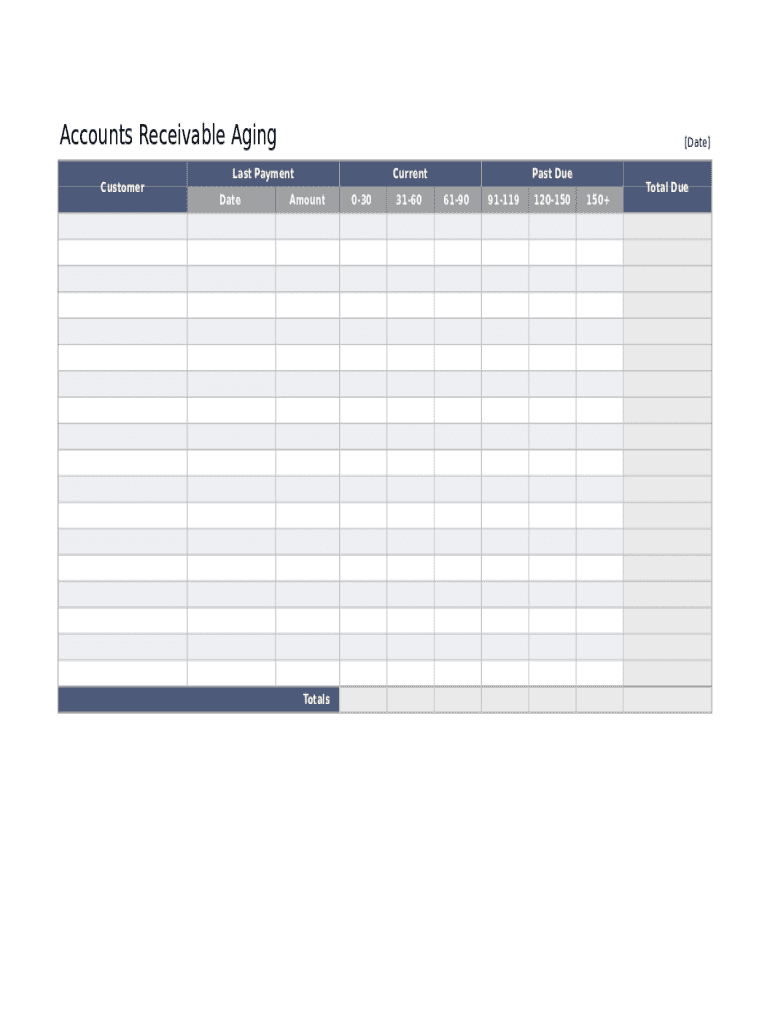
The Accounts Receivable Aging Report is a financial document used by businesses to review unpaid customer invoices. It classifies outstanding balances based on the period they have been due, typically grouped into time buckets such as current, 30, 60, 90, and over 120 days past due. This report is crucial for assessing the financial health of a company by identifying overdue accounts and monitoring customer payment habits.
Aging reports help in maintaining optimal cash flow and ensure timely follow-up with customers. Businesses can use this data to make informed credit decisions and refine their credit policies to minimize revenue losses due to bad debts. A deeper understanding of payment patterns can also support improved customer relationship management by enabling proactive communication regarding overdue balances.
How to Use the Accounts Receivable Aging Report
Utilizing the Accounts Receivable Aging Report effectively involves multiple steps and analyses. Businesses can begin by categorizing outstanding invoices by customer and time overdue. Regular reviews of this report allow for timely collection efforts, as businesses can prioritize calls or outreach to customers with the largest or oldest outstanding balances first.
Further analysis may involve identifying trends, such as customers who consistently pay late, which may indicate the need to reassess their credit terms. During reviews, pinpoint if adjustments are necessary for existing credit policies, minimizing the risk of significant overdue accounts in the future.
Effective use can also involve setting collection targets based on the data within the report. By obtaining insights into cash flow, companies can plan for possible cash shortfalls and avoid liquidity issues.
Steps to Complete the Accounts Receivable Aging Report
-
Gather Invoice Data: Collect all the outstanding invoices from the accounting system, ensuring that each entry includes details like invoice date, customer, and amount due.
-
Categorize by Date: Organize the invoices into aging categories such as 0-30 days, 31-60 days, 61-90 days, and over 90 days overdue.
-
Calculate Totals: For each aging category, sum the total outstanding amount to understand how much is due in each time bucket.
-
Verify Charges: Cross-check invoices with contract terms to ensure each charge is legitimate and appropriately categorized.
-
Analyze and Take Action: Use the compiled report to identify accounts needing immediate attention and strategize collection efforts.
These steps are typically facilitated by accounting software, which allows for automation of parts of the aging report process, reducing human error and increasing efficiency.
Who Typically Uses the Accounts Receivable Aging Report
The primary users of the Accounts Receivable Aging Report are financial analysts, accounts receivable managers, and business owners. Each uses the report to understand and manage accounts receivable processes better.
- Finance Teams use this report to forecast cash flow and identify potential financial risks.
- Credit Managers evaluate the creditworthiness of customers and adjust terms accordingly.
- Sales Teams may use insights from the report to refine customer communication strategies, ensuring that payment schedules align with both party's expectations.
This report aids businesses in enhancing their accounts receivable management, reflecting both the operational and strategic emphasis placed on efficient cash flow handling.

Key Elements of the Accounts Receivable Aging Report
An effective Accounts Receivable Aging Report contains several critical components:
- Customer Details: Information such as customer name and account number.
- Invoice Information: Date issued, invoice number, and due amount.
- Time Categories: Classifications for each outstanding invoice according to its age.
- Total Amounts: Summed amounts for each time period category to assess overall exposure.
Including these elements ensures comprehensive insights are available, allowing businesses to execute informed resolutions and remedial actions efficiently.
Benefits of Using the Accounts Receivable Aging Report
There are several advantages to regularly employing the Accounts Receivable Aging Report:
- Improved Cash Flow Management: Timely identification and collection of overdue accounts enhance liquidity.
- Informed Decision-Making: Better understanding of customer payment behaviors helps set more effective credit policies.
- Risk Reduction: Early detection of potential bad debts leads to reduced financial exposure.
- Enhanced Customer Relations: Proactive management of overdue accounts helps maintain positive relationships with clients through transparent communication.
The report serves as a vital tool for maintaining financial stability and fostering productive business relationships by enabling companies to take timely and well-informed actions.
Software Compatibility with Accounts Receivable Aging Reports
Modern accounting systems like QuickBooks, SAP, and Oracle ERP support the generation and analysis of the Accounts Receivable Aging Report. This compatibility offers multiple benefits:
- Automation: Streamlined data entry, categorization, and analysis reduce manual labor.
- Real-Time Updates: Automated systems offer real-time monitoring of accounts receivable.
- Integration: Interoperability with other financial reports provides a holistic view of a company's financial health.
Utilizing compatible software simplifies report management and enhances overall business efficiency.
Examples of Using the Accounts Receivable Aging Report
Consider the following scenario examples:
- Small Retail Business: Evaluates monthly sales records against the aging report to identify inconsistencies, facilitating monthly follow-up on overdue payments.
- Manufacturing Corporation: Uses the report to uncover chronic late payers and adjust their credit limits or terms, improving overall cash flow predictability.
- Service Provider: Establishes a pattern of seasonal late payments and proactively adjusts collection efforts in anticipation.
Each example highlights how diverse industries employ the Accounts Receivable Aging Report to handle unique business needs, showcasing the report's versatility in financial management practices.