






Definition and Meaning of the Answer to Complaint for Custody
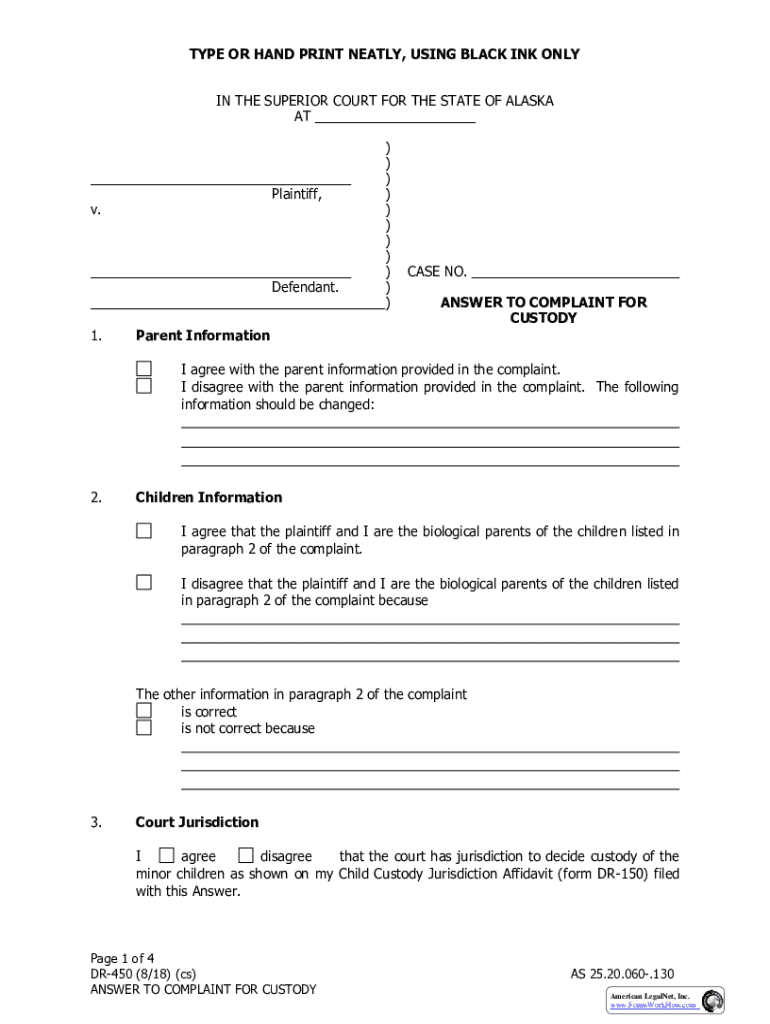
An "Answer to Complaint for Custody" is a legal document filed by a defendant in response to a complaint filed by another party seeking custody of a child. This form allows the respondent to address the claims made by the petitioner and to assert their own rights and interests regarding the custody arrangement. It is an essential part of the legal proceedings in family court, typically involving issues such as parental rights, visitation schedules, and child support.
The purpose of this document is to formally acknowledge receipt of the custody complaint, provide an opportunity to agree or refute the claims, and state any counterclaims or defenses. It helps establish a legitimate dialogue in the judicial process, ensuring each party’s perspective is considered before a judgment is made.
Steps to Complete the Answer to Complaint for Custody
-
Read the Custody Complaint Carefully: Begin by thoroughly reviewing the custody complaint received from the petitioner. This includes understanding all allegations, requests, and terms proposed in the document.
-
Gather Necessary Information: Collect all essential details, such as personal information, relevant dates, and any documentation that can support your response.
-
Fill Out Personal Details: Start filling out the form by entering your personal details, including name, address, and contact information. It's crucial to ensure accuracy to avoid any procedural issues.
-
Respond to Allegations: In this section, you must address each of the allegations listed in the complaint. Clearly state whether you admit, deny, or lack sufficient information to respond to each claim.
-
State Your Custody Preferences: Explicitly state your preference and suggestions for the custody arrangement, including physical and legal custody. This can involve proposing one of several common custody plans, such as joint custody.
-
List Counterclaims or Defenses: If applicable, use this opportunity to present any counterclaims or defenses relevant to the custody case. This might include issues of fitness as a parent or discrepancies in the petitioner’s allegations.
-
Review and Sign the Document: Once completed, double-check all entries for accuracy and completeness. Sign and date the document according to court requirements.
Legal Importance of Filling an Answer to Complaint for Custody
Filing an "Answer to Complaint for Custody" is critical for several reasons:
-
Preserves Legal Rights: By responding, you ensure your rights and interests are considered by the court. Failing to file an answer can result in a default judgment against you.
-
Defines Disagreements: It establishes which aspects of the complaint you contest, setting the groundwork for the court to address these disputes fairly.
-
Initiates Negotiations or Mediation: Often, presenting a well-structured answer can prompt negotiations or mediation efforts to resolve custody disputes without prolonged litigation.
Key Elements of the Answer to Complaint for Custody
-
Acknowledgment of the Custody Complaint: The form must explicitly acknowledge receipt of the original custody complaint and related documents.
-
Responses to Specific Allegations: A comprehensive section devoted to addressing each claim made in the custody complaint, specifying agreement or disagreement.
-
Details of Custody Preferences: Clear articulation of custody proposals, including any deviations from the petitioner’s requests.
-
Factual Support and Evidence: Reference to any supporting documents or evidence that the respondent intends to use during the court proceedings.
Important Terms Related to Answer to Complaint for Custody
-
Petitioner: The individual or party initiating the custody complaint.
-
Respondent: The individual responding to the custody complaint.
-
Custody Arrangement: The legal term describing the court-ordered allocation of parental responsibilities, including physical and legal custody.
-
Visitation Rights: The legally granted timeframe during which the non-custodial parent can spend time with the child.
State-Specific Rules for Answer to Complaint for Custody
Family law, including custody matters, can vary significantly from state to state. Here are a few examples of these differences:
-
Filing Deadlines: States may have specific timeframes within which the respondent must file their answer, often ranging from twenty to forty-five days after receipt of the complaint.
-
Requirement for a Parenting Plan: Some states, like Florida and Washington, mandate that parents submit a detailed parenting plan outlining responsibilities and schedules as part of their response.
-
Mandatory Mediation: Jurisdictions such as California require mandatory mediation for custody disputes before proceeding to trial, emphasizing collaborative solutions.
Understanding these variations is crucial to ensuring compliance with state-specific requirements and facilitating a smoother legal process.