






Definition and Purpose of the Connecticut Subpoena Application Form
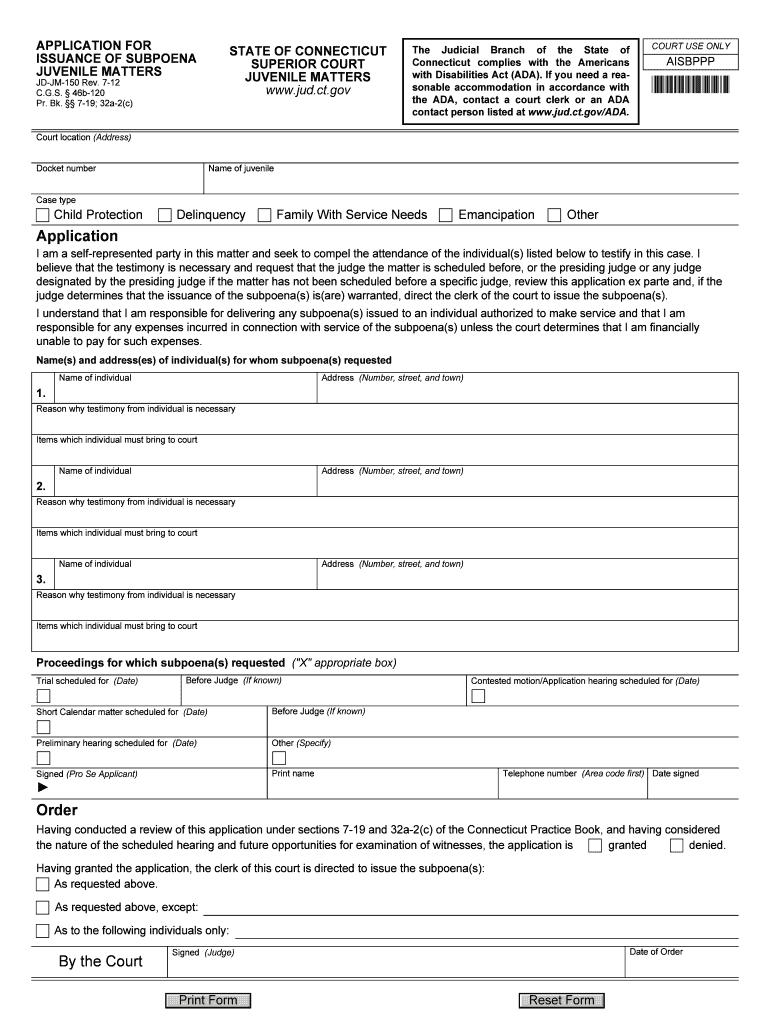
The Connecticut Subpoena Application Form is a legal document used to compel an individual or entity to produce documents or testify in a particular court proceeding in the state of Connecticut. Commonly used in both civil and criminal cases, it ensures that all relevant evidence and testimony are available during trials or hearings. The subpoena can mandate the presence of persons or the submission of necessary documents and is an essential tool in the legal process to uphold the integrity of a court case.
Types of Subpoenas
- Subpoena Ad Testificandum: Commands a witness to attend and testify in court.
- Subpoena Duces Tecum: Requires the production of documents or evidence.
Common Uses
- Gathering witness testimony in civil lawsuits.
- Obtaining documents in criminal cases.
- Compelling individuals to appear in court.
How to Use the Connecticut Subpoena Application Form
Utilizing the Connecticut Subpoena Application Form involves understanding the requirements and processes necessary for issuance. It is important to accurately complete and submit the form to ensure legal compliance and effectiveness.
Steps to Use
- Drafting: Carefully draft the subpoena, detailing who needs to comply and what documents or testimony are required.
- Approval: Submit the form for approval to the relevant legal authority, typically a judge, depending on the type of case.
- Service: Ensure the subpoena is correctly served to the relevant party, usually by a legal officer like a process server or sheriff.
Common Mistakes
- Failing to specify clear instructions or deadlines.
- Incorrectly identifying the person or documents required.
- Not following through with proper legal service protocols.
How to Obtain the Connecticut Subpoena Application Form
Obtaining the Connecticut Subpoena Application Form can be done via several methods, ensuring accessibility for those involved in legal proceedings.
Methods
- Online: Forms can typically be accessed and downloaded from the Connecticut Judicial Branch’s official website.
- In-Person: Visit the local court clerk’s office where the case is filed.
- Legal Counsel: Solicit assistance from legal counsel to obtain and correctly fill out the form.
Required Information for Acquisition
- Case number and parties involved.
- Court details where the case is being adjudicated.
- Any specific instructions linked to the form.
Steps to Complete the Connecticut Subpoena Application Form
Completing the Connecticut Subpoena Application Form requires attention to detail and full knowledge of the legal demands of the case.
- Fill in Personal and Case Details: Include names, case numbers, and court identification.
- Specify Requests: Clearly articulate what is required from the subpoena, whether it’s document production or personal testimony.
- Deadline and Location: Indicate the timeline within which the requirements must be fulfilled and where.
- Review: Ensure accuracy before submission to avoid legal delays or objections.
Pitfalls to Avoid
- Vague language that may be contested.
- Leaving out critical case information.
- Misunderstanding the scope or limits of the subpoena’s reach.
Who Typically Uses the Connecticut Subpoena Application Form
The form is predominantly used by legal professionals, including attorneys, court clerks, and sometimes the parties involved in a lawsuit.


Users
- Attorneys: To advance case strategies and gather evidence.
- Court Officials: To ensure procedural compliance in legal processes.
- Pro Se Litigants: Individuals representing themselves might utilize this form under guidance.
Practical Scenarios
- A divorce attorney might use it to obtain financial records.
- A prosecutor may subpoena an eyewitness for trial testimony.
- A business might need to subpoena another company for documents in a corporate dispute.
Legal Use and Importance of the Connecticut Subpoena Application Form
Understanding the legal implications of using this form is paramount for its effectiveness and legality.
Legal Considerations
- Must be issued in compliance with Connecticut state law and regulations.
- Should respect privacy laws and limits of reach into personal data.
- A failure to respond to a subpoena could result in contempt of court charges.
Importance
- Ensures comprehensive evidence collection for fair adjudication.
- Maintains the integrity and thoroughness of the judicial process.
Key Elements of the Connecticut Subpoena Application Form
Identifying the essential elements of the form can facilitate correct completion and submission.
Essential Information
- Issuing Party Information: Who is requesting the subpoena, including legal representation details.
- Target Party Details: Whom the subpoena is directed at, whether a person or entity.
- Request Specifications: Clear detailing of what is required for the court process.
Examples of Inclusion
- Accurate timelines for compliance.
- Comprehensive listing of documents or testimony needed.
- Instructions for where and to whom the materials need to be returned or presented.
State-Specific Rules for the Connecticut Subpoena Application Form
Navigating the Connecticut-specific rules ensures compliance and avoids any potential legal pitfalls associated with subpoena issuance.
State Rules and Guidelines
- Compliance with Connecticut Practice Book Section relevant to subpoenas.
- Differences from federal subpoena guidelines.
- Specific deadlines for response tailored to Connecticut court timelines.
Non-Compliance Repercussions
- Possible fines or charges of contempt.
- Documented court delays and adjournments.
By adhering to these comprehensive guidelines, legal professionals and involved parties can proficiently manage and utilize the Connecticut Subpoena Application Form to further their legal proceedings effectively.