






Definition and Meaning
The issuance of a subpoena refers to a legal process through which an individual, typically a party in a court case, can request officially sanctioned orders to compel someone to attend court proceedings or produce certain documents. In the context of the Connecticut Superior Court, specifically concerning juvenile matters, the issuance of a subpoena allows self-represented parties to request the attendance of individuals to provide testimony. This critical legal tool ensures that all necessary evidence and witnesses are present, helping to uphold the integrity and fairness of judicial proceedings.
How to Use the Issuance of Subpoena
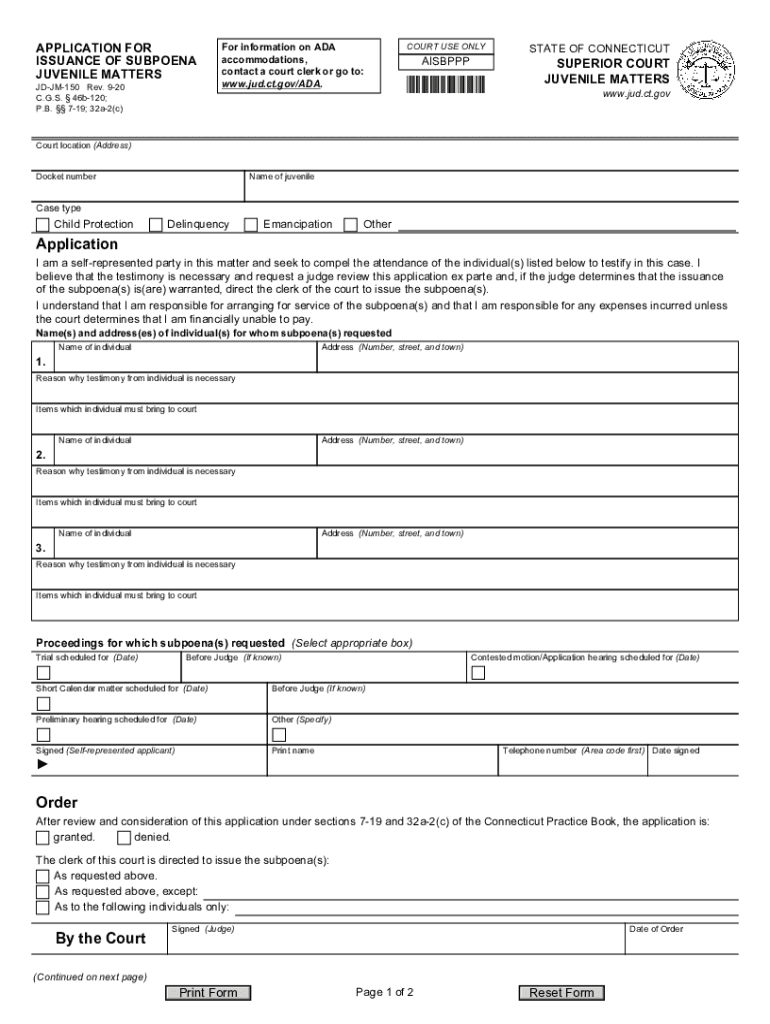
To effectively utilize the issuance of a subpoena, individuals must first understand the specific requirements of their jurisdiction. In Connecticut, self-represented parties involved in juvenile matters can submit a formal request for a subpoena through the designated court application form. This process involves specifying the relevant information such as the names and addresses of the witnesses and the reasons why their testimony is required. The court evaluates the submitted application form, and, if approved, the subpoena is issued to ensure the witnesses are legally bound to participate in the court proceedings.
Steps to Complete the Issuance of Subpoena
-
Download the Correct Form: Obtain the appropriate subpoena form from the Connecticut Superior Court, ensuring it is specific to juvenile matters if applicable.
-
Fill Out the Necessary Information: Include all required details, such as the case number, names, and addresses of the individuals being subpoenaed, and the purpose of their testimony.
-
Submit the Form to the Court: Once the form is completed, submit it to the appropriate court for review. This may involve filing it in person or using an online submission system if available.
-
Await Approval: The court will review the application to determine if all conditions are met for issuing the subpoena. You may be requested to attend a hearing if there are any concerns regarding the application.
-
Receive the Issued Subpoena: If approved, the court will issue the subpoena, which can then be formally served to the individuals or entities involved.
Why Should You Issue a Subpoena
Issuing a subpoena is vital for ensuring that all crucial witnesses and evidence are compiled during a court case. It provides legal authority to compel the presence and participation of individuals who might otherwise be reluctant to attend proceedings. In juvenile matters, this can be particularly important to safeguard the interests of minors and ensure that all relevant testimonies are reviewed in making judicial decisions.
Legal Use of the Issuance of Subpoena
The issuance of subpoenas is firmly rooted in legal proceedings as a means to compel attendance and document production. Legally, failure to comply with a subpoena can result in penalties, including fines or contempt of court charges. It is essential for parties involved in litigation to fully comply with the subpoena process to maintain the integrity of the judicial system and avoid legal repercussions.
Key Elements of the Issuance of Subpoena
- Court Authority: Subpoenas are issued under the authority of the court, ensuring their enforceability.
- Mandatory Compliance: Those served with a subpoena must comply or face potential legal penalties.
- Specific Details: Must include detailed information about the witnesses and the subject matter of their testimony or the documents required.
- Time-Sensitive: Typically includes specific deadlines for compliance to align with the court's schedule.
State-Specific Rules for the Issuance of Subpoena
In Connecticut, particular rules govern the issuance of subpoenas, especially in juvenile cases. For instance, certain confidentiality standards and protections apply when dealing with minors. It is crucial for individuals seeking to issue a subpoena in this context to familiarize themselves with Connecticut’s specific legal guidelines to ensure compliance and accurate execution of the process.
Examples of Using the Issuance of Subpoena
- Witness Testimony: During a child custody case, a self-represented parent might issue a subpoena to a teacher or social worker to testify about the child's well-being.
- Document Production: A party may request documents such as medical records or school attendance reports that are critical to the case outcome.
Understanding the issuance of subpoenas and their appropriate use is essential for those involved in legal proceedings, particularly in the complex and sensitive realm of juvenile law.