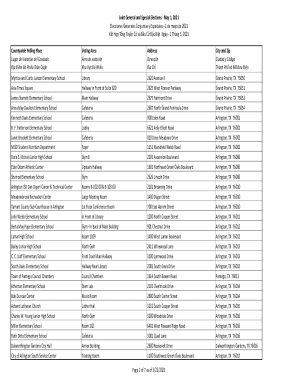
Definition and Purpose of the DSA Monthly Report Form
The DSA Monthly Report Form, primarily used by organizations involved in Direct Selling, serves as a detailed record of monthly sales and activities. It encompasses financial data, sales figures, and information regarding product distribution. This document is crucial for ensuring transparency and precision in reporting, compliance with legal requirements, and effective business management. By providing a comprehensive overview, it helps direct selling associations monitor business performance efficiently.
Key Components of the Form
- Business Identification: Includes Business Names, DSA numbers, and Employer Identification Numbers (EIN).
- Financial Data: Comprises bank charges, total deposits, and cash received, excluding transfers.
- Sales Figures: Detailed breakdown of sales across different product categories.
- Distributor Data: Records of distributor performance metrics and compliance status.
- Operational Costs: Summary of monthly operational expenses.
- Compliance Section: Ensures adherence to legal and financial regulations.
Obtaining the DSA Monthly Report Form
To obtain the DSA Monthly Report Form, businesses must typically contact the Direct Selling Association or a comparable regulatory body overseeing direct selling operations. Forms may be distributed via online portals or by request through email:
- Visit the DSA's Official Website: Most forms are available in the resource or documents section.
- Contact the Regulatory Body: Request the form via official communication channels such as email or postal services.
- Use Electronic Databases: Access forms through electronic databases and legal documentation services tailored to your industry.
Steps to Complete the DSA Monthly Report Form
Filling out the DSA Monthly Report Form requires meticulous attention to detail to ensure accuracy and compliance:
- Enter Identifying Information: Start with business names, DSA number, and EIN.
- Record Financial Details: Accurately input bank charges, deposits, and cash receipts.
- Complete Distributor Activity: Document distributor performance and any sales-related activities.
- Summarize Operational Costs: Provide a thorough record of all operational expenses from the month.
- Review for Accuracy: Cross-check all entered data against company records to prevent errors.
- Submit: Follow specific submission guidelines, whether electronic or print, as specified by the issuing authority.
Who Typically Uses the DSA Monthly Report Form
This form is generally utilized by:
- Direct Selling Companies: Need to report sales and distributor performance.
- Regulatory Bodies: Use the data to monitor compliance and industry health.
- Auditors: Review the form to verify financial and operational consistency.
- Business Executives: Rely on the data for decision-making and strategy formulation.
Important Terms Related to the DSA Monthly Report Form
Understanding key terminology is crucial for correct form completion:
- DSA Number: A unique identifier assigned to each direct selling agent or company.
- EIN (Employer Identification Number): A federal tax ID number used for business identification.
- Bank Charges: Fees associated with maintaining a business's checking account.
- Distributor Metrics: Data points used to assess distributor performance.
Legal Use and Compliance
Adhering to legal guidelines is essential when completing and submitting the form:
- Confidentiality: Ensure all sensitive data is securely handled.
- Accuracy: All financial records must be precise and supported by documentation.
- Submission Deadlines: Meet all filing deadlines to avoid compliance issues and penalties.
Key Elements and Structure of the Form
The DSA Monthly Report Form is structured to capture vital business data:
- Financial Overview: Provides insights into revenue streams and expenses.
- Sales Reporting: Allows granular tracking of sales activities by category.
- Regulatory Compliance: Verifies adherence to relevant laws and policies.
- Distributor Activities: Monitors distributor contributions to sales and engagement.
Examples and Real-World Scenarios
Businesses utilize the DSA Monthly Report Form in various scenarios:
- Annual Audits: Facilitates a transparent review process by third-party auditors.
- Performance Analysis: Helps in assessing sales trends and distributor effectiveness.
- Strategic Planning: Offers data-driven insights for setting future business goals.
- Regulatory Reporting: Ensures aligned reporting with regional compliance requirements.
Through these diverse applications, the DSA Monthly Report Form proves indispensable for maintaining operational integrity and regulatory adherence within direct selling enterprises.