




01. Edit your nys odometer statement online
Type text, add images, blackout confidential details, add comments, highlights and more.

Type text, add images, blackout confidential details, add comments, highlights and more.

Draw your signature, type it, upload its image, or use your mobile device as a signature pad.

Send ny odometer statement via email, link, or fax. You can also download it, export it or print it out.
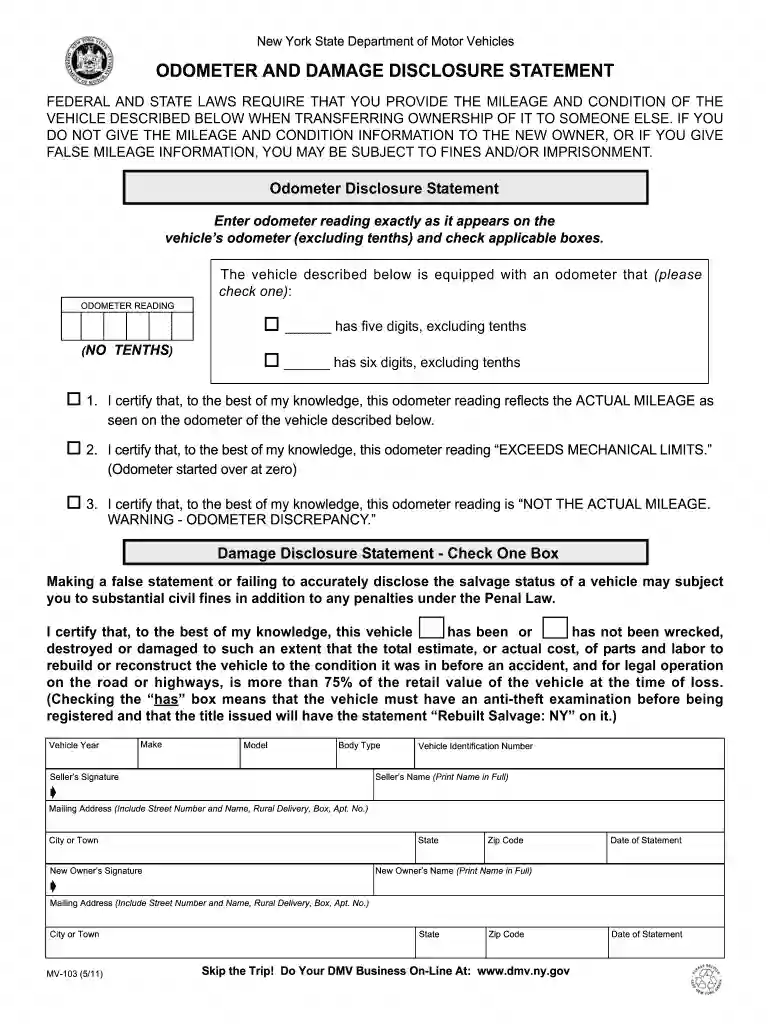
The NYS odometer statement, also known as the Odometer and Damage Disclosure Statement, is a critical form that provides essential information regarding a vehicle's mileage at the time of sale. It is mandated by the New York State Department of Motor Vehicles (DMV), ensuring that sellers disclose accurate odometer readings and any known damage to potential buyers. This form aims to prevent odometer fraud, which can mislead buyers about the true condition and value of a vehicle.
The significance of the odometer statement arises from its legal implications; both sellers and buyers are bound by the information provided. Failure to offer truthful disclosures can lead to penalties, including potential civil and criminal consequences. In essence, this form serves as a protective tool for vehicle buyers while promoting transparency in the vehicle sales process.
Filling out the NYS odometer statement involves several straightforward steps that ensure accurate and complete information is recorded.
Obtain the Form: The first step is to acquire the official NYS odometer statement form, commonly designated as MV-103. This form can be downloaded from the NYS DMV website or obtained directly from a DMV office.
Enter Vehicle Information: Fill in the required details regarding the vehicle, including make, model, year, and Vehicle Identification Number (VIN). This information confirms the specific vehicle the odometer reading pertains to.
Record Odometer Reading: Provide the accurate odometer reading at the time of sale. This number should reflect the true mileage, as misrepresentations can lead to legal issues.
Damage Disclosure: Indicate whether the vehicle has sustained any damage. This includes specifying the extent of any past damages, whether it's been in an accident, or if there are current specific issues.
Signatures: Both the seller and buyer must sign the document. Their signatures affirm the accuracy of the disclosed information and signify agreement on the terms of the transaction.
Submit the Form: Finally, ensure that the completed form accompanies the vehicle's title during the transfer of ownership. This step is crucial for the transaction to be legally recognized.
Understanding specific terminology related to the NYS odometer statement can aid sellers and buyers in navigating the vehicle transfer process efficiently. Here are key terms to consider:
Odometer fraud: This refers to the illegal act of rolling back or altering a vehicle's odometer reading to mispresent its mileage, leading to potential buyer deception.
VIN (Vehicle Identification Number): A unique 17-character code that identifies a specific vehicle, encompassing its model, manufacturer, and year of production.
Damage Disclosure: A section in the odometer statement where sellers disclose any known damage to the vehicle, ensuring transparency regarding its condition.
Certified mileage: The odometer reading that is verified and attested to by the seller, providing assurance to the buyer regarding the vehicle's usage history.
By familiarizing oneself with these terms, individuals engaged in vehicle transactions can better comprehend the implications and requirements outlined in the NYS odometer statement.
The NYS odometer statement serves multiple purposes, making its usage essential in vehicle transactions:
Legal Requirement: New York law mandates that sellers provide an odometer statement to disclose the vehicle's mileage at the time of sale, making it a necessary document during the title transfer process.
Protection Against Fraud: Utilizing the odometer statement helps protect both buyers and sellers from potential odometer fraud. Accurate disclosures enhance trust in the transaction.
Record Keeping: The odometer statement acts as a formal record of the vehicle's mileage and condition, aiding in future sales or disputes that may arise about the vehicle's history.
Facilitates Financing: Lenders often require a signed odometer statement before approving loans for vehicle purchases, ensuring that they have clear and accurate information about the collateral.
Enhances Resale Value: For sellers, providing a complete odometer statement can enhance the resale value by establishing trust and transparency with prospective buyers.
The NYS odometer statement is primarily used by several parties involved in vehicle transactions, reflecting a broad range of users:
Private Sellers: Individuals selling their personal vehicles are required to provide an odometer statement to potential buyers, ensuring that all necessary disclosures are made.
Dealerships: Auto dealers must complete and maintain odometer statements for every vehicle sold, complying with state regulations and providing a clear record of vehicle history.
Buyers: Potential vehicle buyers often request the odometer statement to verify the vehicle's mileage and condition before making a purchase decision.
Financial Institutions: Banks and credit unions that provide financing for vehicle purchases require the odometer statement as part of their due diligence to confirm the vehicle's value.
Title Transfer Agents: Individuals or businesses involved in processing vehicle title transfers utilize the odometer statement as a part of the documentation required for legal ownership transfer.
Understanding the diverse user base of the odometer statement underscores its importance in the vehicle sale process, making it a crucial form for stakeholders involved in ownership transfer.


We've got more versions of the nys odometer statement form. Select the right nys odometer statement version from the list and start editing it straight away!
With DocHub, it’s pretty simple. The platform offers users an add-on called DocHub for Gmail, which you can find in the Google Workspace Marketplace without being charged. Install it and grant it access to your Google account. Open your email with your odometer statement ny attached and click on the add-on button in the right-side panel. Sign in to your DocHub account, and upload the file to our editor, where you can complete it and sign.
It is a no-brainer on a computer or via a mobile device to complete a ny odometer disclosure statement with DocHub. All you need to do is open any installed internet browser on your smartphone and proceed to the DocHub site. Once authenticated, add your file and open it in editing mode. Use our toolbar to make your edits and save adjustments. Optionally, keep your document in your files or send it to a recipient immediately.
At DocHub, your data security is our priority. We follow HIPAA, SOC2, GDPR, and other standards, so you can work on your documents with confidence.
Heres a low-priced computer that wont run out of memory capacity or expandability halfway through your project. Typically, computer usage tends to grow,Read more
I DocHub that, to the best of my knowledge, this odometer reading is NOT THE ACTUAL MILEAGE. WARNING - ODOMETER DISCREPANCY. ODOMETER AND DAMAGE DISCLOSURERead more
A motor vehicle office will not accept a title cer- tificate if the correct odometer or damage disclo- sure statement is not completed, or if information on theRead more


