01. Edit your mv103 form online
Type text, add images, blackout confidential details, add comments, highlights and more.

Type text, add images, blackout confidential details, add comments, highlights and more.

Draw your signature, type it, upload its image, or use your mobile device as a signature pad.

Send mv 103 form via email, link, or fax. You can also download it, export it or print it out.
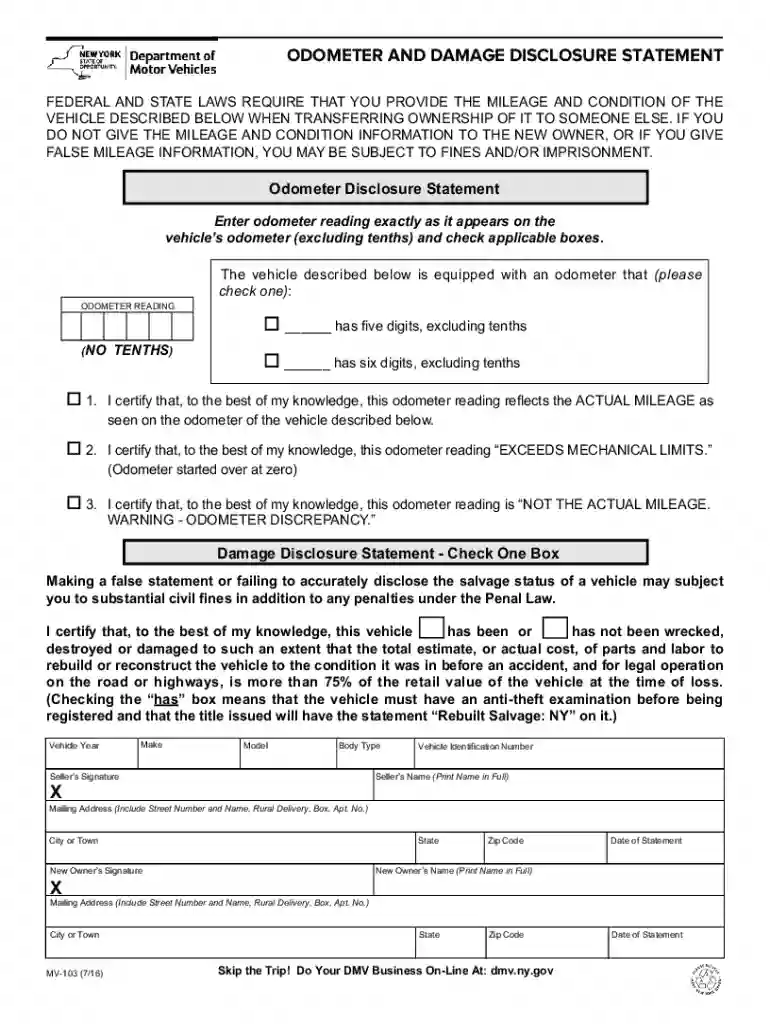
The Odometer and Damage Disclosure Statement is a legal document mandated by both federal and state law in the United States for the transfer of vehicle ownership. It serves as a critical tool for accurately reporting a vehicle's mileage and any significant damage it may have sustained. This form is essential for protecting both buyers and sellers from fraud and legal repercussions. False information in this document can lead to severe penalties, emphasizing its importance in the vehicle transaction process. The statement includes sections specifically designed to capture the odometer reading and any noted damage, ensuring all parties are informed about the vehicle's condition.
Using the Odometer and Damage Disclosure Statement effectively requires understanding its structure and purpose. Both private sellers and dealers must complete this form during the sale or transfer of a vehicle. It should be filled out carefully, with particular attention to accuracy in the odometer reading and damage disclosure sections. The document must be signed by both the seller and the buyer to validate the transaction's legality. The filled form serves as a record that protects against claims of misinformation or fraud after the ownership transfer.
To obtain the Odometer and Damage Disclosure Statement, sellers and dealerships can typically access it through state Department of Motor Vehicles (DMV) websites, or they may receive a physical copy when a vehicle is first purchased or registered. It is essential to obtain the most current version of the document since regulations and form requirements may change over time. Using an outdated form could result in errors in the processing of the vehicle's title transfer.
Completing the Odometer and Damage Disclosure Statement involves several key steps:
The legal framework surrounding the Odometer and Damage Disclosure Statement is strict. Under federal law, the form is required for all vehicles under a certain age threshold—typically ten years. It ensures transparency and trust between the buyer and seller. Non-disclosure or falsification of information can lead to penalties, including fines or legal action. It is vital for sellers to provide accurate information to avoid legal complications and potential lawsuits.
The primary users of the Odometer and Damage Disclosure Statement include individual private sellers, car dealerships, and occasionally buyers as a reference. Private sellers use the document to provide transparency in casual vehicle sales, while dealerships incorporate it into their standard sales paperwork to maintain compliance with legal requirements. Buyers need to understand this form to verify the vehicle's condition and the accuracy of the details provided before completing the purchase.


The statement features several critical components:
Failing to comply with the requirements of the Odometer and Damage Disclosure Statement can result in significant financial penalties and legal repercussions. Sellers who knowingly falsify odometer readings or damage information can face fines, restitution, and even potential imprisonment. In severe cases, non-compliance can invalidate the vehicle transfer, affecting both the seller and the buyer. It is critical to treat this form with the seriousness it warrants, ensuring all information is thoroughly verified and accurately presented.
We've got more versions of the mv103 form form. Select the right mv103 form version from the list and start editing it straight away!
At DocHub, your data security is our priority. We follow HIPAA, SOC2, GDPR, and other standards, so you can work on your documents with confidence.