







Definition & Meaning
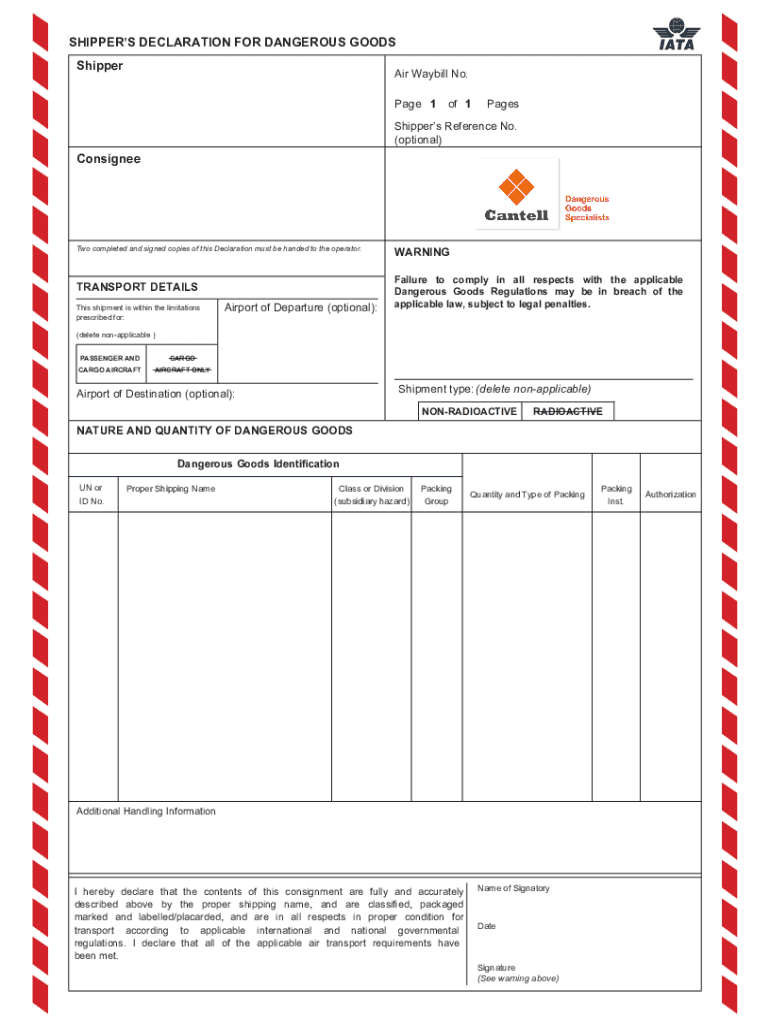
The "PDF Dangerous Goods Shipper's Declaration fillable form - IATA" is a critical document required for the transportation of dangerous goods by air under the regulations established by the International Air Transport Association (IATA). This declaration serves as a formal statement by the shipper verifying that the consignment complies with all applicable air transport regulations. Its primary purpose is to ensure the safe handling, transfer, and documentation of hazardous materials, mitigating risks associated with air transport.
Key Elements of the PDF Dangerous Goods Shipper's Declaration
The form comprises several essential elements that must be accurately completed for compliance:
- Shipper and Consignee Information: This section requires the name, address, and contact details of both the sender and receiver.
- Air Waybill Number: Entering the specific air waybill number links the declaration with the shipment’s tracking and shipping records.
- Shipment Details: Includes details about the nature of the goods, such as the number of packages, proper shipping name, class or division, UN or ID numbers, and packaging instructions.
- Certification Statement: The shipper must certify that the goods are handled per the IATA Dangerous Goods Regulations.
- Signature: Completed by the individual responsible for ensuring that the shipment complies with the necessary regulations.
Steps to Complete the PDF Dangerous Goods Shipper's Declaration
- Gather Required Information: Collect all necessary details about the shipment including product specifics, chemical composition, and classification.
- Enter Shipper Details: Fill in the shipper's name, address, and contact details accurately.
- Complete Consignee Details: Provide the corresponding information for the consignee.
- Detail Shipment Information: List each item, including their UN number, proper shipping name, hazard class, and quantity.
- Certify and Sign: Conclude with the certification and ensure the declaration is properly signed and dated.
How to Obtain the PDF Dangerous Goods Shipper's Declaration
The form can be downloaded directly from the IATA website or acquired through various software platforms that specialize in logistics and shipment documentation, such as DocHub. These platforms often offer options to customize, save, and electronically submit the form, simplifying the process for companies frequently shipping hazardous materials.
Legal Use of the PDF Dangerous Goods Shipper's Declaration
The legality of the form is established through strict adherence to IATA regulations. Each shipment must be correctly documented to avoid potential fines, legal penalties, or transport delays. Non-compliance can result in severe consequences, including shipment refusals or enforced prohibitions on shipping.
Important Terms Related to the Declaration
Several crucial terms are associated with this form:
- UN Number: Universal identifiers for hazardous substances that streamline international recognition and handling.
- Proper Shipping Name: Official names designated to hazardous materials, ensuring consistency across languages and regions.
- Class or Division: The categorization of dangerous goods based on primary risk properties which affect their handling and transportation.
Digital vs. Paper Version
The fillable PDF version of the Dangerous Goods Shipper's Declaration offers significant advantages over traditional paper forms:
- Accessibility: Digital forms can be filled out and sent from virtually anywhere.
- Accuracy: Integrated guidelines reduce errors often associated with manual entries.
- Eco-friendly: Minimizing paper use reduces the environmental impact.
Who Issues the Form
Although the International Air Transport Association sets the core requirements, various shipping and logistics software providers offer the fillable form. This ensures wide accessibility and the ability to integrate with modern document workflow systems like DocHub, boosting efficiency for frequent users.
Penalties for Non-Compliance
Failure to comply with IATA Dangerous Goods Regulations can lead to:
- Fines: Substantial financial penalties from aviation authorities.
- Shipment Delays: Hold-ups due to incomplete or incorrect documentation.
- Legal Action: Potential litigation stemming from incidents caused by non-compliance during goods transportation.
Examples of Using the PDF Dangerous Goods Shipper's Declaration
Practical applications of the declaration include:
- Pharmaceutical Shipments: Ensuring that substances with medical applications comply with specific handling and documentation requirements.
- Chemical Transportation: Facilitating the safe transit of industrial chemicals used in various manufacturing processes.
- Battery Transport: Assisting in the proper classification and documentation necessary for transporting multiple types of batteries that are classified as dangerous goods.
The comprehensive details in each section facilitate a seamless process, enabling shippers to meet all regulatory requirements efficiently.




