




01. Edit your orange county superior court exhibit tags online
Type text, add images, blackout confidential details, add comments, highlights and more.

Type text, add images, blackout confidential details, add comments, highlights and more.
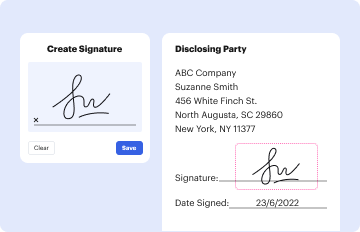
Draw your signature, type it, upload its image, or use your mobile device as a signature pad.

Send orange county superior court exhibit tags via email, link, or fax. You can also download it, export it or print it out.
Orange County exhibit tags are official forms used in legal settings to identify and track exhibits presented during court proceedings. These tags are part of the documentation process, ensuring that all evidence is correctly categorized and logged as part of a case file. They typically include unique identification numbers, dates, and details such as the case number and the signature of the attorney or party introducing the exhibit.
Exhibit tags provide a structured way to catalog various forms of evidence, which could range from physical objects to documents. Their role is crucial in maintaining organized and clear records, thus aiding in the efficient administration of justice. Proper labeling enables court personnel and legal practitioners to quickly identify and retrieve exhibits during the trial.
To effectively use Orange County exhibit tags, legal professionals must follow specific steps to ensure accurate documentation:
Fill Out the Tag: Begin by completing the necessary fields on the exhibit tag. Include the exhibit number, case number, date, and any involved parties.
Attach the Tag: Securely attach the tag to the exhibit in question. For physical items, ensure the tag is affixed in a way that doesn't damage the evidence. For documents, consider using a staple or paperclip to attach the tag.
Submit to Court Clerk: Once the exhibit tag is filled and attached, present it to the court clerk. The clerk will log the exhibit into the court's records system.
Retrieve Exhibit as Needed: During the trial, exhibits can be retrieved and presented using their tagged information. Make sure the tags remain intact to avoid any confusion or delays in the proceedings.
Proper and precise use of exhibit tags helps streamline court processes and ensures that all evidence is properly accounted for throughout the legal process.
Procurement of Orange County exhibit tags is a straightforward process, often handled by legal teams or court personnel:
Court Clerks: Tags can typically be obtained from the court clerk's office where the case is being tried. Clerks provide standardized tags to maintain uniformity.
Legal Supply Vendors: Various office supply or legal document vendors may offer exhibit tags for purchase. Ensure these tags comply with local regulations and standards.
Law Firms: Larger law firms might maintain their own stock of exhibit tags, customized for frequency and ease of use.
Legal professionals should ensure the exhibit tags they obtain meet the requirements specified by the Orange County court system to avoid any issues during trial.
Completing the Orange County exhibit tags involves several key steps to ensure accuracy and compliance:
Enter Exhibit Number: Assign a unique number to each exhibit being entered into evidence. This number helps track the exhibit throughout the court process.
List Case Information: Document the relevant case number, plaintiff and defendant names, and any other identifying information that pertains to the legal matter at hand.
Record Date and Description: Specify the date the exhibit is admitted and provide a brief description of the item. This aids in quick identification and verification.
Signature of Authority: Ensure that the attorney or authorized party introducing the exhibit signs the tag. This signature is an acknowledgment of responsibility for the exhibit's authenticity and relevance.
By following these steps, legal professionals ensure that all necessary details are captured accurately, facilitating smooth judicial procedures.
Orange County exhibit tags are predominantly used by:
Attorneys: As the primary handlers of legal evidence, attorneys utilize exhibit tags to manage and present evidence during trials.
Court Personnel: Clerks and other court staff use the tags to catalog evidence, ensuring the court's evidence log is up-to-date.
Paralegals: Supporting attorneys, paralegals often assist in preparing exhibits for court and ensure proper tagging within the firm.
The consistent use of exhibit tags by these individuals ensures that exhibits are tracked and managed effectively throughout the legal process.


The legal use of exhibit tags plays a vital role in the courtroom:
Authentication: Tags help in the validation process by providing a trail of documentation confirming the identity and origin of the exhibit.
Chain of Custody: Exhibit tags contribute to the chain of custody by documenting the transfer and handling of evidence, which is critical for preserving the integrity of the evidence.
Organization and Efficiency: By systematically cataloging evidence, exhibit tags enable efficient retrieval and presentation during court proceedings, supporting the judicial process’s flow and clarity.
Compliance with these legal uses is essential to ensure the integrity of evidence and uphold the standards of the justice system.
Understanding key terms associated with Orange County exhibit tags helps legal professionals navigate their use:
Exhibit Number: A unique identifier assigned to each piece of evidence.
Chain of Custody: The documented process that outlines the handling and transfer of evidence.
Case Number: A unique identifier for legal cases, crucial for tagging associated evidence correctly.
Admissibility: A legal term referring to whether evidence is allowed to be presented in court.
Familiarity with these terms ensures clarity and precision when handling and documenting exhibits.
Several elements make up the Orange County exhibit tags to ensure comprehensive identification and tracking:
These elements are integral to maintaining an organized and efficient evidence management system within legal proceedings.
At DocHub, your data security is our priority. We follow HIPAA, SOC2, GDPR, and other standards, so you can work on your documents with confidence.




All exhibits to be offered into evidence at trial of an adversary proceeding or contested matter must be numbered and marked for identification with tags.Read more
The expert review panel for this publication was composed of senior Emergency Medical Service (EMS) leadership from a broad domain of stakeholders.Read more
This handbook will give you important information on 4-H projects and activities offered in Orange County and throughout the State of Indiana.Read more


