
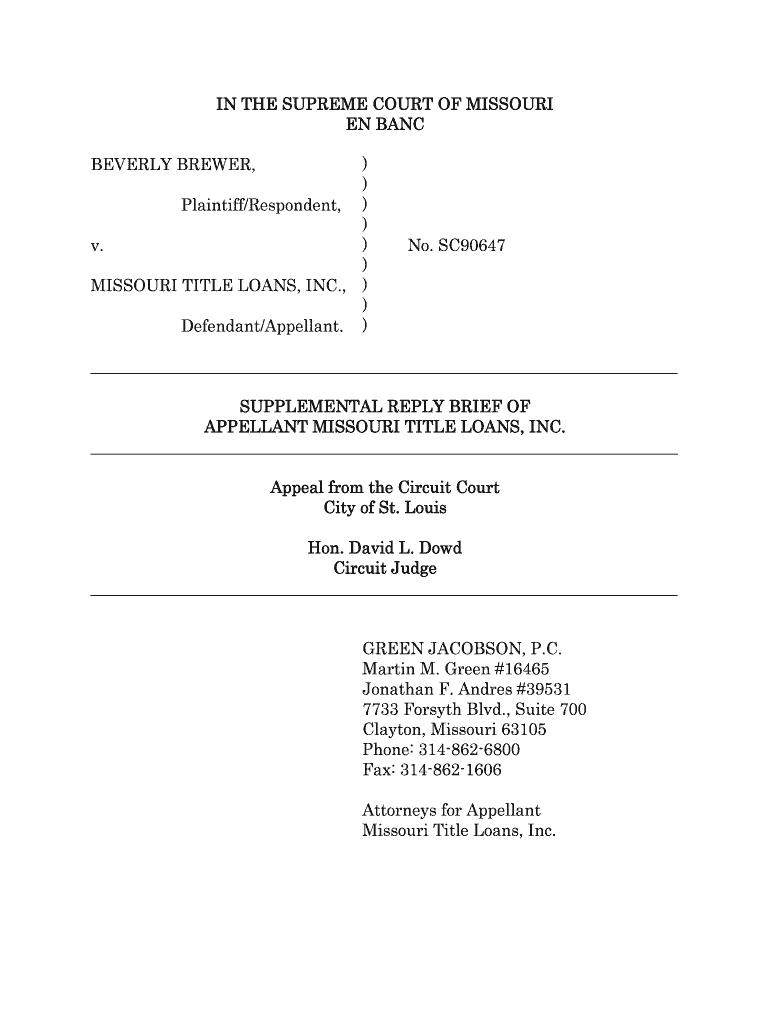







Definition & Meaning
The term "IN THE SUPREME COURT OF MISSOURI EN BANC BEVERLY BREWER, Plaintiff-Respondent, v - courts mo" refers to a specific legal case processed in the highest court of Missouri, the Supreme Court. "En banc" signifies that the case was heard before all judges of the court rather than by a panel selected from them. The parties involved are Beverly Brewer, the plaintiff-respondent, and the entity or individual listed as the adversarial party. This document encapsulates the legal arguments, rulings, and procedural elements involved in this particular appellate case. It highlights its role within the Missouri legal framework where high-level judicial decisions on significant matters are made.
Key Elements of the Document
Understanding the fundamental components of the court document aids in comprehending its implications and procedural context:
- Plaintiff-Respondent: Beverly Brewer, as the plaintiff-respondent, signifies that she initiated the lawsuit and is responding to an appeal filed by the other party.
- Court: The Missouri Supreme Court is the state's highest judicial authority, providing final legal resolution on matters brought before it.
- Case Details: The document is expected to contain various sections, such as factual background, legal issues presented, arguments, and rulings.
Legal Use of the Document
Legal documentation involving the Supreme Court of Missouri serves several critical functions:
- Jurisdictional Authority: Reviews and resolves disputes from lower courts, ensuring the application of law aligns with state and federal statutes.
- Precedent Setting: Decisions may set legal precedents impacting future cases within Missouri and sometimes beyond.
- Legal Recourse: It provides a formal process for appealing decisions that one party believes were in error in lower courts.
Steps to Complete the Document
Engaging with this court document involves several stages, often handled by legal professionals:
- Review Case Background: Analyze the initial facts and proceedings leading up to the appeal.
- Legal Argumentation Development: Formulate concise arguments based on previous court rulings and legal precedents.
- Drafting: Prepare the document, including briefs and other necessary evidence submissions.
- Submission: Submit the completed document to the court following prescribed formats and deadlines.
Who Typically Uses This Document
Several stakeholders interact with the Missouri Supreme Court documentation:
- Attorneys: Representing both plaintiff and defense, they prepare and present intervention points.
- Judges: Analyze documentation to make ruling decisions based on presented evidence.
- Parties to the Case: Directly affected by the document as it determines the outcome of their legal dispute.
State-Specific Rules for Submission
Navigating through Missouri court documents requires adherence to state-specific protocols:
- Strict adherence to submission guidelines, formatting, and deadlines are enforced.
- Compliance with both Missouri's guidelines and federal laws like the Federal Arbitration Act is crucial for consideration.
- Appeals generally require fulfilling certain conditions or showcasing substantial grounds for the original judgment’s contestation.
Important Terms Related to the Document
Knowledge of key terminology can impact understanding and handling of Supreme Court documents:
- En Banc Hearing: A session where a case is heard before all the judges of the court rather than by a selected panel.
- Respondent: Beverly Brewer in this case, defending the lower court's decision upon appeal.
- Arbitration Clause: A significant element, often central to legal disputes involving contractual agreements.
Examples of Using the Document
Several cases highlight how the Supreme Court documents facilitate legal resolutions:
- Lawsuits where arbitration clauses are contested based on state vs. federal jurisdiction.
- Precedent-setting cases such as AT&T Mobility LLC v. Concepcion, impacting arbitration enforceability.
- Bankruptcy appeals or significant civil rights infringements.
Penalties for Non-Compliance
Failure to adhere to court-mandated procedures can result in severe repercussions:
- Potential dismissal of the appeal.
- Financial sanctions or contempt rulings against involved parties.
- Detrimental legal precedents in future proceedings impacting reputations of legal firms or involved individuals.




