






Definition and Meaning of Youth Activity Waiver
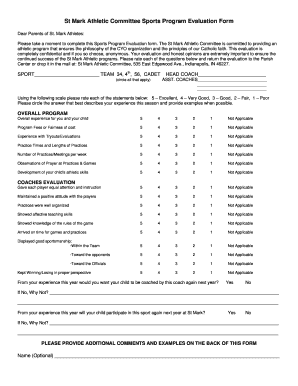
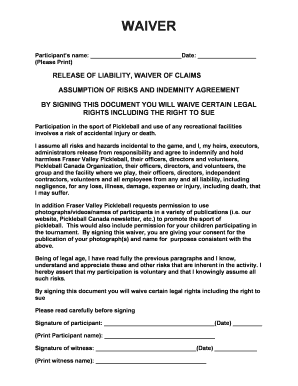
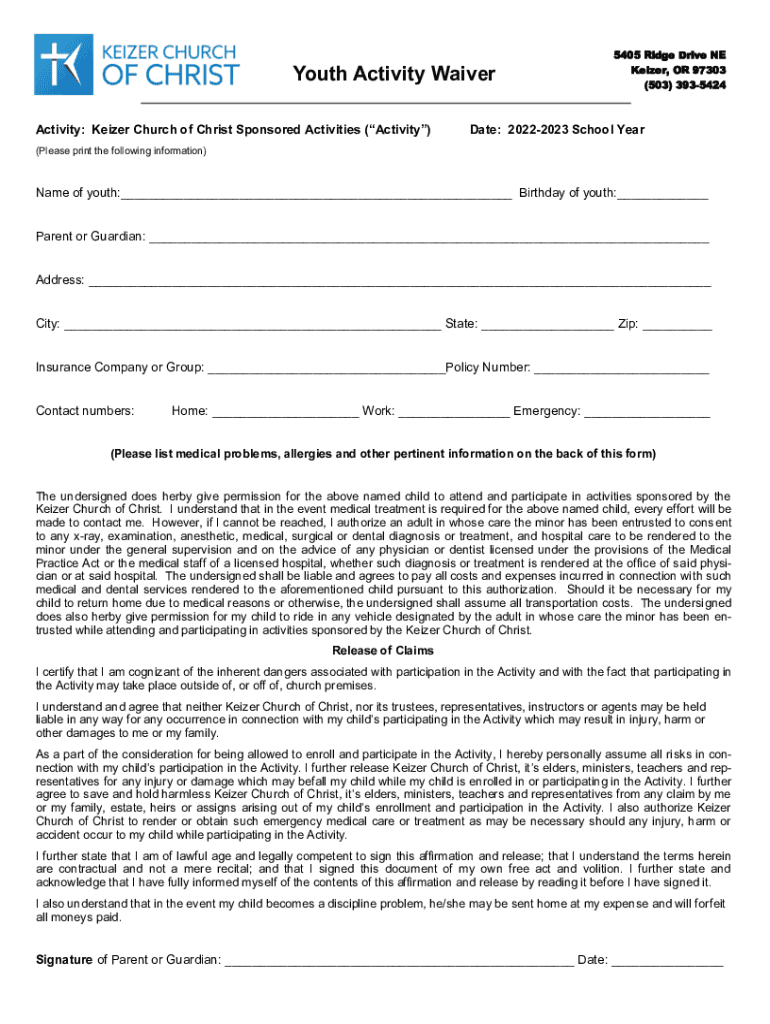
A Youth Activity Waiver is a legal document frequently required when a minor participates in activities, sports, or events. The form serves as a consent record that parents or guardians understand and accept the risks involved in the activity and agree not to hold the organization liable for certain injuries or damages incurred. By signing the waiver, the parent or guardian acknowledges their child's participation and often agrees to terms regarding safety and responsibility.
Typically, these waivers provide a clear outline of the activity, potential risks, and disclaimers required by the organizing entity. Due to legal implications, many organizations use standardized wording to ensure compliance with state and local laws, providing reassurance for both parties. Variations exist based on activity type, claimed risks, and specific participant needs.
How to Use the Youth Activity Waiver
The use of a Youth Activity Waiver involves a series of steps aimed at ensuring legal soundness and clarity:
-
Review the Activity Description: Prior to signing, parents or guardians should thoroughly read the waiver, ensuring they understand the specifics of the activity involved.
-
Identify Potential Risks: The document usually lists associated risks; verifying this information allows the participant's family to make informed decisions.
-
Complete Required Fields: Fill in necessary information such as the participant's name, contact details, and any pertinent medical considerations.
-
Understand Liability Terms: Analyze waivers that outline limited liability clauses, confirming agreement with any indemnity terms or exclusions.
-
Signatures: The waiver requires signatures from both the legal guardian and, occasionally, the participant if of a certain age, reinforcing mutual understanding and agreement.
-
Submission: Some waivers specify submission methods—online, via mail, or in-person. Confirm adherence to deadlines to avoid participant ineligibility.
Steps to Complete the Youth Activity Waiver
Successfully completing the Youth Activity Waiver involves several detailed steps:
- Access the Form: Obtain the waiver from the organizing body’s website or request it in the inclusion packet provided for the activity.
- Read Thoroughly: Invest time in reading each section of the document to avoid missing critical details or stipulations.
- Provide Accurate Information: Ensure all personal and medical information is current and accurate to prevent issues later in processing or participation.
- Verify Emergency Contacts and Medical Details: List emergency contacts and disclose any relevant medical conditions or allergies, helping prevent emergencies during the event.
- Check for Revisions: If the activity spans multiple years, verify if the waiver language or stipulations have changed.
- Sign and Return: Sign the completed document as required; physical waivers might need to be sent back by mail, while digital waivers may simply need an electronic submission.
Key Elements of the Youth Activity Waiver
Youth Activity Waivers typically contain several vital elements which should be consistently examined and comprehended:
- Participant Information: Names, birth dates, and addresses form the foundational identity verification.
- Activity Details: Specifics of the event or sport including location, duration, and nature of involvement.
- Risk Acknowledgment: A thorough list of potential risks associated with the activity.
- Liability Clause: Formal statements that release the organizer from certain liabilities; understanding this is crucial for informed consent.
- Emergency Procedures: How incidents are handled and what protocols are in place.
- Signature Line: Indicates acceptance of terms and is legally binding; must be signed by an adult with legal responsibility.
Important Terms Related to Youth Activity Waiver
Understanding terms commonly found in Youth Activity Waivers enhances comprehension:
- Indemnity: An obligation to compensate for any loss or damage covered by the waiver.
- Liability Release: A term absolving the organization of specific responsibilities.
- Inherent Risks: Risks naturally associated with the activity.
- Guardian Consent: Approval granted by a minor's legal guardian.
- Waiver Scope: Defines the extent and limitations of the waiver’s enforceability.
- Participant: The individual engaging in the activity, typically a minor in this context.
Legal Use of the Youth Activity Waiver
Youth Activity Waivers serve a legal purpose by providing protective measures to organizations while also educating participants' families about activity risks. From a legal standpoint, these waivers aim to:
- Establish Informed Consent: Demonstrating that instructions and risk advisories were communicated.
- Limit Liability: Protecting organizations from lawsuits stemming from non-critical occurrence-related injuries.
- Promote Safety Standards: Encouraging adherence to regulatory and safety recommendations specific to the activity and jurisdiction.
- Recording Agreements: Keeping a record for both the organization and parents, should disputes arise.
Ensure comprehension by reviewing each legal aspect thoroughly, as signing signals agreement to all terms.
State-Specific Rules for the Youth Activity Waiver
Regulations surrounding Youth Activity Waivers may vary based on state-specific law:
- Negligence Clauses: Some states might not permit waivers to cover certain negligence.
- Age Limits: Age of majority—or the age at which a minor becomes legally recognized as an adult—impacts ability to consent to waivers independently.
- Number of Signers: Dual approvals from both parents might be required in some locations.
- Language Requirements: In multilingual states, additional language forms might be necessary to meet all participants' language needs.
Knowing the local legal requirements associated with waiver privileges and responsibilities ensures better readiness and compliance.
Digital vs. Paper Version of the Youth Activity Waiver
Organizations often offer both digital and paper waivers, each with unique considerations:
-
Digital Waivers:
- Accessibility: Easily distributed and accessed via email or organizational platforms.
- Convenience: Allows quick submission and thematically ties into event management software.
- Record Keeping: Automatically archives submissions, minimizing manual tracking efforts.
-
Paper Waivers:
- Tangibility: Physical copies provide a tactile sense of formal acknowledgment.
- Traditional Preference: May appeal to participants preferring standard methods.
- Record Challenges: Requires manual filing and verification for storage.
Determining the preferable method is crucial based on organization culture, participant preferences, and technological capabilities.