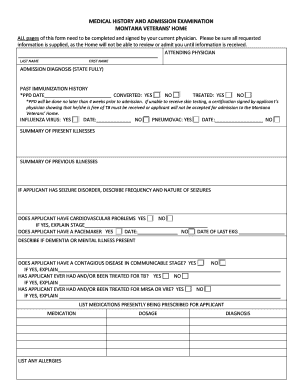
Definition and Purpose of PLI RPLI Medical Certificate for Revival
The PLI RPLI Medical Certificate for Revival is a critical document intended to facilitate the revival of lapsed Postal Life Insurance (PLI) and Rural Postal Life Insurance (RPLI) policies. This certificate serves as a formal declaration of an individual's current health status and is required by the insurance provider to assess the risk associated with reinstating a lapsed policy. The inclusion of both a Medical Leave Certificate and a Good Health Certificate within this form provides a comprehensive overview of any medical conditions or limitations, which ensures that accurate information is used in the decision-making process regarding the policy's revival.
Key Elements of the PLI RPLI Medical Certificate for Revival
This form is comprised of several crucial sections that must be accurately completed to ensure the successful revival of an insurance policy. These sections include:
- Personal Information: Captures essential personal details such as the policyholder's name, insurance policy number, and contact information.
- Medical Leave Certificate: Confirms any recent medical leave and outlines its reasons, duration, and any associated medical conditions.
- Good Health Certificate: Provides a statement verifying the policyholder's current state of health, indicating the absence of incurable or critical ailments.
- Signatures and Seals: Both the attending medical officer’s and policyholder’s signatures, alongside the official seal, authenticate the provided information.
Steps to Complete the PLI RPLI Medical Certificate for Revival
Accurate completion of the medical certificate is essential for the revival process. Follow these steps to ensure correctness:
- Personal Details: Enter the policyholder’s complete name, address, and contact information.
- Policy Information: Specify the policy number and details about its lapse.
- Medical Examination: Undergo a thorough medical examination conducted by a qualified medical officer.
- Medical Leave Section: Complete details regarding any medical leave, including reasons and duration.
- Good Health Declaration: Obtain a declaration from the medical officer confirming the policyholder's current health status.
- Signatures: Ensure both the medical officer and policyholder provide their signatures, and the form bears the official seal of the examining body.
Eligibility Criteria for PLI RPLI Medical Certificate for Revival
To qualify for policy revival using this form, policyholders must meet specific health and administrative criteria:
- The policy must be eligible for revival within the stipulated period after it lapses.
- The policyholder must not have any terminal or severe health conditions that significantly increase the insurer's risk.
- A clear history that does not indicate any fraudulent activity related to the insurance policy.


Legal Use and Implications of the PLI RPLI Medical Certificate for Revival
Using this medical certificate carries legal implications, as it forms part of the official documentation reviewed during the revival process:
- Verification of Information: The insurance provider relies on the accuracy of the details captured in the form to assess risk.
- Fraud Prevention: Providing false or misleading information can result in denial of revival and potential legal consequences.
- Contractual Obligations: This form is part of the larger contractual agreement between the insurer and policyholder, with legal obligations attached once the revival is approved.
How to Obtain the PLI RPLI Medical Certificate for Revival
Policyholders can obtain this certificate through the following channels:
- Local Postal Offices: The form is usually available at local postal facilities where PLI and RPLI services are offered.
- Insurance Provider’s Website: Download the form from the official website of the Postal Life Insurance.
- Direct Mail Request: Request the form via mail through a written application to the insurance provider.
Who Typically Uses the PLI RPLI Medical Certificate for Revival
This certificate is predominantly utilized by:
- Policyholders: Individuals whose PLI or RPLI policies have lapsed and seek to reinstate them.
- Medical Practitioners: Authorized doctors who are responsible for conducting medical evaluations and certifying the policyholder’s health status.
- Insurance Agents: PLI/RPLI agents assisting clients in the policy revival process through document verification and submission.

State-Specific Rules for the PLI RPLI Medical Certificate for Revival
While there is a uniform national guideline for issuing and accepting the medical certificate, certain state-specific considerations might apply:
- Regional Medical Standards: Differences in regional medical practices can slightly influence the medical assessment process.
- Varied Administrative Protocols: Some states may have additional administrative steps or require further documentation, depending on local regulations.
- Acceptance Criteria: Variations in interpretation and acceptance of the medical certificate based on specific state insurance laws.
These structured sections provide substantial insight into PLI RPLI Medical Certificate for Revival, ensuring policyholders have the necessary information to proceed with confidence while adhering to legal, procedural, and medical standards.