






Definition and Meaning of the Eviction Notice Template
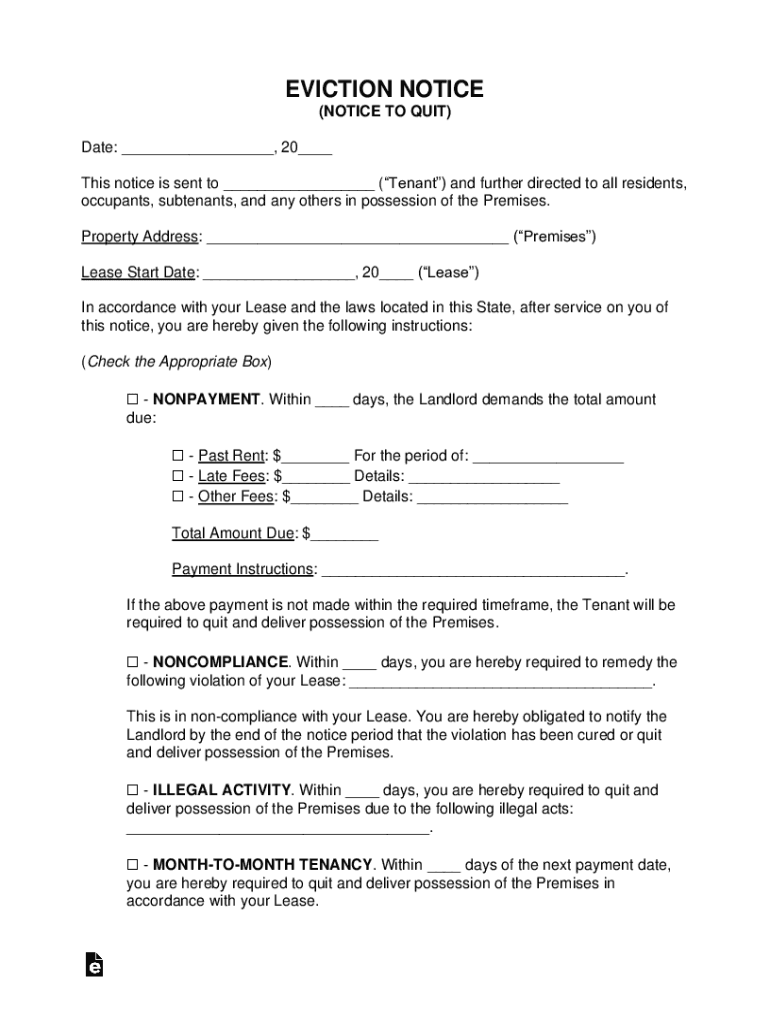
The "Eviction Notice Template - eForms" is a formal document used by landlords to inform tenants of the initiation of eviction proceedings. It serves as a written notification outlining the reasons for eviction, such as failure to pay rent, violation of lease terms, illegal activities, or the end of a tenancy period in the case of a month-to-month rental agreement. This notice is a crucial step in the eviction process, providing tenants with details on actions they must take to rectify the situation or vacate the premises. The template also ensures landlords comply with legal requirements for eviction.
Components of the Template
- Tenant Information: Includes the full name and address of the tenant(s) receiving the notice.
- Eviction Reasons: Clearly outlines the cause(s) for eviction, ensuring tenants understand the issues.
- Remedy and Vacate Instructions: Specifies actions tenants can take to avoid eviction or the deadline for vacating the property.
- Affidavit of Service: Documents the delivery method of the eviction notice, important for legal validation.
How to Use the Eviction Notice Template - eForms
To effectively use the eviction notice template, landlords should follow certain steps to ensure compliance with legal standards and proper communication with tenants.
Steps for Utilizing the Template
- Download the Template: Obtain the correct version of the eviction notice template relevant to your state laws and the specific tenant situation.
- Complete Landlord Details: Fill in your information accurately, including contact details, which facilitates open communication.
- Input Tenant’s Information: Include the full legal name of the tenant(s) and the property address to avoid any confusion.
- State the Eviction Grounds: Clearly detail why the eviction is being pursued. Refer to specific lease agreement clauses when relevant.
- Outline Tenant Options: Include information on how the tenant can avoid eviction, such as paying overdue rent or ceasing prohibited activities.
- Serve the Notice: Deliver the completed notice to the tenant through legally recognized means, such as personal delivery or certified mail, and complete the affidavit of service section.
Steps to Complete the Eviction Notice Template - eForms
Filling out the eviction notice accurately is paramount for both legal compliance and effective communication with the tenant.
Step-by-Step Instructions
- Identify the Correct Form: Make sure to use the template that corresponds with the type of eviction and the relevant state laws.
- Fill Out Basic Information: Start by entering the necessary details about the landlord and tenant, ensuring precision.
- Specify Legal Reasons: Clearly articulate the legal grounds for eviction to avoid disputes.
- Set Deadlines: Provide clear timelines for tenants to remedy issues or vacate the premises, reflecting any legal minimums.
- Review and Sign: Double-check all information for accuracy and sign the form to validate the notice.
- Affidavit of Service: Complete this section after serving the notice to document how and when it was delivered.
Examples of Execution
- Example 1: A landlord serving a nonpayment eviction notice includes the exact overdue rent sum and related late fees.
- Example 2: When evicting for lease noncompliance, explicitly cite the clause violated along with evidence such as broken policies documented through communications or observations.
Important Terms Related to the Eviction Notice Template
Understanding specific terminologies associated with the eviction notice template aids in both creating and challenging eviction notices accurately.
Key Terminology
- Lease Noncompliance: Occurs when a tenant breaches terms specified in the lease agreement, leading to potential eviction.
- Affidavit of Service: A sworn statement detailing the delivery of legal documents, crucial for validation in legal disputes.
- Remedy Period: The timeframe allowed for tenants to address breaches before an eviction becomes irreversible.
Legal Use of the Eviction Notice Template
The eviction notice template must be used within the boundaries of legal frameworks to ensure it is enforceable in a court of law.
Legal Considerations
- State Regulations: Different states have varied legal requirements regarding the eviction process, including notice periods and acceptable reasons for eviction.
- Proof of Delivery: It's vital to retain proof of how the notice was served, as courts often require this when disputes arise.
- Comprehensive Content: Failing to include all necessary components in the notice can delay or invalidate eviction proceedings.
Key Elements of the Eviction Notice Template
Several critical elements must be included in the eviction notice template to ensure it serves its intended legal function.
Essential Components
- Clear Identification: Names and addresses must be precisely stated to avoid ambiguity.
- Legally Valid Reason: Detailed and justified reasons for the eviction that stand up to legal scrutiny.
- Demand for Action: A clear statement of the actions the tenant must take to avoid eviction.
- Documentation: Spaces for documentation of service details are crucial for legal effectiveness.
State-Specific Rules for the Eviction Notice Template
Eviction laws can vary significantly across different states, affecting the use and requirements of the eviction notice template.
Common State Variations
- Notice Periods: States like California may require longer notice periods compared to states like Texas.
- Specific Grounds: Some states have particular conditions under which evictions can be processed, such as required mediation before eviction in certain scenarios.
- Document Formatting: Some states have precise formatting or language requirements, impacting how the template should be completed and utilized.