







Definition & Meaning
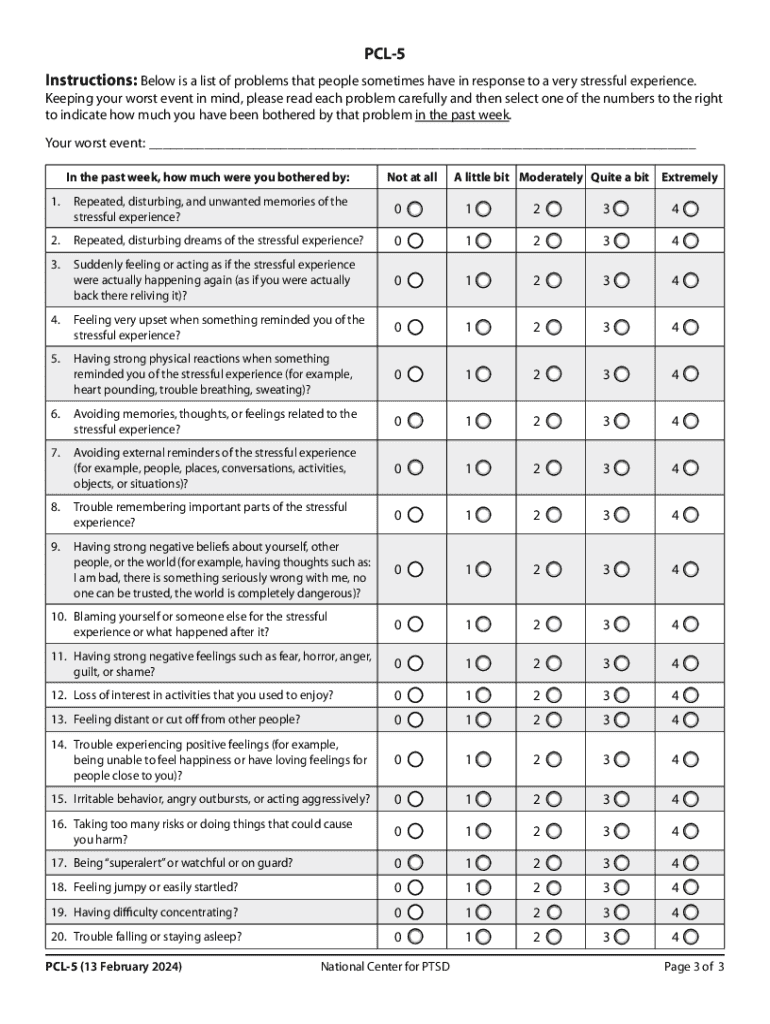
The PTSD Checklist for DSM-5 (PCL-5) is a self-assessment tool used to evaluate the symptoms of post-traumatic stress disorder (PTSD) in individuals. The checklist is aligned with the criteria outlined in the Diagnostic and Statistical Manual of Mental Disorders, Fifth Edition (DSM-5). It comprises a series of questions that address various traumatic experiences and their impact on a person's emotional state over the past week. Each item is rated on a scale from 'Not at all' to 'Extremely,' providing a structured way to assess the presence and severity of PTSD symptoms.
How to Use the PTSD Checklist for DSM-5 (PCL-5) - Fillable Form
- Preparation: Before beginning, ensure you are in a comfortable environment where you can focus.
- Access the Form: Obtain the PCL-5 in its fillable format, which allows responses to be directly entered into the document digitally.
- Read Each Question Carefully: Respond to each item based on your feelings and experiences over the past week.
- Rate Your Responses: Use the scale provided for each question to indicate the level of distress or impact.
- Review Your Responses: Once completed, review your answers for accuracy.
- Secure Your Information: Save and/or print a copy of the completed checklist for your records and any professional consultations.
Steps to Complete the PTSD Checklist for DSM-5 (PCL-5) - Fillable Form
- Access the Form: Open the fillable PDF version of the PCL-5 using a compatible viewer or editor such as DocHub.
- Enter Personal Details: If required, provide basic personal information at the beginning of the form.
- Complete Each Section: Address each question methodically, ensuring all relevant fields are filled.
- Validate Information: Confirm that each response accurately reflects your experiences.
- Finalize the Form: Save the completed form securely, ensuring no data is lost.
- Consult a Professional: If necessary, share the checklist with a healthcare provider for further assessment.
Why Use the PTSD Checklist for DSM-5 (PCL-5) - Fillable Form
- Self-Assessment: Helps individuals gain insights into their mental health by identifying PTSD symptoms.
- Professional Evaluation: Assists clinicians in diagnosing PTSD based on standardized criteria.
- Tracking Progress: Enables tracking of symptom changes over time for ongoing treatment.
- Ease of Use: The fillable format offers convenience for electronic completion and record-keeping.
- Confidentiality: Allows private assessment, with the option to share findings with a healthcare practitioner.
Key Elements of the PTSD Checklist for DSM-5 (PCL-5) - Fillable Form
- Symptom Questions: Includes specific items related to avoidance, hyperarousal, negative alterations in mood, and trauma recall.
- Rating Scale: Provides a standardized numeric scale to assess symptom severity.
- Personal Reflection: Prompts users to reflect on their recent experiences and emotional state.
- Data Security: The fillable form format supports encrypted storage to maintain confidentiality.
- Professional Interpretation: Designed to be used in conjunction with clinical evaluation for a comprehensive analysis.
Who Typically Uses the PTSD Checklist for DSM-5 (PCL-5) - Fillable Form
- Individuals Suspecting PTSD: People experiencing distressful symptoms who wish to understand their mental health status.
- Healthcare Providers: Psychologists, psychiatrists, and counselors use the checklist for diagnostic purposes.
- Veterans and Service Members: Commonly used among military personnel to assess trauma-related symptoms post-deployment.
- Researchers and Academics: Utilized in studies for gathering data on PTSD prevalence and treatment efficacy.

Legal Use of the PTSD Checklist for DSM-5 (PCL-5) - Fillable Form
- Clinical Diagnosis: Part of a formal diagnostic process when administered by qualified mental health professionals.
- Confidential Assessments: Can be used for personal self-assessment without the need to disclose personal health information.
- Ethical Standards: Must be conducted according to DSM-5 guidelines and relevant healthcare regulations to ensure valid results.
- Patient Consent: Required for using the form in clinical settings to respect patient privacy and autonomy.
Digital vs. Paper Version of the PTSD Checklist for DSM-5 (PCL-5)
- Accessibility: The digital fillable form provides ease of access and convenience of use without physical handling.
- Security: Digital versions can be encrypted for secure data storage, whereas paper forms require physical safeguards.
- Sustainability: Electronic forms reduce paper waste, aligning with eco-friendly practices.
- Efficiency: Allows for quick distribution, completion, and submission compared to traditional paper forms, streamlining workflows for both users and professionals alike.




