Definition & Purpose of the Management Training Report
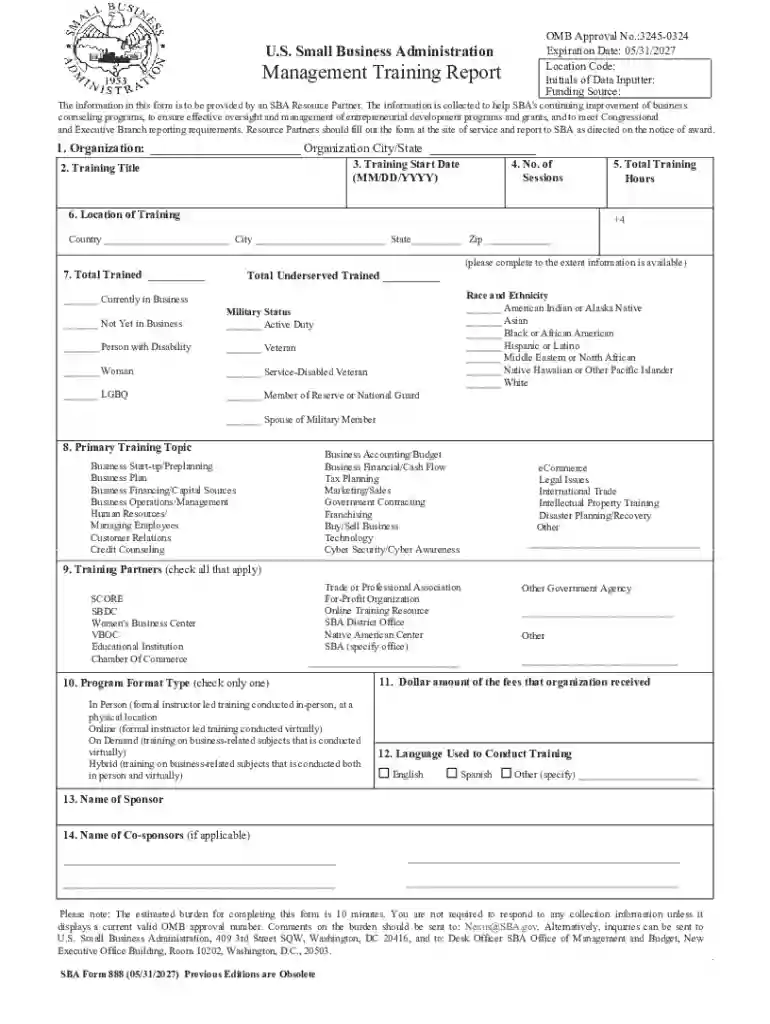
The Management Training Report is a structured document designed by the U.S. Small Business Administration (SBA) for Resource Partners. It serves to capture comprehensive data on business counseling sessions with a primary focus on management training and development initiatives. This report collects essential information around training activities, participation metrics, and demographic details to enhance entrepreneurial development programs and comply with specified reporting requirements. Utilizing this report appropriately aids in improving program outcomes and identifying patterns in training effectiveness.
Steps to Complete the Management Training Report
Filling out the Management Training Report requires careful attention to detail to ensure accurate data collection. Follow these steps to complete the form effectively:
- Gather all necessary data related to the training sessions, including dates, topics, and participant information.
- Record session details precisely, ensuring that each entry reflects the true nature of the training provided.
- Include demographic information about participants, which might involve age brackets, job roles, and other relevant categories.
- Ensure all sections of the report are completed, paying close attention to mandatory fields.
- Review the completed form for any inconsistencies or missing information before submission.
Key Elements of the Management Training Report
This report comprises several crucial components that collectively provide a holistic view of the training sessions conducted. Key elements include:
- Session Details: Comprehensive coverage of each training session, including dates, duration, and topics addressed.
- Participant Information: Details about the attendees, such as names, job titles, and contact information.
- Training Goals and Outcomes: Clear articulation of the objectives set for each session and the corresponding results observed.
- Feedback and Evaluation: Collection of participant feedback to gauge training effectiveness and areas for improvement.
- Demographics: Data on participant demographics to align training efforts with target audience profiles.
Important Terms Related to the Management Training Report
Understanding specific terms is vital for accurately compiling the report. Important terms include:
- Entrepreneurial Development Programs: Initiatives aimed at fostering business skills among entrepreneurs through structured training.
- Resource Partners: Organizations affiliated with the SBA responsible for delivering training and counseling services.
- Session Metrics: Data points such as participant numbers, session duration, and engagement levels, crucial for evaluating training impact.
- Demographics: Statistical data about participants, including age, gender, and occupation, aiding targeted training approaches.
Who Typically Uses the Management Training Report
Primarily utilized by SBA Resource Partners, this report is essential for organizations tasked with delivering business counseling and management training programs. Typical users include:

- Business Development Centers: These entities rely on the report to align their services with client needs and demonstrate program success.
- Educational Institutions: Universities and colleges offering business-related courses can use the report to track educational outcomes.
- SBA Management Officials: These officials use the report to monitor program effectiveness and allocate resources for improvement.
How to Obtain the Management Training Report
Resource Partners and other eligible entities can obtain the Management Training Report directly from the SBA’s website or through official communication channels with the administration. The process typically involves:
- Visiting the SBA’s official site and navigating to the resources section.
- Locating and downloading the report template available in various formats for ease of use.
- Ensuring the most recent version is used, which reflects current reporting standards and requirements.
Legal Use of the Management Training Report
Compliance with legal standards is critical when using this report. The Management Training Report must be employed within the following framework:
- Confidentiality Agreements: Ensuring that all participant data captured is handled in accordance with privacy laws and agreements.
- Accurate Reporting: Providing truthful and accurate information that aligns with SBA reporting requirements to avoid potential penalties or sanctions.
- Document Retention: Maintaining records of submitted reports in line with federal and state guidelines for document retention.
Examples of Using the Management Training Report
Real-world examples highlight the utility of the Management Training Report:
- A Business Development Center utilized the report to refine its training curriculum by analyzing participant feedback and demographic trends.
- An Educational Seminar Series adjusted its target audience strategies after using demographic data from the report to understand participant profiles better.
- A Startup Incubator leveraged the report to secure additional funding by demonstrating the tangible impact of its training programs on local entrepreneurship.
Required Documents
Completing the Management Training Report necessitates the collection of specific documents, including:
- Session Agendas: Detailed outlines of training sessions held.
- Participant Lists: Records of attendees present in each session.
- Evaluation Forms: Feedback forms that capture insights from participants post-training.
- Demographic Surveys: Tools used to gather demographic information of participants.
Ensuring that these documents are organized and readily accessible is critical for accurate and effective report generation.