







Definition and Meaning of the Sv-120
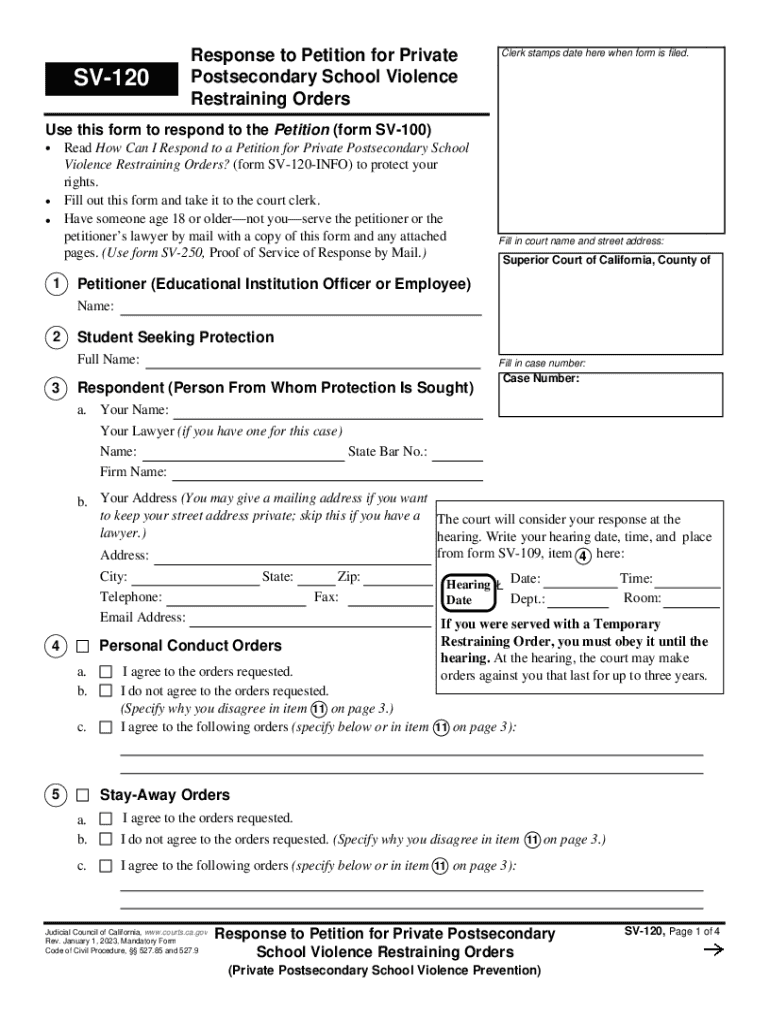
The Sv-120 form is specifically used as a response to a Petition for Private Postsecondary School Violence Restraining Orders in California. It serves as a critical document that allows individuals to contest or agree to the restraining orders sought against them. The form addresses personal conduct orders, stay-away orders, and firearm prohibitions. Respondents must provide detailed information about the involved parties, including descriptions and explanations that support their position on the petitioner's requests. This form is a vital legal tool in managing school-related conflicts and ensuring both compliance with court orders and the protection of personal rights.
How to Use the Sv-120 Form
Using the Sv-120 requires careful adherence to a structured process to ensure that all relevant information is accurately communicated. Respondents need to:
- Fill in the personal details of both the respondent and the petitioner. This includes names, addresses, and any identifying information required by the form.
- Specify the areas of disagreement or agreement with the petition. Each section related to the orders sought—such as personal conduct or stay-away orders—should be addressed with clear justifications.
- Respond to firearm possession queries, providing relevant documentation if disputing any firearm restrictions.
- Indicate the presence of any legal representation by noting the attorney's details on the form.
- Sign and date the document to affirm the truthfulness of the information provided.
How to Obtain the Sv-120 Form
The Sv-120 form can be accessed through the California Courts' official website, where it is available for download in a PDF format. Obtaining the form is a straightforward process:
- Visit the California Courts website.
- Navigate to the forms section and search for "Sv-120."
- Download and print the form for manual completion or fill it out electronically if preferred.
For individuals without internet access, the form can be picked up at local court clerks' offices, where court staff can provide further guidance on the filing process and answer any preliminary questions.
Steps to Complete the Sv-120 Form
Filling out the Sv-120 involves a series of detailed steps designed to ensure a comprehensive response:
- Begin by fully reading the accompanying instructions. This ensures that all sections are understood before starting.
- Fill in the initial case details, such as the court location and case number, to avoid any administrative errors.
- Complete all personal information fields accurately to identify the parties involved.
- Address and complete each segment related to the orders. If disagreeing with any request, include a clear and concise rationale.
- Attach any supporting documentation or evidence that substantiates the response provided.
- Review the form for accuracy and completeness, ensuring no sections are missed.
- Sign and date the form, confirming the authenticity of the information.
Why You Should Use the Sv-120
Using the Sv-120 is crucial for anyone who has been served with a petition for a restraining order related to private postsecondary school violence. This form serves several critical functions:
- Provides a platform for defense by detailing counterarguments against the petitioner's claims and requests.
- Allows respondents to comply with legal processes and protect their legal rights.
- Facilitates transparent communication with the court, highlighting areas of agreement or dispute.
- Prevents unwarranted impositions of orders such as unfair restraining measures or firearm restrictions.
Who Typically Uses the Sv-120
The Sv-120 is primarily used by individuals involved in legal disputes concerning allegations of violence or harassment within postsecondary educational institutions. This includes:
- Students who have been served with a petition and wish to contest the claims.
- School personnel accused of misconduct who need to submit their defense.
- Legal representatives preparing responses on behalf of their clients.
- Individuals seeking to provide clarity regarding multiple or inaccurate claims made by the petitioner.


Important Terms Related to Sv-120
Familiarity with key terms associated with the Sv-120 enhances comprehension and effective use:
- Petitioner: The individual requesting the court's intervention through a restraining order.
- Respondent: The party against whom the restraining order is sought.
- Restraining Order: A legal order issued to protect a person from harassment or harm.
- Personal Conduct Order: Directives pertaining to the behavior that the respondent must adhere to.
- Stay-Away Order: An instruction that requires the respondent to maintain a specified distance from the petitioner.
Key Elements of the Sv-120
Understand the core components of the Sv-120 to ensure effective completion:
- Identification Section: Requires personal details for both petitioner and respondent.
- Order Response: Space to agree or contest specific orders requested by the petitioner.
- Firearms Declaration: Commitment to adhere to state laws on firearms if applicable.
- Justification Commentary: Area to provide explanations, evidence, and supporting arguments.
- Legal Representation: Section to indicate if an attorney is involved and their pertinent information.




