
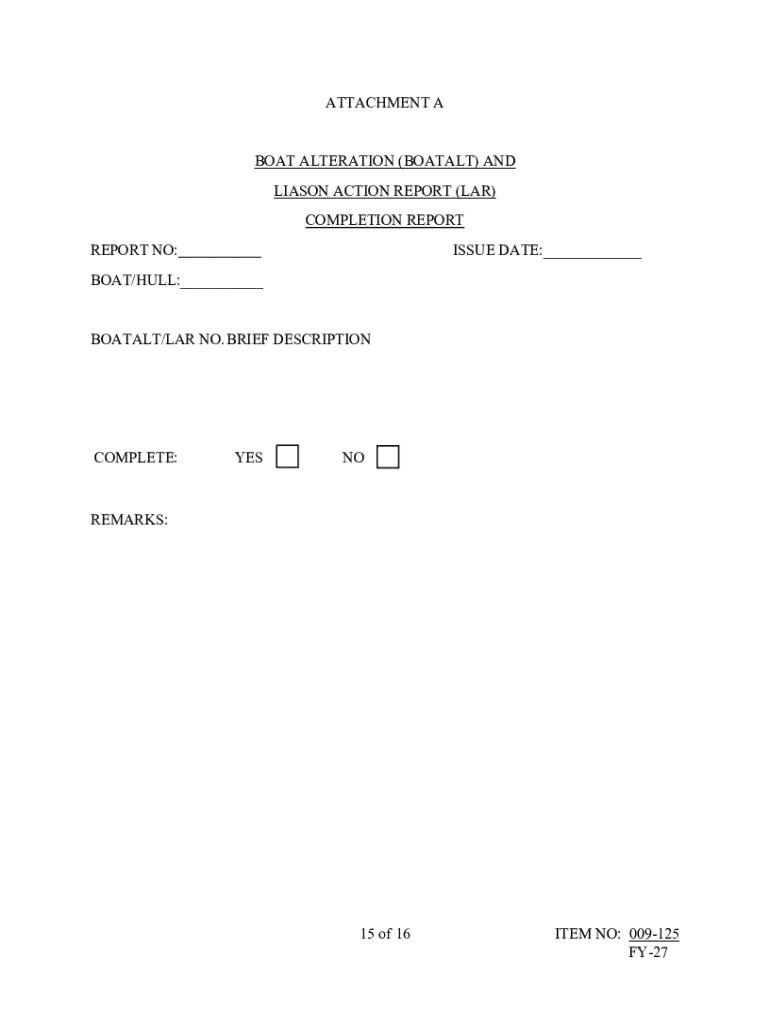







Definition and Meaning
The NAVSEA Standard Item 009-125 FY-27 is a technical and procedural guide used for the maintenance and repair of naval vessels measuring 65 feet or less. It outlines specific quality assurance measures, inspection requirements, and compliance standards. Contractors must adhere to these guidelines to ensure the integrity and safety of repair operations conducted on such vessels. The document serves as both a regulatory measure and a practical framework, ensuring that industry best practices are followed in vessel maintenance projects.
Key Aspects of the Standard
- Scope: Applies to vessels 65 feet or less.
- Quality Assurance: Requires a detailed plan to guide repair processes.
- Inspections: Must be conducted by qualified personnel.
- Reporting: Regular submission of progress and inspection reports is mandatory.
- Regulatory Compliance: Aligns with industry standards and legal regulations for maintenance activities.
How to Use the NAVSEA Standard Item 009-125 FY-27
For contractors engaged in naval vessel maintenance, the NAVSEA Standard Item 009-125 FY-27 provides a comprehensive guide to managing and executing repair tasks effectively. Contractors need to familiarize themselves with the document before beginning any project. Understanding its requirements is crucial to ensure contractual and regulatory compliance.
Implementation Steps
- Review the Document: Thoroughly read the NAVSEA Standard Item to understand all requirements.
- Develop a Quality Assurance Plan: This should include methodologies for inspections and reporting.
- Assign Qualified Personnel: Ensure all inspections and repairs are performed by certified professionals.
- Maintain a Clean Work Environment: Adhere to cleanliness standards specified in the document.
- Submit Required Reports: Provide timely and accurate progress and inspection reports to the supervising authority.
Steps to Complete the NAVSEA Standard Item 009-125 FY-27
Completing tasks outlined in the NAVSEA Standard Item 009-125 requires strict adherence to its guidelines. Below are detailed procedural steps to guide maintenance activities:
- Initiate a Quality Assurance Plan: This foundational step involves outlining specific inspection checklists, identifying materials, and setting project timelines.
- Conduct Initial Inspections: Begin with a thorough inspection of the vessel to identify all repair needs.
- Perform Repairs: Execute necessary repairs with adherence to specified procedures for tasks such as electrical installations and fastener replacements.
- Final Inspections: Conduct a final comprehensive inspection to ensure all repair work meets established standards.
- Submit Documentation: Compile and submit all required reports, including deviations from the initial plan.
Who Typically Uses the NAVSEA Standard Item 009-125 FY-27
The NAVSEA Standard Item 009-125 is primarily used by:
- Naval Contractors: Businesses engaged in maintenance and repair of naval vessels.
- Quality Assurance Inspectors: Professionals ensuring compliance with the standards outlined in the document.
- Project Managers: Individuals overseeing repair projects and ensuring adherence to timelines and standards.


Practical Context
- Typical use cases involve scheduled maintenance of small naval craft and urgent repair operations following vessel assessments.
- Detailed knowledge of this document is crucial for contract bids and project alignment with legal stipulations.
Key Elements of the NAVSEA Standard Item 009-125 FY-27
Understanding the critical elements of the NAVSEA Standard Item helps ensure comprehensive compliance. The main components include:
- Quality Assurance Requirements: Specific measures and standards that must be maintained throughout the repair process.
- Inspection Protocols: Detailed guidelines for conducting initial and follow-up inspections.
- Reporting Standards: Obligations for documenting and communicating the progress and status of repairs.
- Workmanship Criteria: Detailed specifications for materials and workmanship to be used in repairs.
Examples of Using the NAVSEA Standard Item 009-125 FY-27
Several scenarios exemplify the practical application of the NAVSEA Standard Item 009-125:
- Routine Maintenance: Applying the standard for scheduled maintenance operations to ensure vessel readiness and safety.
- Repair Projects: Following the outlined procedures during complex repairs to reduce risks and enhance effectiveness.
- Emergency Adjustments: Using the guidelines to swiftly respond to unexpected deviations during repair tasks.
Important Terms Related to NAVSEA Standard Item 009-125 FY-27
To fully grasp the NAVSEA Standard Item, it's essential to become familiar with key terminologies:
- Deviation: Any departure from pre-established procedures or standards, requiring formal documentation and approval.
- Quality Assurance Plan: A comprehensive strategy that outlines quality control measures for maintenance activities.
- Inspection Report: Documentation of findings from vessel inspections, highlighting compliance and areas needing attention.
Legal Use of the NAVSEA Standard Item 009-125 FY-27
The legal implications associated with the use of the NAVSEA Standard Item 009-125 are significant, impacting contractual obligations and regulatory compliance. Contractors must ensure:
- Adherence to Standards: Compliance with quality, safety, and procedural requirements.
- Documentation Integrity: Accurate reporting and documentation to prevent legal disputes.
- Regulatory Alignment: Fulfillment of all legal obligations related to maritime operations and repairs.




