






Definition & Meaning
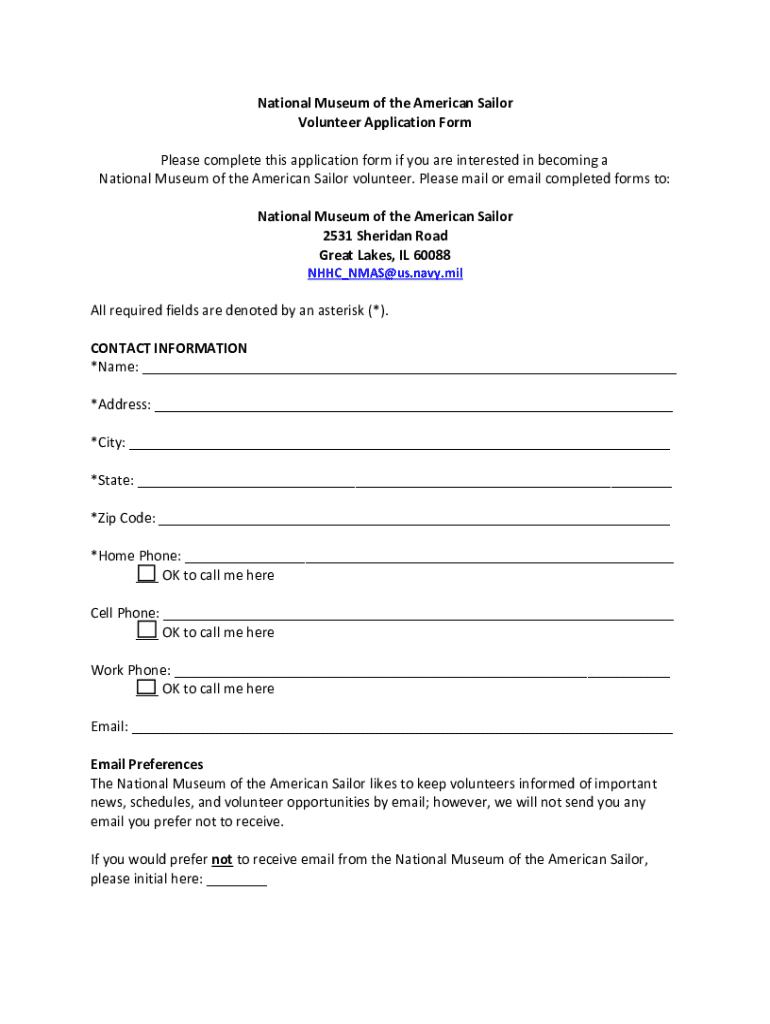
The "Acts of Service: Volunteers at the National Museum of the" form is a volunteer application document used by the National Museum of the American Sailor. It is designed to collect essential information from individuals interested in volunteering at the museum. The form captures critical data such as contact details, emergency contacts, references, areas of interest, and availability for volunteering. This form enables the museum to organize and manage its volunteer resources efficiently, ensuring that all volunteers provide essential details to facilitate their roles and involvement.
How to Use the Acts of Service: Volunteers at the National Museum of the
To use this form, prospective volunteers need to fill out the required sections with accurate and complete information. The form typically includes fields for personal details, availability, and specific areas of interest within the museum's activities. Candidates should review each section carefully, ensuring clarity and correctness, especially for sections requiring contact or emergency information. Once completed, the form can typically be submitted according to the museum's specified submission methods, which may include online submission or physical delivery.
Steps to Complete the Acts of Service: Volunteers at the National Museum of the
-
Gather Necessary Information: Before beginning the form, collect all required information, such as contact details, availability, references, and emergency contact information.
-
Fill Out Personal Information: Start by completing your personal details, including full name, address, phone number, and email address to establish your identity and contact point.
-
Provide Emergency Contacts: Enter the names, phone numbers, and relationships of individuals to be contacted in emergencies, ensuring available and reliable contacts.
-
Select Interest Areas: Specify your areas of interest for volunteering, such as visitor services, educational programs, or special events, to align your skills and preferences with the museum's needs.
-
List References: It's often important to include professional or personal references who can vouch for your character and abilities. Provide their contact information carefully.
-
Review and Submit: Carefully review all provided information for accuracy, complete any additional required fields, and follow the specified submission method to finalize your application.
Key Elements of the Acts of Service: Volunteers at the National Museum of the
- Personal Information: This section requires volunteers to provide their full name, address, telephone number, and email for proper identification and communication.
- Emergency Contact Details: Essential for ensuring volunteer safety, requiring names, relationships, and contact numbers for emergency circumstances.
- Availability: Details regarding the days and hours volunteers can commit to help coordinate schedules that benefit both the volunteers and the museum's operations.
- Interests and Skills: Volunteers can highlight specific areas of interest, which aids in aligning them with suitable roles within the museum.
- References: Input from references provides insight into the volunteer's reliability and suitability for the role, adding a layer of verification.
Examples of Using the Acts of Service: Volunteers at the National Museum of the
-
Seasonal Event Volunteers: Individuals wishing to help during peak times, like holidays and special museum events, can use this form to indicate their interest and availability.
-
Educational Program Assistants: Those interested in educational outreach can fill out this form and specify their skills and interest in interacting with school groups or conducting tours.
-
Administrative Support Workers: People with office skills can use the form to pursue behind-the-scenes roles that support museum operations, like data entry or visitor information management.
Application Process & Approval Time
-
Initial Application: Submit the form with all necessary information filled out accurately, either online or in-person according to the museum’s guidelines.
-
Review Process: After submission, the museum staff will review applications to assess suitability and fit for available volunteer roles.
-
Approval Notification: Accepted volunteers will be notified via the contact details provided; this step could take anywhere from a few days to a couple of weeks depending on the number of applicants.
-
Orientation and Training: Once approved, volunteers are typically required to undergo an orientation session where museum policies, procedures, and specific role duties are discussed.
Eligibility Criteria
-
Age Requirements: Volunteers often need to be of a certain age, commonly 18 years or older, although some programs may allow younger individuals with parental consent.
-
Skill Requirements: Certain roles may require specific skills or expertise, such as educational program facilitation, which should be indicated during the application process.
-
Commitment Levels: Some roles may require a minimum commitment in terms of hours per week or duration of service to ensure consistency and reliability.


Required Documents
-
Identity Verification: Volunteers may need to provide a government-issued ID to verify their identity and eligibility.
-
Parental Consent for Minors: If applicable, signed consent from a parent or guardian is essential for volunteering candidates under 18 years of age.
-
Reference Letters: Including letters from listed references can help support the application by verifying the volunteer's character and commitment.
Form Submission Methods
-
Online Submission: Many museums accept applications through email or a dedicated online portal, providing convenience and efficiency.
-
In-Person Submission: Volunteers may also have the option to submit applications physically at the museum's main office, which can offer an opportunity to ask questions directly.
By leveraging these guidelines, potential volunteers can effectively navigate the application process for the "Acts of Service: Volunteers at the National Museum of the" form, ensuring they have included all necessary and relevant information.