
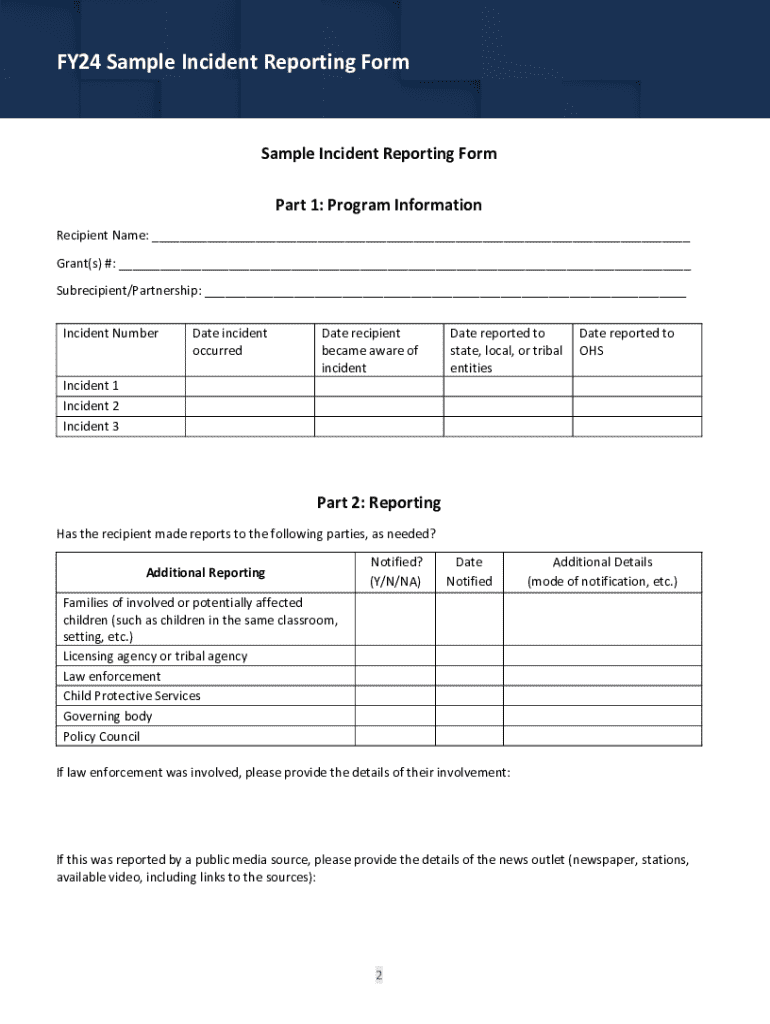







Definition & Meaning
The "FY24 Sample Incident Reporting Form FA1 Monitoring Review" is a crucial document utilized by Head Start recipients to report health and safety incidents involving children. This form serves as a standardized tool to document potential child abuse, inadequate supervision, unauthorized release, and serious child injuries. By providing guidelines on required reporting procedures, it ensures timely communication with the Office of Head Start within seven days of an incident.
Purpose and Use
- Standardization: Provides a uniform approach to document and report incidents.
- Compliance: Ensures adherence to mandatory reporting requirements set by the Office of Head Start.
- Clarity: Helps identify and describe the nature of the incident, involved parties, and any investigative actions.
- Record-keeping: Aids in maintaining a formal record of incidents for accountability and future reference.
Key Elements of the FY24 Sample Incident Reporting Form
This form includes several key sections that need detailed attention to ensure proper reporting and compliance.
Incident Description
- Details of the Incident: Description of what happened, including time, date, and location.
- Involved Parties: Information about children, staff, or bystanders involved in the incident.
Specific Incident Reporting Requirements
- Health and Safety: Detailed description of the health or safety issue.
- Immediate Actions: Steps taken immediately following the incident to ensure safety and mitigate harm.
Reporting Procedures
- Documentation Requirements: Guidelines on what specific information must be included in the report.
- Mandatory Reporting: Criteria for identifying mandatory reporting to authorities.
- Sensitive Information: Handling and protection of sensitive personal data described in the report.
How to Use the FY24 Sample Incident Reporting Form
Using the form effectively involves understanding each section and accurately capturing required information.
Step-by-Step Completion Guide
- Fill in Incident Details: Begin by accurately describing the incident, ensuring that all aspects are documented.
- List All Involved Parties: Ensure comprehensive details for all individuals involved, including their roles.
Detailed Documentation
- Narrative Description: Use clear, factual language to narrate the events.
- Action Taken: Describe both immediate and subsequent actions, specifying any emergency measures implemented.
Steps to Complete the FY24 Sample Incident Reporting Form
Completing the form involves a systematic approach to ensure no critical information is missed.
Sequential Procedure
- Collect Information: Gather all necessary details from witnesses or involved parties.
- Form Filling: Follow the form's structure and fill out each section comprehensively.
- Review and Finalize: Carefully check the completed form for accuracy and completeness.
Review Checklist
- Accuracy: Ensure all reported details are accurate and backed by evidence or witness statements.
- Updates: Note any subsequent events related to the initial incident.
Who Typically Uses the FY24 Sample Incident Reporting Form
The form is primarily designed for Head Start program personnel but may also be used by other stakeholders in the health and safety reporting process.


Typical Users
- Head Start Administrators: Responsible for oversight and compliance.
- Teachers and Caregivers: First responders to incidents within early childhood settings.
- Safety Officers: Individuals tasked with the assessment and documentation of safety incidents.
Legal Use of the FY24 Sample Incident Reporting Form
Understanding the form's legal implications is vital for ensuring compliance and protecting stakeholder rights.
Compliance and Regulatory Aspects
- Adherence to the Law: Ensures reporting practices align with state and federal laws.
- Confidentiality: Protects sensitive information, in accordance with privacy regulations.
Implications of Non-compliance
- Penalties: Potential legal consequences for failing to report an incident as required.
- Funding Risks: Non-compliance may jeopardize federal funding for Head Start programs.
Required Documents for Submission
Appropriate documentation is critical in providing a comprehensive report and ensuring it is considered valid.
Supporting Documentation
- Medical Reports: Any relevant medical evaluations or treatment records.
- Witness Statements: Documented accounts from individuals present at the scene.
Form Submission Methods (Online / Mail)
Understanding how to submit the completed form correctly is essential for timely processing.
Submission Channels
- Online Portal: Submission through authorized digital platforms for efficiency.
- Mail Services: Physical mailing options for official records and archived documentation.
Digital vs. Paper Form
- Digital Submission: Importance of utilizing electronic formats to enhance speed and trackability.
- Archival Requirements: Proper filing for audit purposes and historical records.




