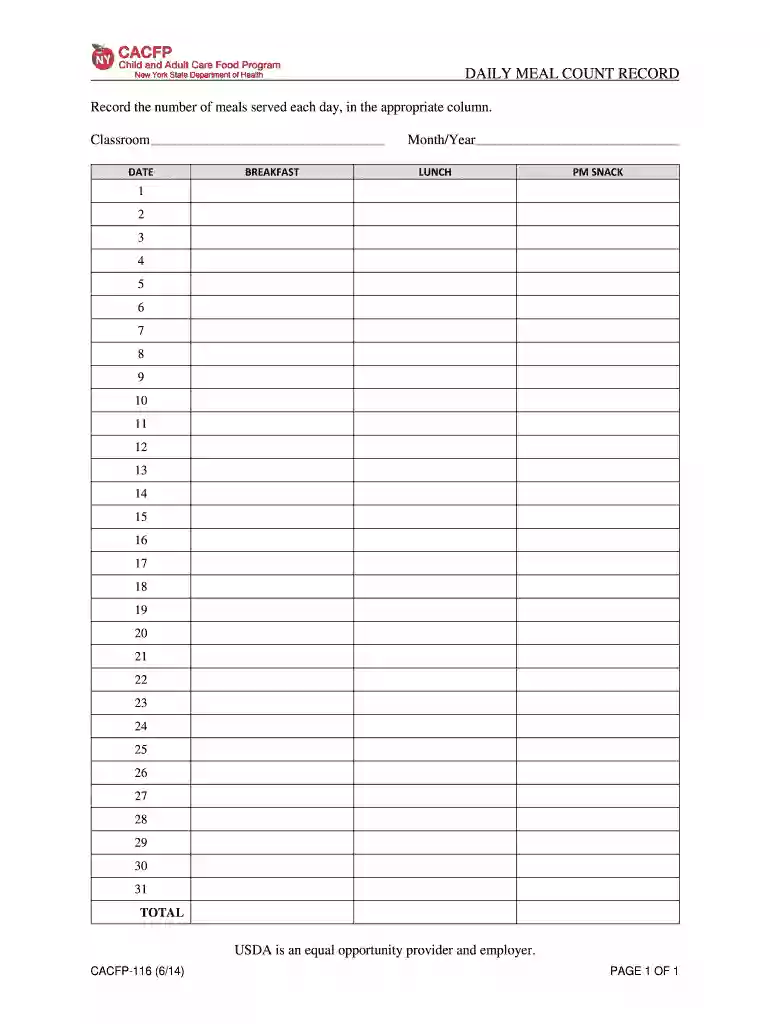
Definition and Purpose of the CACFP Daily Meal Count Form
The CACFP daily meal count form serves a critical role in the Child and Adult Care Food Program (CACFP), which is designed to provide nutritious meals to children and eligible adults in approved care settings. This form is essential for tracking the number of meals served daily, ensuring compliance with USDA guidelines on meal offerings and nutritional standards.
- Meal Tracking: The form systematically captures daily counts of meals served at different times—usually breakfast, lunch, and afternoon snacks. It helps institutions maintain accurate records for reimbursement purposes.
- Regulatory Compliance: Using this form aids facilities in adhering to USDA requirements, ensuring that they meet meal service standards and documentation needed for funding.
- Data Collection: The data collected can be invaluable for assessing meal program effectiveness and planning future menus that align with participants’ preferences and nutritional needs.
How to Complete the CACFP Daily Meal Count Form
Completing the CACFP daily meal count form requires careful attention to detail to ensure all meals are accurately recorded for each day. Here is a structured approach:
- Daily Entries: Each day of the month should have corresponding spaces for entering meal counts. Ensure that you fill these out promptly.
- Count Types: Record the number of meals served for each meal category:
- Breakfast
- Lunch
- PM Snack
- Signature Requirement: At the end of the month, a responsible individual—such as a program director or supervisor—must sign the form to certify that the data recorded is accurate.
Example of Completing a Daily Meal Count
- On Monday, if you served fifty breakfast meals, seventy lunch meals, and thirty snack meals, these numbers would be entered in their respective boxes on the form.
Key Components of the CACFP Daily Meal Count Form
The CACFP daily meal count form is designed with specific components that facilitate efficient and accurate record-keeping:
- Header Information: Includes details such as the facility name, month, year, and name of the person filling out the form.
- Date Columns: Each day of the month is laid out in a column format for easy reference.
- Meal Type Rows: Clearly defined rows for each meal type (breakfast, lunch, PM snack), helping users to quickly input the data.
Importance of Accurate Meal Counts in CACFP
Accurate meal counts are vital for several reasons, including:
- Reimbursement: Proper documentation is a prerequisite for the facility to receive federal funding and reimbursement for meals served, impacting the financial health of the program.
- Program Integrity: Inaccurate counts can lead to program audits, which might result in penalties or loss of funding.
Consequences of Errors
- Financial Implications: Errors may result in denied reimbursements, causing financial strain on care facilities.
- Potential Disqualification: Inconsistent record-keeping may lead to disqualification from the program if compliance is questioned.
Monthly Reporting and Submission Requirements
At the end of each month, the completed CACFP daily meal count form must be submitted for review. Here are the essential components involved in this process:
- Review for Accuracy: Before submission, double-check all entries for accuracy. Mistakes at this stage can lead to complications.
- Submission Methods: Depending on the policy of the administering agency, forms may need to be submitted online or via hard copy. Familiarize yourself with the appropriate method.
- Retention of Records: Facilities are required to keep the completed forms for a specified period to comply with audits or reviews.
State-Specific Requirements
It is essential to be aware that some states may have additional documentation requirements or specific submission guidelines. Verify with local regulations to ensure compliance.
Common Challenges in Completing the Form
While using the CACFP daily meal count form, users may encounter various challenges:
- Inconsistent Data Entry: Inconsistent meal counts can arise from rushing or miscommunication. Develop a systematic approach to ensure counts are captured accurately.
- Training Needs: New staff members may require training on how to fill out the form properly. Establish a training protocol to mitigate errors.
Solutions for Common Challenges
- Regular Training Sessions: Conduct regular training sessions for staff to ensure everyone is familiar with the form and its importance.
- Quality Control Checks: Implement a system of checks and balances by having a second staff member review the entries before final submission.
Alternatives to the CACFP Daily Meal Count Form
Though the CACFP daily meal count form is widely used, there may be alternatives available that could be adapted for similar purposes:
- CACFP Meal Count Worksheets: Some facilities opt to use alternative worksheets that might better fit their unique operational setups, as long as they still comply with USDA standards.
- Custom Solutions: Facilities may create custom meal count sheets that cater to their specific menu offerings or meal service schedules.
Benefits of Alternative Forms
- Flexibility: Custom forms can provide flexibility in data collection formats and methods, tailoring to the unique needs of the facility.
Best Practices for Using the CACFP Daily Meal Count Form
Adopting best practices when using the CACFP daily meal count form can simplify the meal counting process and increase accuracy.
- Establish a Routine: Set aside a specific time each day for staff to record meal counts, fostering consistency and reducing errors.
- Utilize Technology: Consider using digital solutions for data entry, which can often streamline the recording process and reduce the chance of inaccuracies inherent in manual log entries.
Examples of Effective Practices
- Daily Briefings: Conduct brief daily meetings to remind staff of the importance of accurate meal counting and to clarify any questions regarding the form.