




01. Edit your meal count record form online
Type text, add images, blackout confidential details, add comments, highlights and more.

Type text, add images, blackout confidential details, add comments, highlights and more.

Draw your signature, type it, upload its image, or use your mobile device as a signature pad.

Send it via email, link, or fax. You can also download it, export it or print it out.
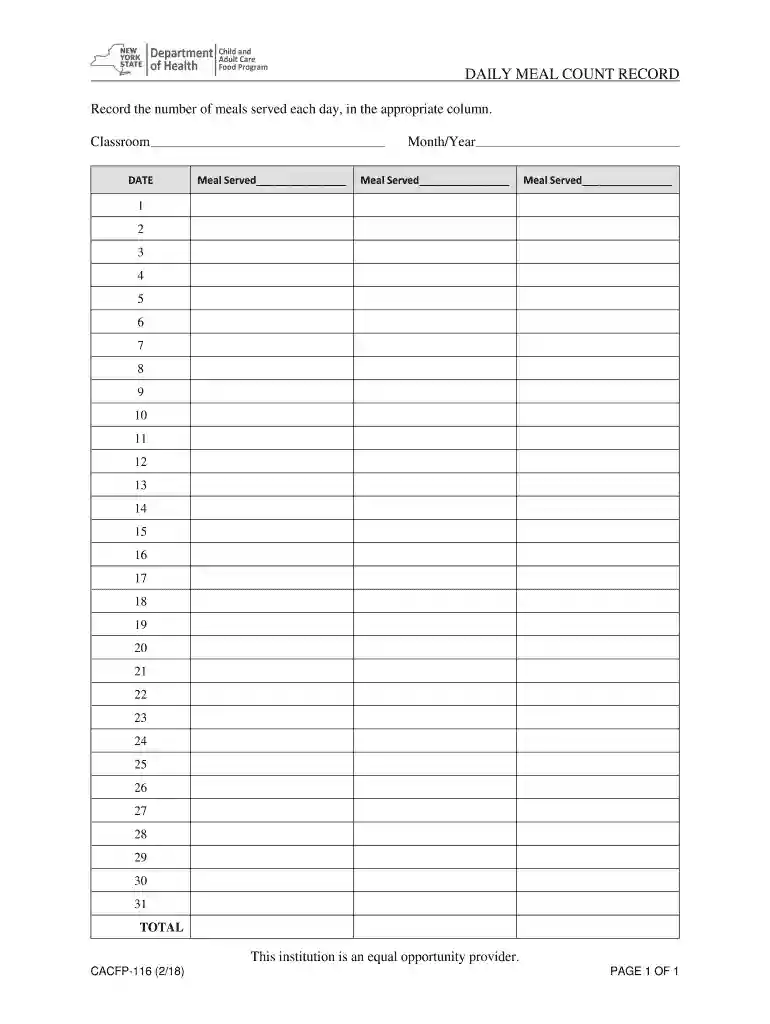
The Daily Meal Count Record is a structured form used to systematically track the number of meals served in various settings such as schools, daycares, or institutions. This form is crucial for ensuring accurate meal count documentation, which can directly affect funding and reporting requirements. By maintaining an accurate record, institutions can demonstrate compliance with nutritional programs and assist in meal planning and resource allocation.
Examples of where the Daily Meal Count Record is used include schools participating in the National School Lunch Program or childcare centers benefiting from the Child and Adult Care Food Program.
Utilizing the Daily Meal Count Record involves several straightforward steps to ensure the accurate capture of data:
Initial Setup: Before starting, ensure that the form is correctly dated for the month it will be used, with appropriate fields for each day.
Recording Daily Counts: Each day, enter the number of meals served into the corresponding day's section. It is important to include all meals, such as breakfast, lunch, and snacks, to maintain completeness.
Weekly and Monthly Totals: At the end of each week, sum the daily meal counts to provide a weekly total. Ensure these are transferred to the monthly total at the end of the month.
Examples might include a school lunchroom manager entering the meal counts immediately after meal service each day.
Completing the Daily Meal Count Record requires attention to detail and consistency:
Enter Basic Information: Fill in any required details such as the institution name, address, and reporting period.
Daily Entries: Record the number of meals served each day in the respective fields. Be precise and ensure entries are made at the same time each day to reduce errors.
Weekly and Monthly Summation: Total the meals served weekly and monthly to provide cumulative data, which is essential for reporting purposes.
Review and Verify: Before the month's end, review the entries for accuracy and completeness. Address any discrepancies or gaps promptly.
The form consists of critical sections each serving a unique purpose for comprehensive data collection:
Proper understanding and utilization of these elements ensure accurate and effective record keeping.
Accurate use of the Daily Meal Count Record provides multiple benefits:
Institutions that keep regular and accurate records experience fewer compliance issues and receive appropriate funding in a timely manner.
The form is widely used by:
These users find the form essential for maintaining transparency and meeting program requirements.


Understanding terminology associated with the form is essential:
Grasping these terms helps improve the accurate use and completion of the form.
While the form serves a universal purpose, some state-specific variations may exist:
Schools and institutions must be familiar with their state’s specific requirements to ensure full compliance. For example, some states may have specific software recommendations for digital records.
Modern practices allow for digital record-keeping, offering several advantages:
These tools enhance accuracy and efficiency by minimizing human error and allowing for real-time updates.
We've got more versions of the meal count record form form. Select the right meal count record form version from the list and start editing it straight away!
At DocHub, your data security is our priority. We follow HIPAA, SOC2, GDPR, and other standards, so you can work on your documents with confidence.
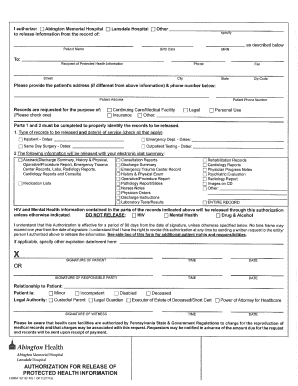
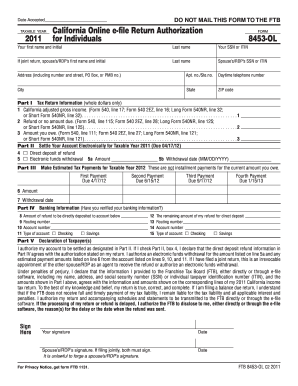
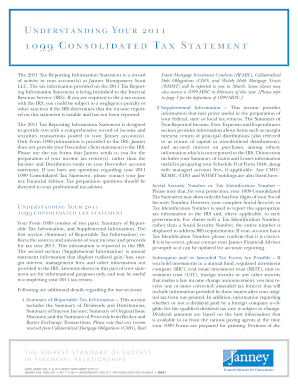


This form may be used for the daily meal count either by recording the number of meals on the clicker or by checking off each number.
The system shall provide an accurate daily record of the actual number of student meals at the point of service that were served free and at the reduced price


