







Definition and Meaning
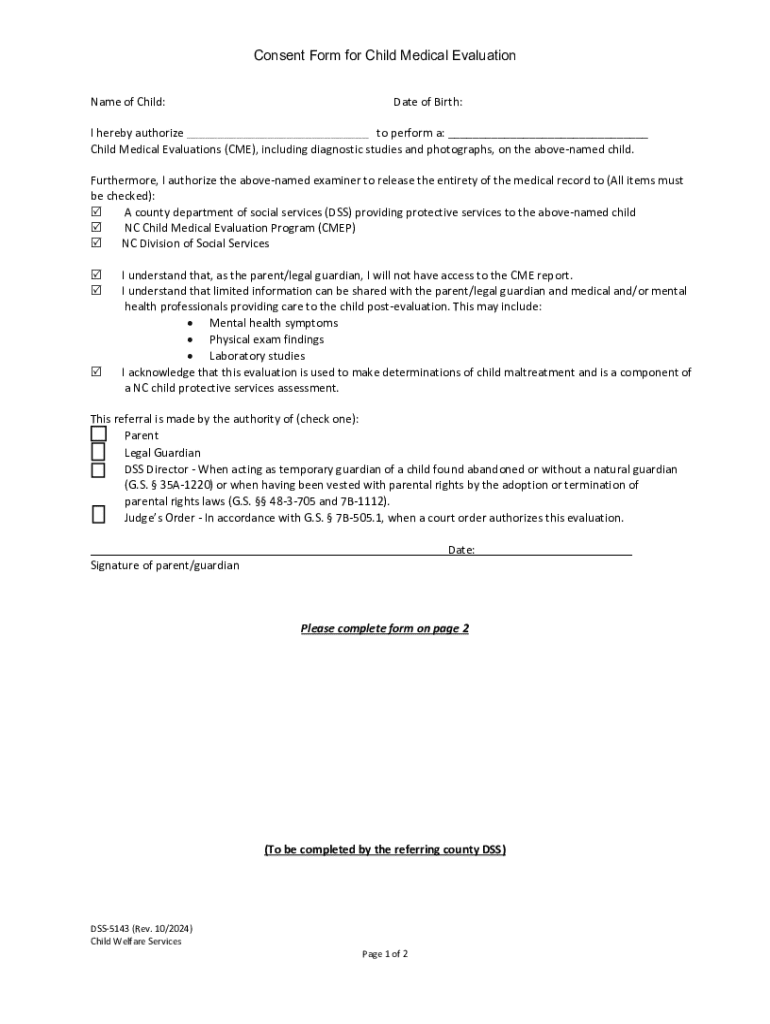
A Consent Form for Child Medical Evaluation is a critical document used to authorize medical evaluations of a minor by a designated examiner. This form permits the examiner to conduct necessary diagnostic studies and allows the sharing of the child’s medical records with relevant agencies involved in child protective services. Typically used in situations where a medical evaluation is part of a child protection case, this form sets out the framework for the evaluation and ensures that all parties understand the permissions granted and limitations imposed.
How to Use the Consent Form for Child Medical Evaluation
To effectively use the Consent Form for Child Medical Evaluation, guardians or legal representatives of the child must fully understand the form's sections and complete it accurately. The process begins with reading each part of the form to determine the scope of permissions being granted, which involves medical evaluation, diagnostic testing, and releasing information to specified agencies. Filling out the form requires entering identifying information for the child and signatures from authorized representatives. This ensures that all parties involved, including medical personnel and child services agencies, operate within the agreed parameters. It is critical to complete all required fields to avoid processing delays or legal complications.
Steps to Complete the Consent Form for Child Medical Evaluation
- Provide Child’s Information: Start with the child’s full name, date of birth, and identifying details as requested in the form.
- Examiners Details: Enter the name and credentials of the designated medical examiner responsible for the evaluation.
- Purpose of Evaluation: Clearly state the reason for the medical evaluation, referencing relevant case identifiers or agency requests.
- Authorization for Diagnostic Tests: Specify which diagnostic studies are authorized under this consent, ensuring clarity on the scope of tests to be performed.
- Release of Medical Records: Identify any agencies or individuals authorized to receive medical information, listing them precisely.
- Legal Authority Verification: Reflect the legal body or statute empowering this evaluation, often required in conjunction with child protective services.
- Signatures and Date: Obtain necessary signatures from legal guardians or county DSS representatives, with an accurate date to validate the form.
Why Use the Consent Form for Child Medical Evaluation
Utilizing a Consent Form for Child Medical Evaluation is paramount for ensuring legal compliance and protecting the rights of all parties involved in child medical evaluations. This form serves multiple purposes: authorizing necessary medical assessments, enabling the coordination of care between different agencies, and safeguarding sensitive medical information. It ensures a standard procedure is followed, reducing potential legal issues and promoting transparency among caregivers, medical professionals, and child protection agencies.
Key Elements of the Consent Form for Child Medical Evaluation
- Child's Identifying Information: Ensures all parties are evaluating the correct individual.
- Scope of Medical Evaluation: Defines the extent and purpose of the medical tests and assessments authorized.
- Information Release Authorization: Offers explicit permission for sharing confidential medical records with designated authorities.
- Legal Authority Statement: Provides a legal basis for conducting the evaluation, reinforcing the legitimacy of the process.
- Signatures: Confirms consent from authorized representatives to prevent disputes or unauthorized evaluations.
Who Typically Uses the Consent Form for Child Medical Evaluation
The primary users of the Consent Form for Child Medical Evaluation include legal guardians, child protective services, medical practitioners, and representatives from county department of social services (DSS). In cases involving suspected abuse or neglect, this form is a standard tool for facilitating necessary health assessments while adhering to established legal protocols and protections for minors.


Legal Use of the Consent Form for Child Medical Evaluation
This form holds substantial legal value as it documents comprehensive consent for medical procedures and necessary data sharing. As it is often part of legal investigations or protective actions, maintaining accuracy and completeness is essential to uphold the legal rights of minors and ensure that medical and legal professionals act in compliance with established standards. Regular training or consultation with legal experts is advised to stay current with regulations affecting the usage of such forms.
State-Specific Rules for the Consent Form for Child Medical Evaluation
While the Consent Form for Child Medical Evaluation is widely used across the United States, variations may exist based on state-specific regulations. Each state might have adjustments in terms of how consent is documented, the extent of information sharing allowed, and any unique requirements for medical evaluations. Practitioners and caregivers should consult local legal guidelines or contact child protective authorities to ensure their practices align with state requirements. This contract provides consistency and alignment with varying legal mandates while ensuring that children's welfare is prioritized.
Important Terms Related to the Consent Form for Child Medical Evaluation
- Designated Examiner: The authorized medical professional tasked with conducting the medical evaluation.
- Diagnostic Studies: Medical tests and assessments performed as part of the child's health evaluation.
- Child Protective Services (CPS): Governmental agencies responsible for responding to cases of child abuse or neglect.
- Legal Guardian: An individual recognized by law as having the responsibility and authority to make decisions about the child's welfare.
- Confidentiality: The principle ensuring that personal medical information of the child is shared only with authorized parties.




