
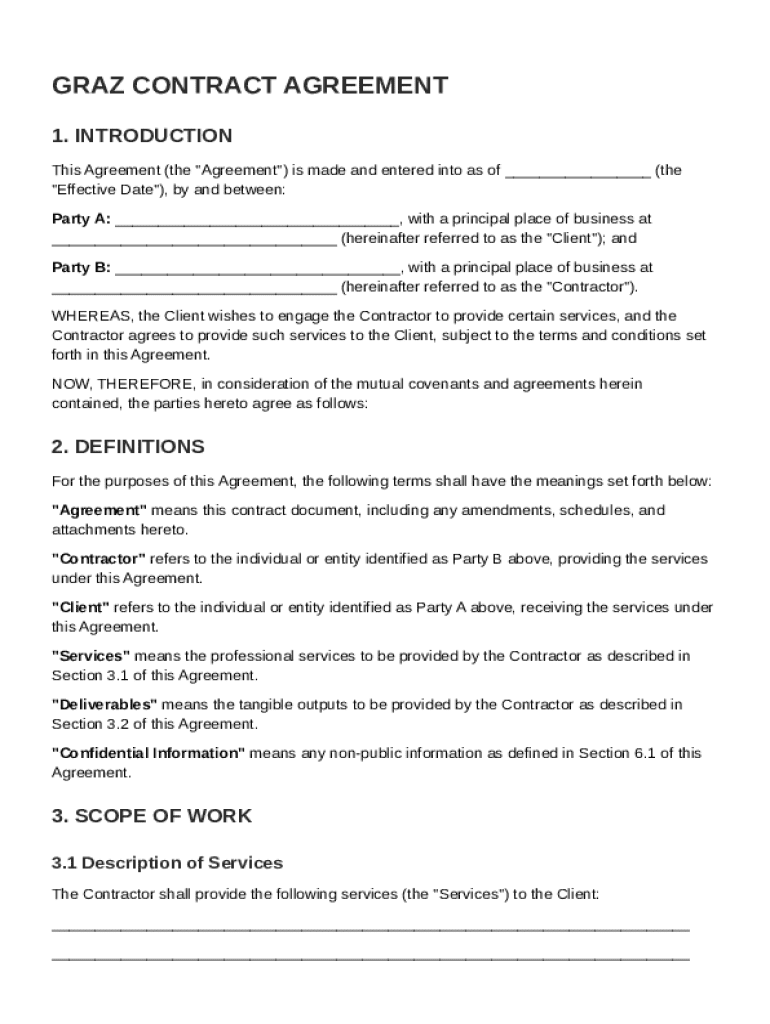







Key Elements of the Graz Contract Template
The Graz Contract Template establishes a detailed framework necessary for managing the relationship between a client and a contractor. Essential elements include:
- Definitions: Clear definitions of terms used throughout the contract are crucial for avoiding misunderstandings.
- Scope of Work: This section delineates the specific services the contractor is expected to deliver, ensuring both parties have a mutual understanding of job responsibilities.
- Compensation: Details regarding how much the contractor will be paid, the payment schedule, and any additional expenses that may be reimbursed.
- Obligations of Both Parties: Both the client’s and contractor’s duties are outlined to guarantee each party understands their responsibilities.
- Confidentiality: Provisions to protect sensitive information shared during the contract period.
These elements are fundamental to ensuring clear communication and a successful engagement between the client and the contractor.
Steps to Complete the Graz Contract Template
To complete the Graz Contract Template effectively, consider the following steps:
- Fill in Basic Information: Begin by entering the client’s and contractor’s details, such as names, addresses, and contact information.
- Define the Scope of Work: Clearly outline the tasks, deliverables, and any deadlines associated with the work being contracted.
- Specify Compensation and Payment Terms: Include clauses that explain how and when the contractor will be paid.
- Establish Obligations: Both parties should clearly note their responsibilities, ensuring a mutual understanding.
- Address Confidentiality and Security: Insert clauses related to the handling and protection of confidential information.
- Review and Revise: Thoroughly review the document for accuracy and completeness before finalizing the contract.
Legal Use of the Graz Contract Template
The Graz Contract Template is designed for legality and clarity, ensuring both parties adhere to common business standards. It is vital in formalizing agreements to avoid potential disputes. The following legal aspects are integral:
- Legally Binding Clauses: Ensure all terms comply with relevant laws to uphold the contract’s validity.
- Termination Conditions: Include criteria under which either party can terminate the agreement.
- Dispute Resolution: Establish methods for addressing potential conflicts, such as mediation or arbitration.
- Amendments: Set guidelines for making changes to the contract during its term.
These components make the template a robust tool for defining legal relations.
Who Typically Uses the Graz Contract Template
Typical users of the Graz Contract Template include:
- Freelancers and Independent Contractors: Individuals who provide services to multiple clients often use such templates for protective agreements.
- Clients Seeking Professional Services: Businesses and individuals hiring external expertise benefit from using structured agreements.
- Project Managers: Those responsible for overseeing external workforce engagements commonly use these contracts to manage expectations and deliverables.
- Legal Advisors: Consultants who draft or review contracts to ensure they meet legal standards and client requirements.

State-Specific Rules for the Graz Contract Template
When utilizing the Graz Contract Template, consider any state-specific regulations:
- Labor Laws: States might have unique labor laws affecting contractor agreements, including minimum wage and working conditions.
- Tax Regulations: Ensure compliance with state tax codes as they pertain to contracting and payroll.
- Contract Enforceability: Some states require specific language or clauses for contracts to be legally enforceable.
Consulting a legal expert familiar with state-specific laws is advisable to tailor the template legally.
Examples of Using the Graz Contract Template
Here are some practical scenarios where the Graz Contract Template proves useful:
- Technology Consultancy: Using the template to formalize agreements between tech consultants and software companies, highlighting deliverables and payment schedules.
- Creative Projects: Designers can use the contract to outline the project scope with clients seeking graphic or interior design services.
- Event Management: Contracts serving as agreement frameworks for event planners coordinating with caterers and service providers.
These applications demonstrate the template's versatility across various industries.
Important Terms Related to the Graz Contract Template
Understand these key terms when working with the Graz Contract Template:
- Effective Date: The date on which the contract becomes active.
- Force Majeure: Clause that frees both parties from fulfilling contractual obligations due to extraordinary events.
- Non-Compete: Agreement preventing the contractor from engaging in competition with the client during and after the contract.
- Indemnity: Protection against any legal claims arising from activities related to the contract.
Clarifying these terms enhances the efficacy and enforceability of the contract.
Software Compatibility with the Graz Contract Template
The Graz Contract Template has flexible software compatibility features:
- DocHub: Edit and annotate directly, offering an efficient document workflow.
- Google Workspace Integration: Seamlessly import and export between Google Drive and Gmail.
- Microsoft Office Files: Compatibility with DOC, PPT, and XLS formats ensures integration with common business applications.
- Mobile Browsers: Accessibility via mobile browsers allows on-the-go document management.
Utilizing these software features enhances productivity and simplifies document handling.




