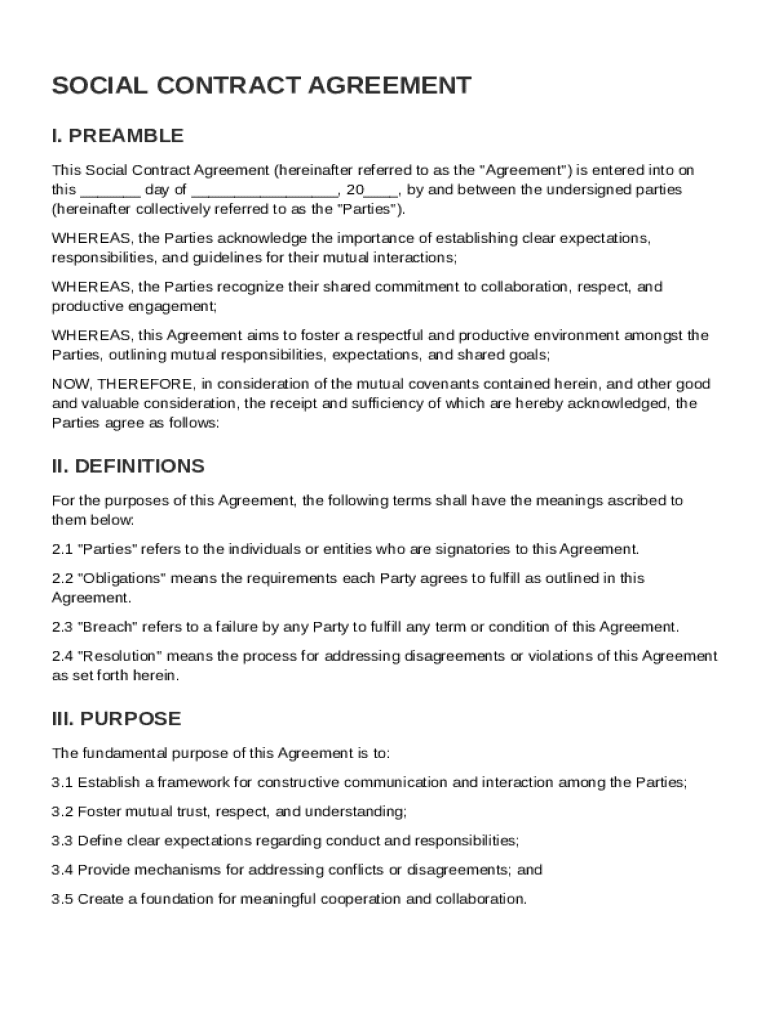







Definition and Understanding of a Social Contract Template
A Social Contract Template serves as a formal agreement involving two or more parties, outlining mutual expectations, responsibilities, and regulations. The template emphasizes the importance of specific collaboration elements such as communication, trust, and conflict resolution. Each party involved in the agreement gains a reference framework that helps maintain a productive environment. By outlining individual and shared responsibilities, rights, and privileges, this template not only prevents misunderstandings but also promotes transparency and accountability in professional or social settings. The Social Contract Template can be used in workplaces, partnerships, school projects, and communities where a shared understanding is essential.
Key Elements of the Social Contract Template
Critical components of a Social Contract Template ensure clarity and efficiency:
- Identifying Parties Involved: Clearly listing the names of the individuals or entities participating in the contract from the outset.
- Scope and Objectives: Defining the purpose and objectives of the contract comprehensively to ensure that all parties have a unified goal and understanding.
- Roles and Responsibilities: Specifying the particular duties and liabilities of each participant to ensure responsibilities are acknowledged.
- Communication Protocols: Establishing clear channels and methods for communication to avoid lapses in information sharing.
- Dispute Resolution Mechanisms: Having defined pathways for resolving conflicts helps to address issues swiftly and effectively.
- Terms of Amendment: Guidelines on how changes to the contract can be proposed and approved by all involved parties ensure flexibility when necessary.
How to Use the Social Contract Template
Using the Social Contract Template can be a straightforward process if followed correctly:
- Download and Open: Access the template through digital platforms to ensure it's compatible with editing tools like DocHub.
- Initial Review: Go through the entire content to understand what sections are pre-defined and which need customization based on the purpose.
- Information Input: Fill in specific details, such as party names, objectives, and roles.
- Customization: Modify sections to better fit the particular needs of the agreement while maintaining legal compliance.
- Review: Conduct a thorough review of all input and modifications for accuracy.
- Finalize and Sign: Once all parties have reviewed the content, finalize with signatures, which can be done electronically through platforms like DocHub.
Who Typically Uses the Social Contract Template
Social Contract Templates are useful tools across diverse groups and industries:
- Businesses and Corporations: To set collective expectations and promises among shareholders, employees, and partners.
- Educational Institutions: Schools and universities employ these to engage students and teachers in respectful and cooperative academic environments.
- Community Groups: Non-profits and volunteer organizations use them to ensure aligned goals and expectations within teams.
- Partnerships and Alliances: Between professional entities looking to create formal agreements while maintaining flexibility for growth.


Legal Use and Compliance of the Social Contract Template
This template is crafted to adhere to U.S. legal standards, ensuring that all components align with federal and state regulations. It is essential to recognize and integrate specific legal requirements pertinent to each state, particularly regarding dispute resolutions and amendments. To guarantee enforceability, all parties should explicitly understand and voluntarily accept the terms set out in the contract. Frequently, additional legal counsel is advisable to tailor the template to complex agreements or to navigate specific state laws.
Steps to Complete the Social Contract Template
Completing the Social Contract Template involves a series of methodical actions:
- Gather Necessary Information: Collect relevant details concerning each party involved and the agreement specifics.
- Populate Template Fields: Input the gathered information into the appropriate sections of the template.
- Verify Terms: Double-check all entries to ensure completeness and accuracy.
- Set Dates and Timelines: Assign clear deadlines and timeframes for the completion of specific tasks or objectives.
- Stakeholder Review: Present the document to all stakeholders for review and feedback.
- Amendments: Incorporate feedback and make necessary amendments while obtaining consensus.
- Finalization: Approve and sign the final document ensuring all parties have access and records of the agreement.
Examples of Using the Social Contract Template
Real-world applications of the Social Contract Template demonstrate its wide versatility:
- Corporate Team Projects: Used to delineate roles and track deliverables in collaborative projects, ensuring smooth teamwork.
- University Group Assignments: Establishes guidelines and responsibilities amongst students, promoting fairness in contribution.
- Community Service Agreements: Utilized by volunteer groups to align members on policies and service commitments.
- Strategic Partnerships: Formalizes the alliance's terms and objectives between multiple business entities to achieve shared goals.
Important Terms Related to the Social Contract Template
Understanding specific terminology assists in a clearer interpretation and execution of the template:
- Mutual Obligations: The responsibilities and duties each party is bound to perform.
- Breach of Contract: Occurs if any party fails to meet the terms agreed upon, leading to potential dispute resolution.
- Amendment Clause: A provision that outlines how changes to the contract can be made and accepted by all parties involved.
- Confidentiality Agreement: Ensures certain parts of the contract or information remain private and undisclosed to third parties not involved in the contract.
These key topics and strategies provide deep insights into the Social Contract Template's function and use, offering comprehensive guidance for users.