
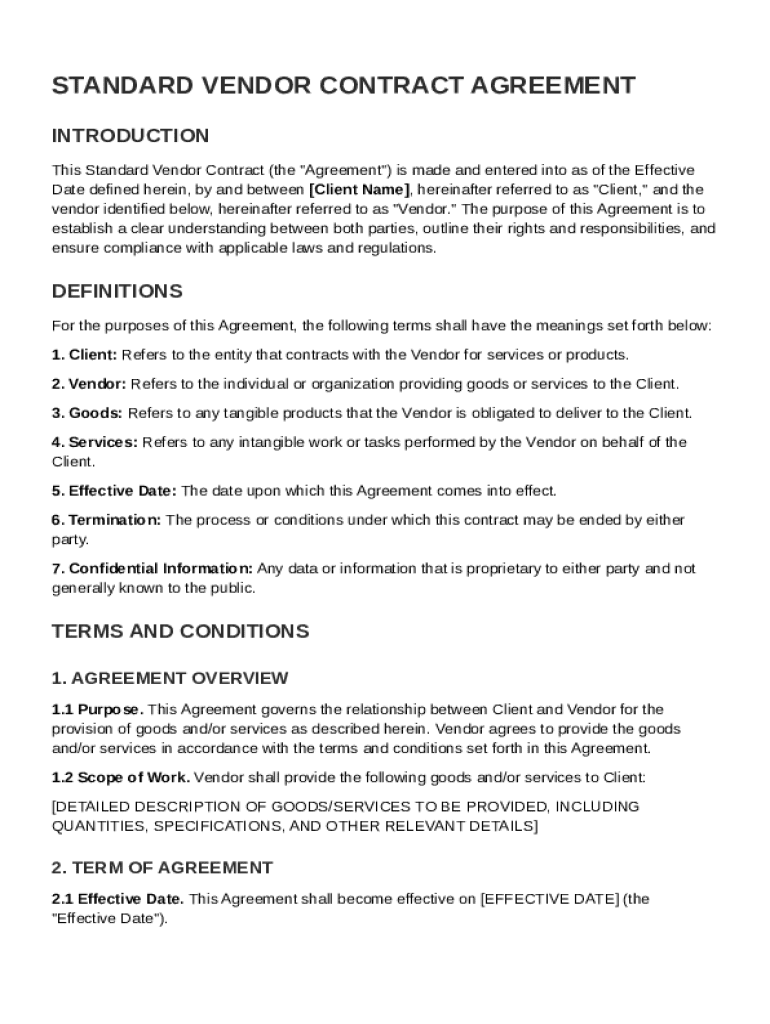







Definition and Meaning of the Standard Vendor Contract Template
A Standard Vendor Contract Template is a pivotal document that helps define the terms and conditions of a business relationship between a client and a vendor. This template serves as a pre-structured format, providing a comprehensive framework for customizing agreements based on specific vendor services. It includes clauses related to payment structures, delivery schedules, confidentiality, and termination conditions while complying with applicable laws. The use of a standardized template ensures consistency, efficiency, and legal compliance in vendor-client relationships.
Benefits of Using a Standard Template
- Clarity and Consistency: Ensures that all agreements follow a standard format.
- Time Efficiency: Reduces the time spent drafting contracts from scratch.
- Legal Assurance: Incorporates legally vetted clauses.
How to Use the Standard Vendor Contract Template
To effectively utilize a Standard Vendor Contract Template, first identify the unique needs of your business relationship and customize the template accordingly. Begin by gathering all pertinent information about the vendor and client, including names, addresses, and contact details. Modify the sections to reflect the specific terms agreed upon, such as service delivery timelines, payment terms, and responsibilities of each party.
Step-by-Step Customization Process
- Review Standard Clauses: Understand the template's sections and decide which need modifications.
- Input Specific Details: Insert relevant details about the vendor and client.
- Customize Terms: Tailor sections on payment and confidentiality to match negotiated terms.
- Add Additional Clauses: Include state-specific or industry-specific requirements if needed.
- Review and Revise: Conduct a legal review to ensure compliance and address any ambiguities.
Steps to Complete the Standard Vendor Contract Template
Completing the Standard Vendor Contract Template involves several critical steps to ensure its effectiveness and legality. Start with a thorough understanding of the document and then proceed through the following detailed process:
- Information Gathering: Collect all necessary information such as business names, services offered, and pricing.
- Template Selection: Choose a template that best matches the service type.
- Clause Customization: Edit and adjust standard clauses to fit the specific deal.
- Legal Review: Employ a legal expert to examine the document for compliance and enforceability.
- Finalization: Conduct a final review with all parties to confirm satisfaction with the contract details.
- Execution: Sign and date the contract, making copies for all involved parties.
Important Considerations
- Detail Orientation: Pay attention to small details; they can impact legal enforceability.
- Legal Resources: Utilize professional legal advice for complex clauses or negotiations.
Who Typically Uses the Standard Vendor Contract Template
The Standard Vendor Contract Template is widely utilized by various entities to streamline contractual obligations and protect their interests. It is particularly beneficial for:
- Small Businesses: For establishing agreements with suppliers or service providers.
- Corporations: To standardize vendor contracts across different departments.
- Freelancers and Consultants: To formalize service agreements with clients.


Industry-Specific Applications
- Manufacturing: Tailored for product delivery and supply chain agreements.
- IT Services: Customizable for software development and maintenance contracts.
- Retail: Used for vendor-supplier relationships within the supply chain.
Key Elements of the Standard Vendor Contract Template
Understanding the core components of the Standard Vendor Contract Template is essential for drafting a thorough and precise agreement. The template typically includes the following key elements:
- Identification: Names and details of both the vendor and client.
- Scope of Work: Outline of services or goods to be provided.
- Payment Terms: Details of payment methods, schedules, and amounts.
- Delivery Schedules: Timelines for deliverables.
- Confidentiality Clause: Ensures the protection of sensitive business information.
- Termination Conditions: Procedures for contract termination under specified circumstances.
Additional Provisions
- Dispute Resolution: Methods for resolving disputes, such as arbitration or mediation.
- Liability Limitations: Defines the extent of accountability for each party.
- Compliance Requirements: Obligations to comply with relevant laws and regulations.
Legal Use of the Standard Vendor Contract Template
The Standard Vendor Contract Template serves several legal functions, offering protection and compliance in vendor-client agreements. Proper use of the template helps ensure:
- Enforceability: Contains necessary legal language to uphold terms in court.
- Regulatory Compliance: Meets industry-specific and federal regulations.
- Reduced Litigation Risk: Clear terms minimize misunderstandings leading to disputes.
Legal Review and Assurance
- Expert Inputs: Always have a legal professional review for specific wording and legal applicability.
- Document Updates: Keep templates updated with changing laws and regulations to maintain compliance and relevance.
Important Terms Related to the Standard Vendor Contract Template
The use of a Standard Vendor Contract Template involves several crucial legal and business terms that dictate the contract's implementation and execution. Understanding these terms is critical for effective contract management:
- Force Majeure: Clauses that excuse parties from liability due to uncontrollable events.
- Indemnity: Approvisions detailing compensation for losses or damages.
- Non-compete: Restrictions preventing the vendor from engaging in business with competitors for a specified time.
Frequently Used Legal Terminology
- Amendments: Procedures for modifying contract terms.
- Breach: Failure to fulfill the agreed contractual obligations.
- Confidentiality: Protection of sensitive information shared during the relationship.
Examples of Using the Standard Vendor Contract Template
The Standard Vendor Contract Template is applied across various industries and scenarios to establish clear business relationships. Here are examples of how it is utilized:
- IT Services Agreement: A tech firm uses the template to stipulate service levels and support for software installations.
- Marketing Vendor Contracts: Ad agencies employ the template to outline scopes of work, expected deliverables, and payment schedules for campaigns.
Real-World Scenarios
- Event Planning: Contracts outlining vendor roles in catering, entertainment, and logistics for corporate events.
- Construction: Used to manage the procurement of materials between builders and suppliers.
These examples highlight the versatility and effectiveness of the Standard Vendor Contract Template in securing well-defined and legally sound business arrangements. The template's strategic implementation not only protects business interests but also enhances operational efficacy across various sectors.




