01. Edit your form online
Type text, add images, blackout confidential details, add comments, highlights and more.

Type text, add images, blackout confidential details, add comments, highlights and more.

Draw your signature, type it, upload its image, or use your mobile device as a signature pad.

Send it via email, link, or fax. You can also download it, export it or print it out.
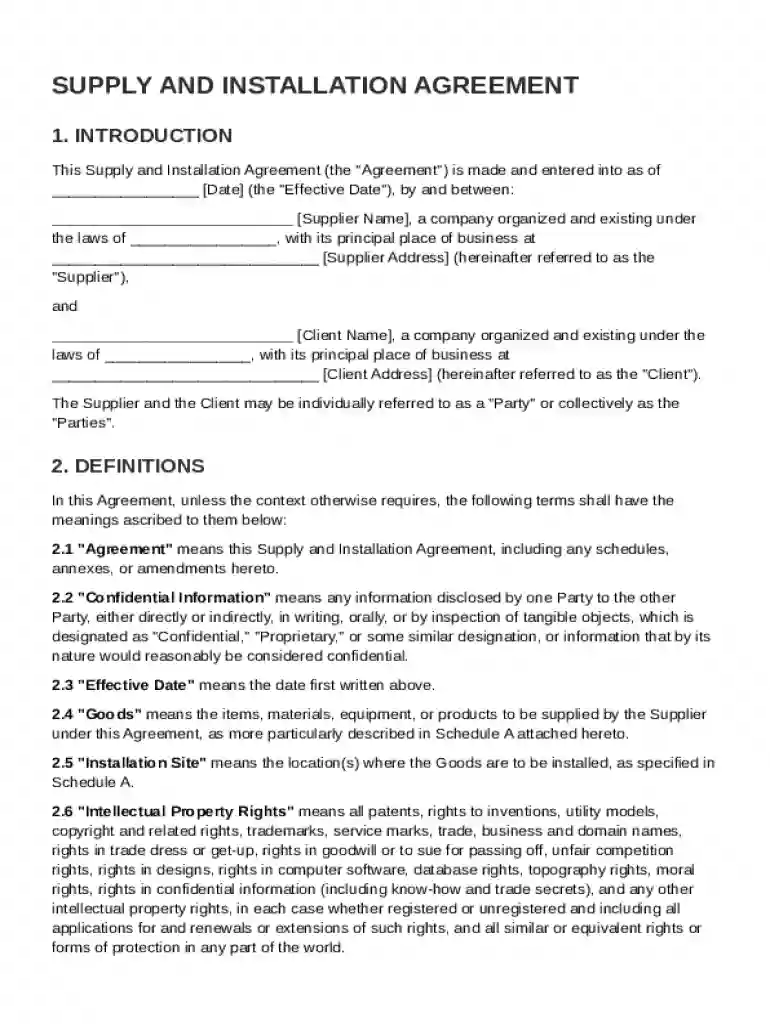
The Supply and Installation Agreement Template is a legally-binding document that defines the contractual relationship between a supplier and a client. It outlines the provision and installation of goods and related services. This agreement typically includes detailed terms that specify the responsibilities of each party involved, thereby ensuring a clear understanding of the obligations, expectations, and protections afforded to both the supplier and the client.
The document includes crucial sections like definitions of key terms, scope of work, payment schedules, liability clauses, and more. By detailing these elements, the agreement provides a framework for how the business relationship will function, allowing both parties to manage risks and expectations effectively. For instance, the agreement will define what constitutes a successful installation service, thereby helping to prevent disputes regarding service quality.
The scope of work section details the services and deliverables that the supplier agrees to provide. It is vital that this section is specific, clearly delineating the products to be supplied, the installation services to be performed, and any other ancillary tasks expected of the supplier. This portion of the agreement ensures that both parties have a mutual understanding of the tasks to be completed, which helps prevent potential misunderstandings or conflicts.
This section outlines the financial aspects of the agreement, including the total cost, payment schedule, and terms of payment. Whether the payment is upfront, in installments, or upon completion, the payment terms should be laid out with precision. Additionally, this section can address late fees or penalties for delayed payments, offering financial protection for the supplier.
Warranties and guarantees provide security to the client, ensuring the quality and reliability of the goods and services delivered. This section specifies the duration and terms of any warranties offered by the supplier, including conditions under which they apply. Warranties can cover materials, workmanship, or performance standards, and they typically ensure that defects or issues arising within a certain period will be addressed at no additional cost.
Review the Template: Begin by thoroughly reviewing the template to understand each section and determine any modifications needed to fit specific circumstances.
Customizing Parties and Details: Insert the names and contact information of both the supplier and the client. Customizing the scope of work, payment terms, and timelines are critical to reflect the particular arrangement.
Define Responsibilities and Risks: Clearly define the responsibilities of each party, including any risks associated with the supply and installation process. This involves agreeing on who will be responsible for potential damages or delays.
Finalize and Sign: Before finalizing, both parties should review the document carefully. It is advisable to have legal counsel review the document to ensure it’s legally sound and reflective of the agreed terms. Once both parties agree, signatures should be obtained.
The agreement serves as a legally enforceable document that can be used as evidence in court should disputes arise between the supplier and the client. To ensure its enforceability, the agreement must include certain legal provisions such as dispute resolution mechanisms and governing law clauses, aligning with applicable U.S. laws. These provisions determine how disagreements are to be resolved, often recommending arbitration or mediation before litigation.
This template is commonly used by businesses in industries such as construction, manufacturing, and technology services, where the supply and installation of products are integral to operations. Both small and large businesses can benefit from this agreement, especially those engaging in transactions involving substantial investments in equipment or proprietary technology installations.

Businesses that rely on precision in the delivery and setting up of products—such as construction firms installing structural components or IT companies setting up hardware systems—will find this agreement invaluable. Manufacturing companies delivering machinery, or energy providers installing wind or solar equipment, can also benefit from the clarity this template offers in delineating responsibilities and expectations.
While the fundamental elements of the agreement remain consistent, some states have specific regulations regarding contracts that might necessitate adjustments to the agreement. For instance, some states may require additional disclosures or set limitations on warranty periods. It's crucial to check federal and state-specific requirements during the drafting and customization of the agreement to ensure that local laws are respected and incorporated into the contract terms.
By specifying roles, responsibilities, and expectations, this template facilitates transparent, efficient, and effective execution of supply and installation projects across various industries.
At DocHub, your data security is our priority. We follow HIPAA, SOC2, GDPR, and other standards, so you can work on your documents with confidence.