







Definition & Meaning
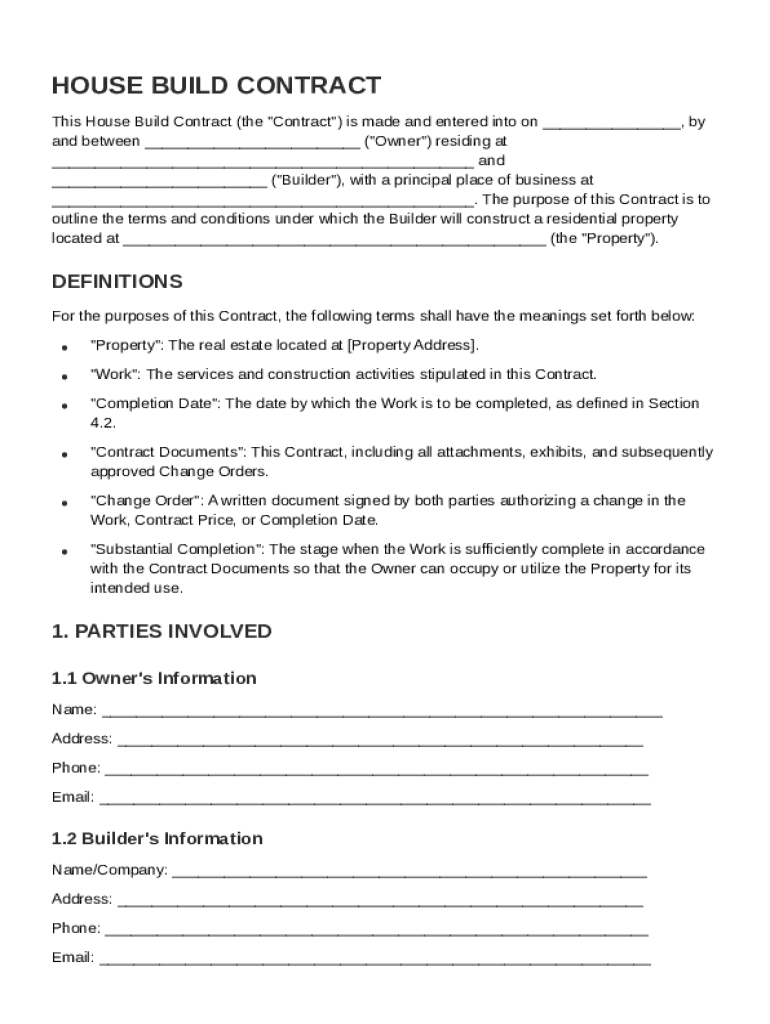
The House Build Contract Template outlines a formal agreement between an owner and a builder for the construction of a residential property. This document specifies the obligations, rights, and responsibilities of both parties involved in the project. It encompasses definitions crucial to the contract, such as who constitutes the "Owner" and "Builder," as well as the project location, scale, and specifications. This structure ensures clarity and prevents misunderstandings or disputes throughout the construction process.
Key Elements of the House Build Contract Template
A comprehensive House Build Contract Template includes several essential sections that detail different aspects of the construction project:
- Scope of Work: Clearly identifies tasks to be completed by the builder, including detailed descriptions of the construction methods, materials, and standards to be used.
- Contract Price and Payment Schedule: Outlines the total cost of the project and establishes a timeline for payments. This section often details milestone-based payments contingent upon the completion of specific work stages.
- Timeline and Deadlines: Sets the project commencement and completion dates, as well as any interim deadlines for different phases of construction.
- Change Orders: Describes procedures for making modifications to the original scope of work, including needed approvals and any cost implications.
- Permits and Approvals: Details the necessary legal and regulatory permits that must be acquired prior to starting construction.
Legal Use of the House Build Contract Template
The House Build Contract Template serves as a legally binding document that protects both parties' interests by clearly outlining the agreement's terms. When this contract is properly executed, it helps prevent legal disputes by establishing clear protocols for resolution processes, which could include mediation and arbitration. It is important that both parties understand and agree to these terms, solidifying the document's enforceability under United States law.
Steps to Complete the House Build Contract Template
Completing a House Build Contract Template involves several steps to ensure all pertinent information is accurately recorded:
- Identify Parties: Clearly specify the full legal names of the owner and builder, along with their respective contact details.
- Define Scope and Specifications: Include a comprehensive description of the work to be performed, including architectural designs, specifications, and material lists.
- Establish Pricing and Payment Terms: Agree upon the total contract price, detailing specific payment terms, methods, and any conditions for installment disbursements.
- Set Timelines: Define the start and completion dates, alongside any interim deadlines that must be adhered to during the construction process.
- Include Change Orders: Specify the procedures for making changes to the contract, noting approval processes and any financial adjustments resulting from these modifications.
- Obtain Signatures: Ensure all parties read the document thoroughly and sign it, agreeing to the stipulated terms and conditions.
Important Terms related to House Build Contract Template
Several specialized terms are frequently encountered in a House Build Contract:
- Substantial Completion: When a project is complete enough to be functional for its intended use, perhaps while minor tasks remain unfinished.
- Force Majeure: Refers to unforeseen events beyond the control of either party, like natural disasters, which may delay the project.
- Lien Waiver: A document the builder can request after payment affirming that no liens will be applied to the property for unpaid work or materials under the contract.
- Liquidated Damages: Pre-determined damages agreed upon in the contract that specify the amount payable for unexcused delays or failures to meet deadlines.
- Punch List: A list of items to be corrected or completed before project completion.
Software Compatibility
The House Build Contract Template is typically available in formats compatible with a variety of software systems, ensuring ease of access and modification. Most templates can be used with PDF readers, DOC editing programs like Microsoft Word, and even spreadsheet software if calculations are incorporated. This flexibility allows users to customize the document as necessary, accommodating different project specifics and altering requirements with precision.
Business Entity Types
Different business entities may utilize the House Build Contract Template depending on their operational structures and project scale:
- Limited Liability Companies (LLCs): Often engage in residential construction projects, benefiting from the dispute resolution clauses and clear scope of work delineations.
- Corporations: Use this template for larger-scale construction projects that require detailed milestone payments and complex scheduling.
- Partnerships: May find the template valuable for outlining responsibilities among partners involved in the construction process.
State-Specific Rules for the House Build Contract Template
While the general structure of the House Build Contract Template remains consistent across the U.S., there may be state-specific rules or requirements. These variations often pertain to:
- Licensing and Permits: Diverse requirements exist concerning the legal documentation necessary to commence building, which can vary by state and sometimes by locality.
- Lien Waiver Regulations: States may have different laws governing the use and enforcement of lien waivers in construction contracts.
- Dispute Resolution: Some states mandate specific processes for resolving contractual disputes, impacting how these sections should be drafted.
Examples of Using the House Build Contract Template
Using this template, both seasoned builders and first-time residential developers can protect their interests and enforce clear communication. For example, a homeowner building a custom home will value the contract’s detailed timeline and pricing information, fostering transparency with the builder. Conversely, builders constructing multiple housing units simultaneously might rely on standard provisions regarding change orders and subcontractor responsibilities to maintain consistent project management across all jobs.




