







Definition & Meaning
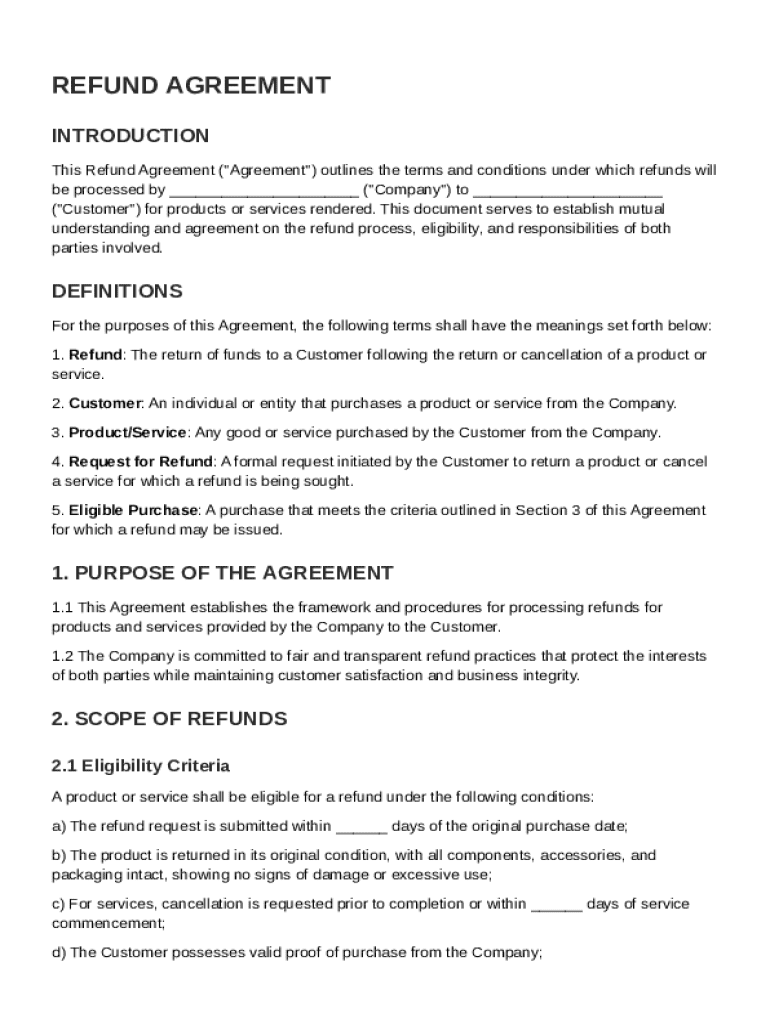
A refund contract template is a structured document used to establish the terms and conditions for processing refunds between a company and its customers. It clearly defines the key elements such as eligibility criteria, the procedures for submitting a refund request, and the responsibilities of both parties involved. This type of contract is crucial for businesses that offer refunds as part of their service or product offering, ensuring clear communication and setting expectations to avoid disputes.
Key Elements of the Refund Contract Template
The refund contract template is composed of several essential components that ensure clarity and fairness. These typically include:
- Eligibility Criteria: Specific conditions under which a refund is applicable, including time frames and product/service conditions.
- Request Process: Detailed procedures on how customers can request a refund, including necessary documentation and preferred communication channels.
- Responsibilities: Outlines the duties and obligations of both the company and the customer in the refund process.
- Dispute Resolution: Provisions for resolving disagreements and the methods for arbitration or legal recourse if necessary.
- Jurisdiction: Specifies the legal framework and jurisdiction under which the contract is governed.
These elements ensure that both parties are informed and agree to the terms, minimizing conflict and ensuring compliance with legal standards.
How to Use the Refund Contract Template
Using a refund contract template involves several key steps to adapt it to your specific needs. The process generally includes:
- Customizing Terms: Tailor the template to include specific stipulations relevant to your business and industry requirements.
- Reviewing with Legal Counsel: Engage with a legal professional to review the terms and ensure compliance with local laws and regulations.
- Implementing the Template: Integrate the finalized contract into your sales and service processes, ensuring all relevant teams are aware and trained.
- Communicating to Customers: Make the refund policy clear and accessible to customers via your website, product packaging, or service agreements.
- Monitoring Compliance: Regularly review and update the contract to reflect changes in business operations or legal requirements.
This structured approach helps in maintaining transparency and ensuring the effectiveness of the refund process.
Steps to Complete the Refund Contract Template
Completing the refund contract template involves detailed steps to ensure accuracy and comprehensive coverage:
- Identify Key Terms: Clearly define the terms, including eligible products or services, and any exemptions.
- Outline the Process: Provide a step-by-step guide on how customers can file a refund, including any forms or evidence required.
- Set Timeframes: Establish deadlines for refund requests and processing, aligning with business capabilities.
- Assign Responsibilities: Clearly delineate who is responsible for what actions within your organization.
- Specify Communication Channels: Indicate how communications should be carried out, such as via email or an online form.
- Include Legal Clauses: Add necessary legal language to protect your business and ensure the contract is enforceable.
Completing these steps helps in creating a comprehensive and effective refund contract that serves both business and customer interests.
Important Terms Related to Refund Contract Template
Understanding the terminology within a refund contract template is vital. Some important terms include:
- Refund Period: The maximum timeframe in which a customer can request a refund after purchase.
- Non-Refundable Items: Specifies items or conditions under which refunds are not permissible.
- Processing Fees: Any fees deducted from the refund amount for handling and processing.
- Customer Obligations: Responsibilities of the customer, such as providing proof of purchase or product return.
- Force Majeure: Situations beyond control that may impact the ability to process refunds.
These terms structure the contract and provide clarity and protection for both parties involved.
Legal Use of the Refund Contract Template
The legal use of a refund contract template involves ensuring that the terms comply with federal and state regulations and safeguard both the business and customer rights. This includes:
- Compliance with Consumer Protection Laws: Aligning with regulations like the Magnuson-Moss Warranty Act or state consumer protection acts.
- Transparency Requirements: Clearly stating terms and conditions to avoid allegations of misleading practices.
- Documentation Obligations: Maintaining records of all refund requests and agreements as per statutory requirements.
Ensuring legal compliance not only protects the business from potential litigation but also builds customer trust and loyalty.
Examples of Using the Refund Contract Template
Using a refund contract template can vary based on industry and product/service type. Examples include:
- Retail Goods: A retailer might use the template to offer 30-day refunds for undamaged goods.
- Digital Services: A subscription service could set terms for refunds on a pro-rata basis for service cancellations.
- Events/Tickets: An event organizer might have a no-refund policy but offer exchanges or credits for future events.
Each scenario would adapt the template to meet specific transactional needs and customer expectations.
State-Specific Rules for the Refund Contract Template
Different states in the U.S. have unique requirements pertaining to refund contracts. Key state-specific considerations include:
- California Law: Requires clear refund policies for transactions over $100.
- New York Regulations: Mandates visible postings of refund policies at the point of sale.
- Florida Rules: Allows sellers to determine their policies but must honor any advertised cancellation and refund policy.
Businesses must adapt their refund contract templates to comply with these varied state laws to ensure legality and consumer satisfaction.
Digital vs. Paper Version
Deciding between a digital or paper version of a refund contract comes with considerations:
- Digital Benefits: Offers easier distribution, real-time updates, and electronic signatures for efficiency.
- Paper Advantages: Useful for consumers less familiar with digital transactions or in jurisdictions requiring physical signatures.
- Hybrid Approach: Many businesses opt for both, offering digital contracts for ease and paper copies for in-person transactions.
This dual approach ensures flexibility and accessibility for a broader range of customers.




