
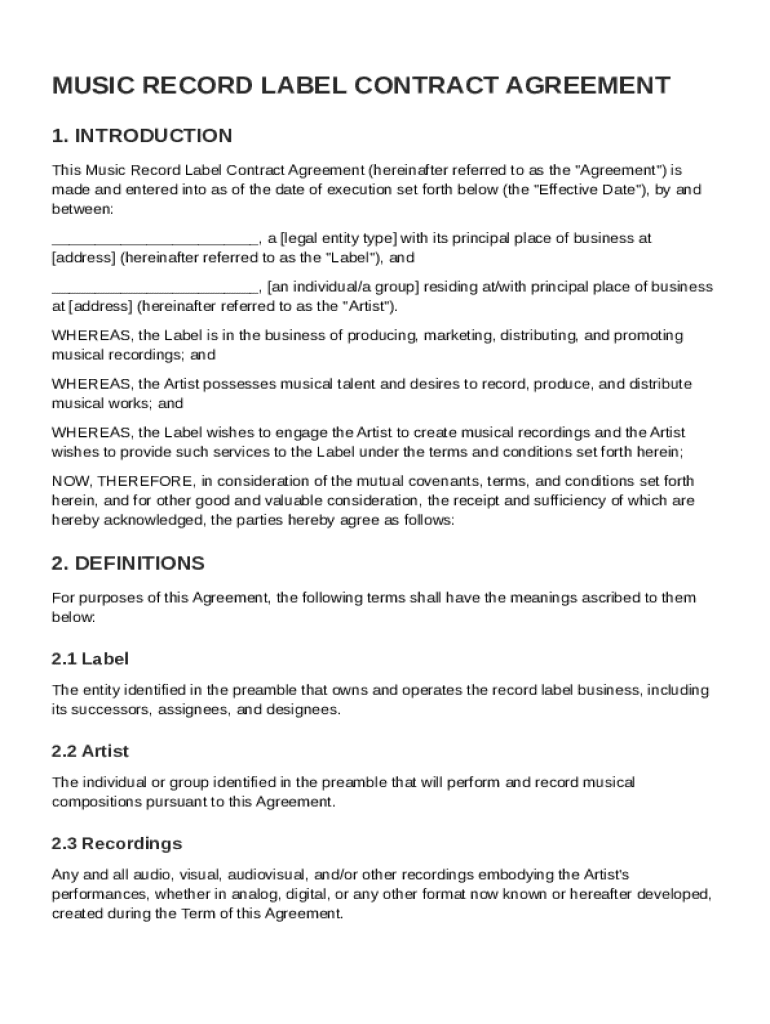







Definition & Meaning
The Music Record Label Contract Template is a legal document designed to outline the partnership between a record label and an artist. It sets forth the terms of their collaboration in the creation, production, and distribution of musical recordings. This contract ensures that both parties understand their rights and obligations, thereby reducing the risk of disputes. The template helps artists and record labels establish a structured approach to their professional relationship, involving the negotiation of financial terms, creative control, and marketing responsibilities.
Key Elements of the Music Record Label Contract Template
A comprehensive Music Record Label Contract Template usually includes several key sections. These sections detail vital components of the agreement:
- Rights and Obligations: Specifies the duties of each party and the expectations regarding deliverables.
- Compensation Structure: Details how artists will be paid, including aspects like royalties, advances, and other financial incentives.
- Creative Control: Defines who has the final say in creative decisions and how disputes over artistic direction are resolved.
- Marketing and Promotion: Outlines the marketing efforts the record label will undertake to promote an artist’s work.
- Termination Conditions: Describes how and under which conditions the contract can be terminated by either party.
Each of these elements plays a crucial role in ensuring that the contract serves both parties fairly and transparently.
How to Use the Music Record Label Contract Template
Using the Music Record Label Contract Template involves several critical steps to ensure that it meets the specific needs of both the record label and the artist:
- Review: Begin by thoroughly reviewing the template to understand its structure and how it applies to your circumstances.
- Customize: Modify the template to fit the specific terms agreed upon by both parties. This may involve adjusting financial terms, creative rights, and the scope of marketing efforts.
- Consult Legal Professionals: It is advisable to have legal experts review the customized contract to ensure compliance with state laws and safeguarding of interests.
- Final Agreement: Both parties should carefully review the final contract, make any necessary adjustments, and mutually consent to the terms.
- Signatures: Once satisfied with the terms, both the record label and the artist should sign the agreement to formalize the partnership.
Legal Use of the Music Record Label Contract Template
The Music Record Label Contract Template must comply with legal standards to be enforceable. It adheres to state-specific regulations, ensuring that the contract remains valid within the legal framework of the United States. Here are some legal considerations to bear in mind:
- Compliance with ESIGN Act: Ensures electronic signatures used within the template are legally binding.
- Missed Payments or Breach: Specifies legal recourse in the event of breaches such as late payments or delivery failures.
- Dispute Resolution: Includes clauses for arbitration or mediation in case of disagreements.
By addressing these legal elements, the contract secures the interests of both the record label and the artist.
Who Typically Uses the Music Record Label Contract Template
The Music Record Label Contract Template is primarily utilized by:
- Independent and Major Record Labels: For formalizing agreements with new or existing artists.
- Individual Artists or Bands: Seeking formal agreements with record labels to ensure proper handling of their work.
- Artist Management Companies: To negotiate terms and conditions on behalf of artists they represent.
- Entertainment Lawyers: Advising clients on legal matters related to record label contracts.
Each of these entities uses the template to create transparent, enforceable agreements that facilitate successful collaboration.


State-Specific Rules for the Music Record Label Contract Template
Contracts in the music industry must consider state-specific rules as these can vary significantly across different jurisdictions. Essential considerations include:
- General Contract Legislation: Variations in state laws regarding enforceability and legal requirements.
- Royalty Regulations: Differences in how states regulate royalty calculations and payment schedules.
- Employee and Independent Contractor Distinctions: State laws may have distinct stipulations that define the working relationship between artists and record labels differently.
Understanding these specific rules helps tailor the contract to ensure full legal compliance within the relevant state.
Steps to Complete the Music Record Label Contract Template
To effectively complete the Music Record Label Contract Template, follow these detailed steps:
- Gather Necessary Information: Collect all relevant details from both parties, including contact information, financial terms, and specific obligations.
- Draft Preliminary Agreement: Fill out the template with the initial terms agreed upon during negotiations.
- Seek Feedback: Share the preliminary draft with all parties involved to ensure alignment and make any necessary adjustments.
- Legal Review: Consult legal experts to verify that the contract adheres to applicable laws.
- Finalize Document: Integrate feedback and make final edits to the contract.
- Execution and Signing: Both parties should carefully sign the document to make it legally binding.
By following this structured process, users can effectively tailor the contract to suit their specific needs.
Examples of Using the Music Record Label Contract Template
Consider scenarios where a record label engages with independent artists for album production or where a major label secures a new talent for an extended contract. In these cases:
- Indie Labels: Might use the template to align expectations with independent musicians for grassroots marketing campaigns and creative freedom.
- Major Labels: Could use the template to outline more rigid control over artistic direction and comprehensive promotional strategies for mass-market appeal.
These examples demonstrate how the contract can adapt to different contexts, offering flexibility while preserving essential terms.




