
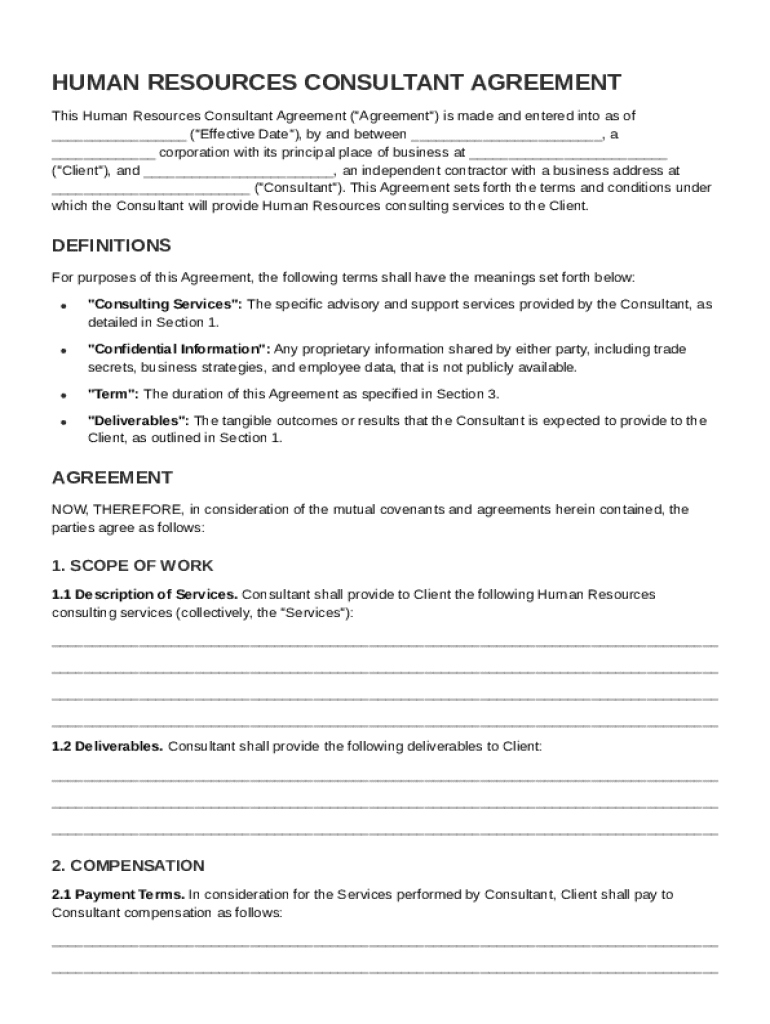







Definition & Structure of the Human Resources Consultant Contract Template
The Human Resources Consultant Contract Template is a legally binding agreement outlining the relationship between a corporation (Client) and an independent contractor (Consultant) providing HR consulting services. It delineates critical aspects such as the scope of work, compensation terms, confidentiality agreements, and relationship dynamics.
The document typically contains several essential sections:
- Parties Involved: Names and contact details of the Consultant and Client.
- Scope of Services: Detailed description of consulting services to be delivered.
- Compensation and Payment Terms: Outline of payment structure, including fees, schedule, and method of payment.
- Duration of Agreement: Time frame for the consultancy services, including start and end dates.
- Confidentiality Obligations: Rules about handling and protecting sensitive information.
- Termination Clause: Terms under which the contract may be terminated by either party.
- Governing Law: Specifies the legal jurisdiction applicable to the contract.
This template is vital as it helps establish clear expectations and protects both parties legally, reducing potential disputes and ensuring a smooth professional relationship.
How to Use the Human Resources Consultant Contract Template
To utilize the Human Resources Consultant Contract Template effectively, follow these steps:
- Download the Template: Access the template through trusted sources like DocHub, ensuring you have the latest version compatible with your needs.
- Customize the Template: Tailor the document to fit the specific requirements and circumstances of your agreement. This includes filling in the details of the parties involved, describing the scope of services, and specifying compensation terms.
- Add Legal Clauses: Ensure that necessary legal clauses, such as confidentiality obligations and indemnification, are clearly defined and included.
- Review and Revise: Have both the Consultant and Client review the contract for any discrepancies or additional needs. It might be beneficial to involve legal counsel to ensure compliance with relevant laws.
- Obtain Signatures: Once both parties agree to the terms, they should sign the document. Use platforms like DocHub to facilitate legally binding electronic signatures.
- Store Safely: Keep a copy of the signed contract in a secure, easily accessible location for future reference.
Using the template in this manner ensures a comprehensive, tailored, and legally sound agreement.
Key Elements of the Human Resources Consultant Contract Template
Several key components form the backbone of an effective Human Resources Consultant Contract Template:
- Definitions: Clearly define important terms and roles within the contract to avoid ambiguities.
- Scope of Work: Detailed explanation of the HR consulting services, including specific tasks and deliverables expected from the Consultant.
- Compensation Details: Precise information about the Consultant's fee, payment schedule, and the process for handling expenses and invoices.
- Confidentiality and Data Protection: Procedures and obligations for handling confidential information to protect against unauthorized use or disclosure.
- Relationship Nature: Clearly establish the independent contractor status to delineate responsibilities and tax obligations.
- Indemnification Clauses: Commitments by both parties to hold each other harmless in case of certain legal disputes arising from the agreement.
- Dispute Resolution and Governing Law: Methods for resolving disputes, whether through mediation, arbitration, or litigation, including applicable state law.
These elements ensure all bases are covered for maintaining a transparent and professional consulting engagement.
Important Terms Related to Human Resources Consultant Contract Template
Understanding critical terms within the Human Resources Consultant Contract Template is crucial:
- Independent Contractor: A self-employed individual providing services for a company under terms specified in the agreement, responsible for their taxes and benefits.
- Confidential Information: Data or knowledge explicitly recognized as sensitive, proprietary, or private, requiring protection from unauthorized use.
- Scope of Services: The range and limitations of tasks and responsibilities assigned to the Consultant under the contract.
- Indemnity: An obligation of one party to compensate the other for any loss or damage that results from the contractual relationship.
- Non-Disclosure Agreement (NDA): A contract stating specific information cannot be disclosed without proper authorization.
Grasping these terms aids in comprehending the contract's scope and obligations.
Legal Use of the Human Resources Consultant Contract Template
The legal application of the Human Resources Consultant Contract Template involves using it to establish enforceable agreements between a Consultant and a Client. Key legal considerations include:
- Federal and State Compliance: Ensure the contract aligns with both federal regulations and specific state laws where the agreement is executed.
- Worker Classification: Proper classification of the Consultant as an independent contractor to avoid misclassification penalties under the IRS guidelines.
- Data Protection Laws: Abide by national data protection and privacy regulations, such as GDPR or CCPA, if applicable.
- Contractual Capacity: Verify that both parties have the legal capacity to enter into an agreement, which may include age, mental competence, and authority for companies.
Adhering to these legal guidelines prevents potential legal challenges and maintains contractual integrity.
Steps to Complete the Human Resources Consultant Contract Template
Completing the Human Resources Consultant Contract Template involves several methodical steps:
- Gather Required Information: Collect detailed information about the parties involved, including contact details, project timeline, and payment terms.
- Define the Scope of Work: Specify clearly the services to be rendered, expected outcomes, and deliverables.
- Set Payment Terms: Determine the fee structure, payment timelines, and any contingencies for non-payment or late payments.
- Establish Legal Obligations: Address confidentiality, indemnity, and termination clauses to protect both parties' interests.
- Ensure Mutual Understanding: Discuss the contract provisions in detail with the other party to prevent misinterpretation.
- Review and Execute: Have the contract reviewed by legal counsel if necessary, then proceed to signatures either digitally or in person.
These steps ensure that the contract is comprehensive, mutually beneficial, and legally binding.
Who Typically Uses the Human Resources Consultant Contract Template
A variety of professionals and organizations utilize the Human Resources Consultant Contract Template:
- Small to Medium Enterprises (SMEs): These businesses often require external HR expertise without hiring full-time staff.
- Large Corporations: Sometimes corporations engage specialized consultants for strategic HR initiatives or projects.
- HR Consulting Firms: Firms that provide outsourced HR services frequently use this template to formalize engagements with clients.
- Independent HR Consultants: Freelancers in HR who work with various companies on specific projects or ongoing support use this template to outline agreements.
Understanding the potential users of the template highlights its relevance across different business contexts and sectors.

State-Specific Rules for the Human Resources Consultant Contract Template
Each U.S. state may have specific rules that could affect the Human Resources Consultant Contract Template. Considerations include:
- Employment Laws: States like California and Massachusetts have distinct rules regarding independent contractor classification that should be considered.
- Tax Obligations: Understanding state-specific tax laws is essential for payment and reporting requirements in the contract.
- Non-Compete Clauses: Some states limit non-compete agreements, impacting confidentiality and employment terms.
- Dispute Resolution Jurisdictions: Choice of law clauses should align with state regulations regarding contract disputes.
Adapting the contract to meet state-specific rules ensures legal compliance and reduces potential legal risks.




