







Definition & Meaning
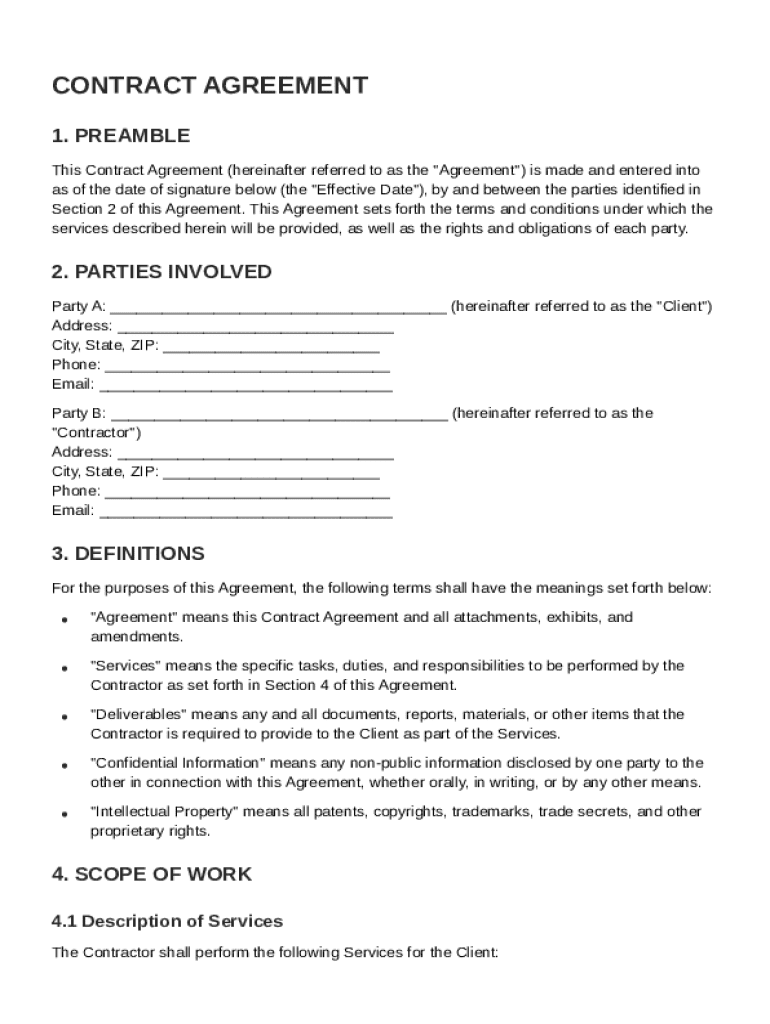
The Clean Contract Template is a structured document designed to streamline the contracting process between a client and a contractor. It delineates the terms and conditions governing the provision of specified services, ensuring clarity and alignment between both parties. This template includes sections like the parties involved, scope of work, payment terms, confidentiality, and liability limitations. Designed as a comprehensive guide, it protects the interests of both the client and the contractor by clearly outlining each party's rights and responsibilities.
Key Sections Included
- Parties Involved: Identifies the client and the contractor involved in the agreement.
- Scope of Work: Details the specific services that the contractor will provide.
- Payment Terms: Outlines the financial arrangements and payment schedules.
- Confidentiality: Ensures that sensitive information remains protected.
- Liability Limitations: Defines the extent of each party’s liabilities.
How to Use the Clean Contract Template
Using the Clean Contract Template efficiently involves understanding its structure and the context of your agreement. Begin by reviewing each section to ensure it meets your specific needs. Tailor the language to suit the nature of the services provided and the unique dynamics of the client-contractor relationship.
- Review Each Section Thoroughly: Make sure each section accurately reflects the agreed terms and conditions.
- Custom Tailoring: Modify sections such as payment terms or the scope of work to align with your project specifics.
- Consult with Legal Experts: Engaging a legal professional to review the template can enhance its robustness.
- Signatures: Ensure both parties sign the template where indicated to validate it legally.
Best Practices
- Ensure clarity in all terms to prevent misunderstandings.
- Use precise language to define responsibilities.
- Keep a signed copy for your records.
Steps to Complete the Clean Contract Template
Completing the Clean Contract Template involves a systematic approach to ensure all necessary information is included and accurately reflected. Follow these steps for a comprehensive completion:
- Collect Required Information: Gather details such as the names and addresses of the involved parties and the specifics of the services provided.
- Fill in Each Section Carefully: Use clear, concise language to fill each segment of the template.
- Review Contractual Terms: Double-check sections such as payment terms, timelines, and deliverables for accuracy and completeness.
- Include Signature Fields: Designate areas for both the client and contractor to sign, as well as the date of agreement.
- Finalize the Document: After all sections are complete and both parties have signed, the contract is ready for execution.
Key Elements of the Clean Contract Template
The Clean Contract Template comprises key elements designed to facilitate a clear and effective agreement between parties. Each element plays a crucial role in ensuring all aspects of the contract are covered:
- Client and Contractor Information: Establishes the identities of the contracting parties.
- Work Description: Provides a detailed outline of the work expected from the contractor.
- Compensation Structure: Details how the contractor will be paid, including rates and schedules.
- Termination Clause: Specifies conditions under which the contract can be terminated by either party.
- Amendments Procedures: Outlines how changes to the contract will be handled.
Who Typically Uses the Clean Contract Template
This template is commonly used by various professionals and businesses needing a structured and legally sound agreement framework. It is ideal for:


Primary Users
- Freelancers and Independent Contractors: To provide services to businesses.
- Small Business Owners: Engaging outside contractors or consultants.
- Corporate Legal Departments: Standardizing contracts across different departments.
Secondary Users
- Project Managers: Overseeing contractor contributions to large projects.
- Human Resources Departments: Engaging temporary or freelance workers for specific tasks.
Legal Use of the Clean Contract Template
The Clean Contract Template ensures compliance with legal standards while offering flexibility for specific needs. It adheres to principles set forth by the ESIGN Act, making the document legally binding once signed by both parties. This protects all contractual elements under the scope of U.S. law, mitigating potential disputes and ensuring that all agreed-upon terms offer mutual benefit and protection.
Essential Legal Considerations
- Ensure all sections comply with state-specific contract laws.
- Verify valid and informed consent through signatures.
- Review intellectual property clauses to protect proprietary information.
Examples of Using the Clean Contract Template
Examples of the Clean Contract Template in practice illustrate its functionality and adaptability across scenarios. Here are some practical applications:
Scenario Examples
- Marketing Consultant Agreement: A small business uses the template to engage a marketing consultant to develop a promotional strategy.
- IT Services Contract: An IT contractor employs the template to outline services provided to a corporate client, including system upgrades and maintenance.
- Creative Services Engagement: A design firm utilizes the template for an agreement with a freelance graphic designer on a new project.
Each example showcases the template’s versatility in clarifying expectations and responsibilities across different business relationships.
State-Specific Rules for the Clean Contract Template
While the Clean Contract Template serves a broad audience, it is important to tailor certain sections to comply with state regulations in the U.S. These can impact areas such as payment terms and liability clauses.
Important State-Level Considerations
- Governing Law Clauses: Specify which state’s laws will oversee the interpretation and enforcement of the contract terms.
- Regulatory Compliance: Ensure compliance with state-specific employment laws, especially regarding payment and nondisclosure agreements.
Working within state parameters helps prevent jurisdictional disputes and maintains the contract’s integrity across different legal environments.




