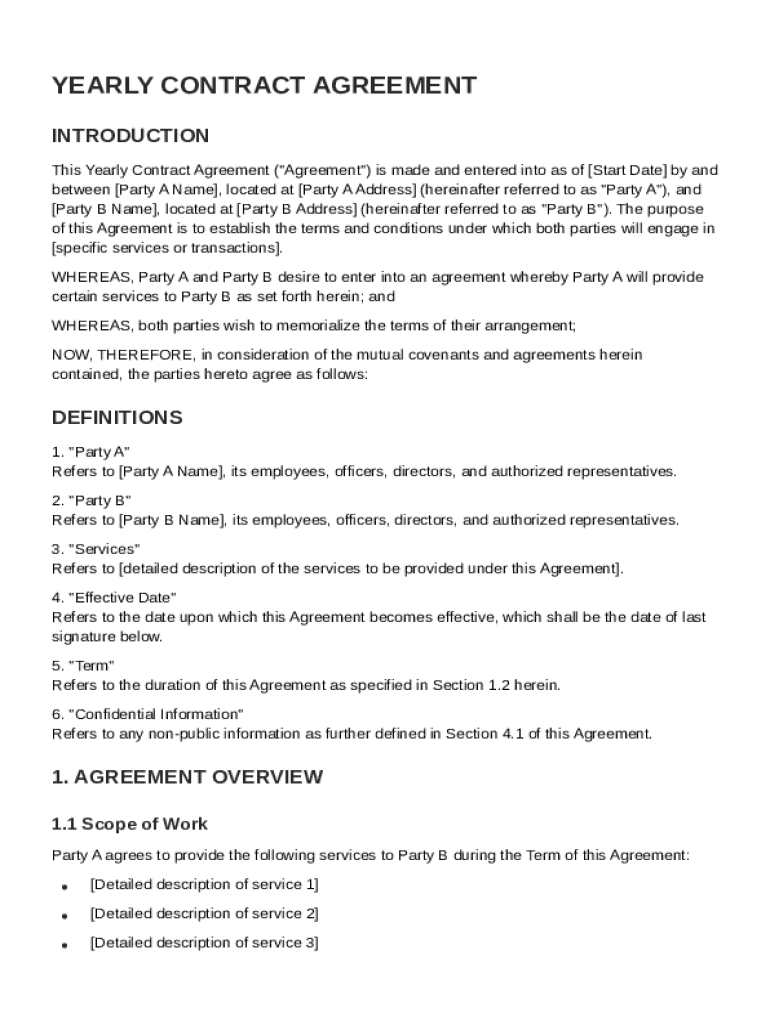







Key Elements of the Yearly Contract Template
The Yearly Contract Template encompasses a range of crucial elements designed to formalize the relationship between two parties for a defined period, typically one year. These elements ensure that the rights and responsibilities of each party are clear and agreed upon.
-
Parties Involved: Clearly identify Party A and Party B, including their legal names and addresses. This establishes the entities involved in the agreement.
-
Term of Agreement: Specify the start and end dates of the contract. Include provisions for renewal if the parties wish to extend the contract beyond the initial term.
-
Scope of Services: Detail the services or products that will be provided under the contract. This section prevents misunderstandings by delineating what is expected from each party.
-
Compensation and Payment Terms: Outline the agreed-upon payment structure. This includes the total compensation, payment schedule, and acceptable payment methods.
-
Confidentiality: Include clauses that protect sensitive information exchanged between the parties during the execution of the contract. Specify what constitutes confidential information and the duration of the confidentiality obligations.
-
Termination Clauses: Provide conditions under which the contract can be terminated by either party before the end date. This includes breaches of contract and other circumstances that justify termination.
Essential Steps to Complete the Yearly Contract Template
Completing a Yearly Contract Template requires careful attention to detail to ensure each section accurately reflects the agreement. Following a systematic approach can streamline this process.
-
Gather Necessary Information: Collect all relevant details for both parties, including legal names, contact information, and any specific requests or preferences.
-
Draft the Contract Terms: Use clear and concise language to articulate the terms of the agreement, covering all key elements such as services, compensation, and termination.
-
Review Legal Requirements: Confirm that the contract adheres to applicable legal standards and regulations to avoid potential legal disputes. This may require consulting legal counsel.
-
Negotiate and Finalize Terms: Discuss the draft with the other party to ensure mutual understanding and agreement. Adjust terms as necessary.
-
Sign the Contract: After all parties agree to the terms, secure signatures from authorized representatives to formalize the agreement.
-
Distribute Copies: Provide each party with a copy of the signed contract for their records.
Important Terms Related to Yearly Contract Template
Understanding key terms is essential when utilizing a Yearly Contract Template. These terms define the nature and scope of the agreement.
-
Renewal: The process by which a contract is extended beyond its original term. Renewal clauses should specify conditions and notice periods for extension.
-
Compensation: The agreed-upon payment for services or products provided under the contract. It includes salary, fees, or any other form of remuneration.
-
Breach of Contract: Refers to the failure of one party to fulfill its obligations as outlined in the contract. This section should detail remedies or penalties for breach.
-
Dispute Resolution: Mechanisms for resolving conflicts that arise from the contract, such as mediation or arbitration, should be clearly defined.
Legal Use of the Yearly Contract Template
Legal compliance is paramount when drafting and executing a Yearly Contract Template, as it ensures enforceability and protection for both parties.
-
Adherence to Contract Law: The template must follow relevant state and federal laws governing contracts. This includes ensuring that the terms are not unconscionably favoring one party over another.
-
Signatory Authority: Verify that signatories have the legal authority to enter into the contract on behalf of their respective parties.
-
Enforceability: The contract’s terms should be clear and specific to avoid any clauses being deemed unenforceable due to vagueness.
Examples of Using the Yearly Contract Template
Yearly Contract Templates are widely applicable across various industries and use cases.
-
Consulting Services: Companies frequently use these templates to define service terms, deliverables, and payment conditions for consulting engagements.
-
Supplier Agreements: Businesses may establish yearly contracts with suppliers to secure terms for the supply of materials or goods, often including pricing and delivery schedules.
-
Employment Contracts: Used to outline terms of employment for positions with a one-year duration, including roles in academia or project-based jobs.
State-Specific Rules for the Yearly Contract Template
Different states may have unique requirements or customary practices regarding contract law, which should be considered when creating a Yearly Contract Template.
-
Governing Law Clause: Specify which state's law governs the contract. This is particularly important in multi-state agreements.
-
Notarization Requirements: Some states may require notarized signatures for the contract to be legally binding. Verify if this applies to your template.
-
Specific Clauses: Certain states might have regulations regarding the inclusion or exclusion of specific clauses, such as non-compete or confidentiality agreements.
Software Compatibility
The Yearly Contract Template can be effectively managed and edited using various software platforms, enhancing convenience and productivity.
-
DocHub Integration: The template can be imported into DocHub for editing and signing, supporting file formats like PDF, DOC, and more.
-
Google Workspace: Direct integration allows seamless editing and sharing within the Google ecosystem, offering efficient workflow management.
-
Document Management Systems: Compatible with systems like Microsoft Word and Adobe Acrobat, allowing customization and detailed formatting options.
Who Typically Uses the Yearly Contract Template
This template serves a broad range of users, from individuals to companies, who require formal agreements for defined periods.
-
Small to Medium Enterprises (SMEs): Often use the template to establish supplier or client contracts, promoting clear expectations and continuity.
-
Freelancers and Contractors: Use templates to outline project scopes, timelines, and compensation, providing a clear framework for client engagements.
-
Non-profits: Employ these templates to manage partnerships and sponsorships, ensuring mutual benefits and legal compliance.