






Key Elements of the Bridal Hair Contract Template
Understanding the main components of the Bridal Hair Contract Template is crucial for both stylists and clients. This template outlines the specific expectations and responsibilities of each party, ensuring everyone involved is on the same page. Key elements typically include:
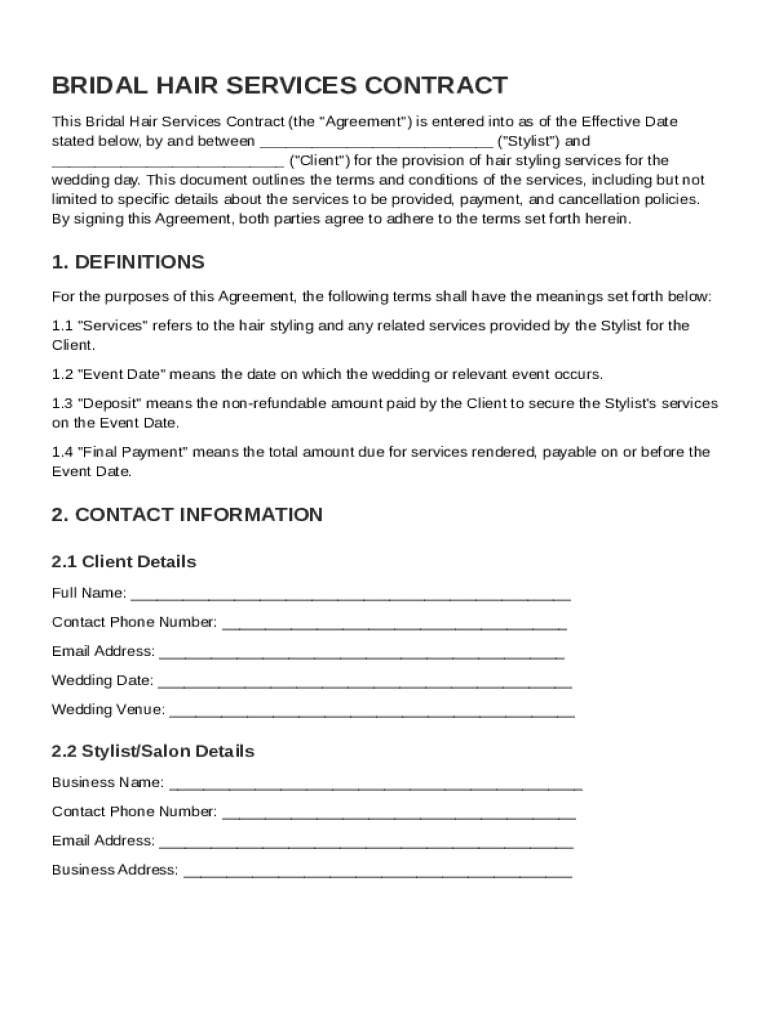
- Contact Information: Specific details about both the stylist and the client, such as names, addresses, and phone numbers, are crucial for seamless communication.
- Services Provided: A detailed list of hair services to be rendered, including any trials, the range of hairstyles, and the number of people to be styled.
- Payment Terms: Specifications on the cost of services, deposit amount, payment schedule, and any accepted payment methods.
- Scheduling and Timing: The exact date, time, and location for both the trial and wedding day services, ensuring all arrangements align with the wedding timeline.
- Cancellation Policy: Terms governing the cancellation by either party, covering potential refunds or charges.
- Liability Waivers: Clauses delineating the responsibility for any unsatisfactory results or unforeseen circumstances impacting the stylist's ability to deliver services.
Understanding and clearly defining these elements helps in avoiding misunderstandings and disputes.
How to Use the Bridal Hair Contract Template
Utilizing the Bridal Hair Contract Template involves several practical steps to tailor it to individual needs. Follow this guide to use the template effectively:
- Download the Template: Obtain a copy of the template from a reputable source.
- Customize the Template: Edit the document, filling in details relevant to the particular stylist-client agreement.
- Review and Revise: Ensure both parties thoroughly review the terms and spell out any ambiguities.
- Sign the Contract: Obtain signatures from the stylist and the client, confirming mutual agreement.
These steps facilitate a clear, documented understanding between the stylist and client prior to the event.
Steps to Complete the Bridal Hair Contract Template
Completing the Bridal Hair Contract Template requires attention to detail. Follow these steps for a comprehensive approach:
- Fill Out Personal Details: Provide accurate contact information for both the stylist and the client.
- Define Services and Terms: Specify all service details, including timelines and any style consultations or trials.
- Outline Financial Agreements: Include payment structures, deadlines, and describe deposit and installment processes.
- Clarify Policies: Articulate policies on cancellations, amendments, and liabilities.
- Review for Accuracy: Double-check all information for accuracy and completeness.
- Finalize with Signatures: Conclude the process with formal signatures to enforce the contract legally.
Following these steps ensures a thorough and enforceable agreement.
Who Typically Uses the Bridal Hair Contract Template
The Bridal Hair Contract Template serves a specific niche of users, including:
- Bridal Hairstylists: Professionals providing hair services for bridal parties who require legal documentation of their agreements.
- Wedding Planners: Facilitators who manage various wedding services and need standardized contracts for vendors.
- Brides-to-Be and Bridal Parties: Clients looking to formalize agreements with stylists to guarantee service quality on their special day.
Each user type relies on the template to protect their interests and ensure service delivery as expected.


Legal Use of the Bridal Hair Contract Template
The legal use of the Bridal Hair Contract Template involves complying with the necessary legal standards to ensure enforceability:
- Governing Law: The contract should indicate which state laws apply, ensuring that the terms are consistent with regional legal requirements.
- Binding Agreement: Both parties must have the capacity to enter into a contract, and the agreement should reflect genuine consent.
- Signature and Authentication: The contract needs to be formally signed, and electronic signatures should comply with the ESIGN Act for validity.
By focusing on these areas, the template serves as a legally sound document.
State-Specific Rules for the Bridal Hair Contract Template
Certain states may have specific rules and regulations influencing the content and enforceability of the Bridal Hair Contract Template. Consider the following:
- Consumer Protection Laws: Some states have consumer protection standards shaping service contracts, affecting deposit returns and service disclaimers.
- State Licensing Requirements: Hair stylists must comply with state-specific licensing, influencing contractual obligations.
- Dispute Resolution Clauses: Specify state-acceptable dispute resolution methods like mediation or arbitration.
Understanding regional differences can ensure compliance with all applicable regulations.
Software Compatibility and Document Management
DocHub's robust features support various document formats, enhancing the use of the Bridal Hair Contract Template:
- Format Compatibility: Work seamlessly with formats such as PDF, DOC, and TXT, ensuring accessibility.
- Digital Signature Integration: Utilize DocHub's electronic signing capabilities to authenticate agreements securely and efficiently.
- Real-time Collaboration: Allow multiple stakeholders to edit, comment, and approve documents concurrently, streamlining the contract process.
This compatibility supports an efficient contract management workflow.
Examples of Using the Bridal Hair Contract Template
Real-world applications of the Bridal Hair Contract Template illustrate its value:
- Last-minute Cancellations: A bride needing to cancel due to unforeseen circumstances can reference the cancellation policy to negotiate refunds or alternative solutions.
- Service Customization Changes: Amendments to the style or number of attendees can be logged and agreed upon through the existing contract framework.
- Deposit Disputes: A clear payment section provides evidence for settling any disagreements about deposits and final payments.
These scenarios demonstrate the template's role in resolving potential conflicts and maintaining professional standards.