




Definition & Meaning
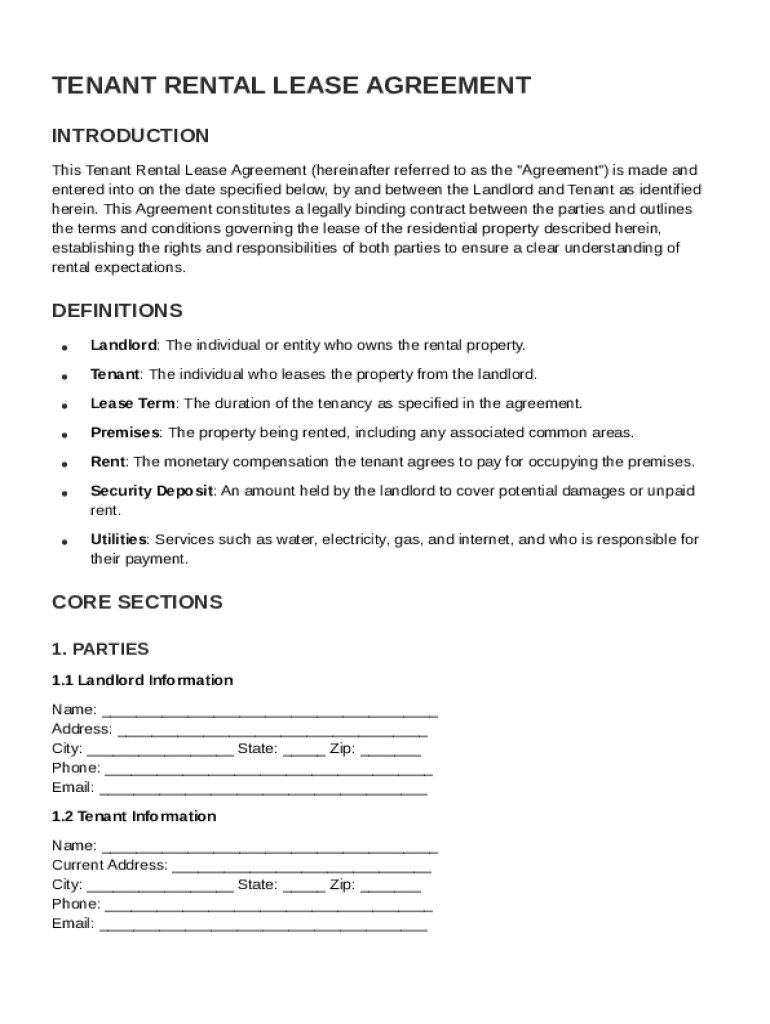
A Tenant Rental Lease Agreement Template is a standardized document used to define the terms and conditions of a lease agreement between a landlord and a tenant. This template is legally binding and provides a comprehensive overview of both parties' rights and responsibilities. It typically includes details like the length of the lease, rental amounts, security deposits, and the maintenance obligations of each party. This document serves as a clear guide to what is expected from both the landlord and tenant during the duration of the lease. By using a template, landlords and tenants can ensure that they are complying with all relevant legal requirements while addressing specific needs for their rental arrangements.
Key Elements of the Tenant Rental Lease Agreement Template
The Tenant Rental Lease Agreement Template covers multiple crucial elements to protect the interests of both the landlord and the tenant. Key elements included typically are:
- Parties Involved: Identifies the landlord and tenant who are entering into the lease agreement.
- Property Description: Details of the property being rented, including address and any included amenities.
- Lease Term: Specifies the duration of the lease, including start and end dates.
- Rent Payment: Outlines the amount of rent, due date, and the method by which payment should be made.
- Security Deposit: Provides details on the security deposit amount, its purpose, and the conditions under which it may be retained by the landlord.
- Maintenance Responsibilities: Describes what repairs or maintenance the tenant is responsible for, and what the landlord will cover.
- Utility Management: Clarifies who is responsible for paying utilities like water, electricity, and gas.
- Termination Conditions: Details how and under what circumstances the lease can be terminated by either party.
Steps to Complete the Tenant Rental Lease Agreement Template
Completing the Tenant Rental Lease Agreement Template requires careful attention to detail to ensure accuracy and legal compliance. Here are the steps to follow:
- Review Template: Start by thoroughly reading through the entire template to understand the sections and requirements.
- Fill in Party Details: Input the names and contact information of both the landlord and tenant.
- Describe the Property: Enter the detailed description of the rental property, including address and unit number if applicable.
- Specify Lease Term: Clearly define the start and end dates of the lease period.
- Outline Rent Details: Enter the rent amount, due dates, and preferred payment method to avoid misunderstandings.
- Document Security Deposit: Record the amount, purpose, and conditions of the security deposit.
- Clarify Responsibilities: Specify maintenance and repairs responsibilities and utility payments.
- Review and Sign: Once all the information is completed, both parties should review the document for accuracy before signing.
Who Typically Uses the Tenant Rental Lease Agreement Template
The Tenant Rental Lease Agreement Template is primarily used by individuals and businesses involved in the rental market:
- Property Owners: Landlords use this template to formalize lease arrangements with tenants, ensuring clear communication of terms and legal compliance.
- Tenants: Prospective tenants utilize this document to understand their rights and obligations before moving into a rental property.
- Property Managers: Individuals managing rental properties on behalf of owners may use these templates to streamline and standardize lease agreements across multiple tenants.


State-Specific Rules for the Tenant Rental Lease Agreement Template
Variations in state laws can affect the Tenant Rental Lease Agreement Template. It is essential to consider state-specific rules that may influence the content of the lease, such as:
- Security Deposit Regulations: Different states have varying laws governing maximum security deposit amounts and conditions for returns.
- Notice Requirements: States may dictate different notice periods required for lease terminations or rent increases.
- Disclosure Obligations: Some states may require landlords to disclose certain information, such as the presence of lead paint or recent property deaths.
Legal Use of the Tenant Rental Lease Agreement Template
A Tenant Rental Lease Agreement Template must adhere to local laws to be enforceable. Legal use includes:
- Compliance with Lease Laws: Ensuring the template complies with federal and state residential lease regulations.
- Fair Housing Compliance: Adhering to Fair Housing laws prohibits discrimination based on race, color, national origin, religion, sex, familial status, or disability.
- Ensuring Transparency: Clarity in the terms of the lease to prevent potential disputes or misunderstandings.
Examples of Using the Tenant Rental Lease Agreement Template
Several scenarios demonstrate the practical application of a Tenant Rental Lease Agreement Template:
- Single Family Homes: Used when renting entire houses as one unit.
- Apartments: Applied when leasing individual units within larger complexes.
- Commercial Properties: Adaptations of this template may be used for commercial real estate leases, involving business properties.
Versions or Alternatives to the Tenant Rental Lease Agreement Template
Alternative forms or versions may exist depending on specific circumstances:
- Month-to-Month Lease Agreements: For short-term rental arrangements, often renewed each month.
- Sublease Agreements: Used when an existing tenant wishes to rent out all or part of the property to another tenant.
- Commercial Lease Agreements: Different templates for commercial rather than residential rentals, including different terms pertinent to business use.