






Definition and Purpose of the Teenager Contract Template
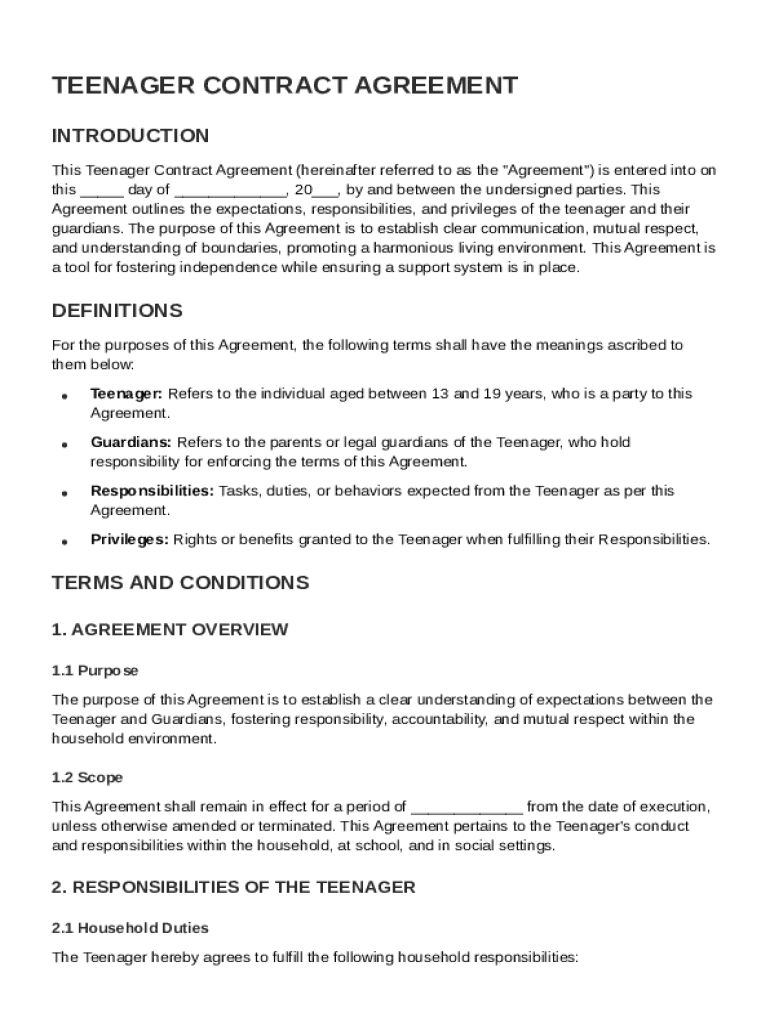
The Teenager Contract Template is crafted to serve as a formal agreement between teenagers and their guardians. This document clarifies expectations, responsibilities, and privileges within a family setting. By providing a structured approach, it enhances mutual respect and clear communication. Typically, the contract includes sections detailing household duties, academic goals, behavioral expectations, and communication protocols. It also defines privileges such as technology use, social activities, and curfews, alongside consequences for non-compliance and rewards for adhering to the terms.
Incorporating a contract template helps establish definitive boundaries and encourages constructive dialogue. By detailing specific commitments, it supports teenagers in understanding their roles and responsibilities clearly. The process of reviewing and signing this document can foster a sense of accountability and commitment, promoting respect and trust within the family unit.
How to Use the Teenager Contract Template Effectively
To utilize the Teenager Contract Template effectively, families should first gather all participants to discuss the framework and intentions of the document. The conversation should encompass the key areas of responsibilities, privileges, and penalties, ensuring all parties have a thorough understanding of each section. The aim is to create an agreement that is both fair and achievable, reflecting the family's unique values and dynamics.
Once consensus is reached on the terms, parties can proceed with populating the template with specific details applicable to their household. This might include setting particular chores, outlining academic expectations, and establishing agreed-upon curfews. It's essential to approach this process collaboratively, allowing teenagers to voice their opinions and negotiate terms they are willing to accept. This practice enhances compliance and nurtures a cooperative atmosphere.
Key Elements to Include in the Teenager Contract Template
Several essential components should be part of the Teenager Contract Template to ensure it is comprehensive and effective:
-
Responsibilities: Outline specific chores or tasks that the teenager must complete regularly. This section might address household duties, academic goals, and personal responsibility elements, such as maintaining hygiene or managing time efficiently.
-
Behavioral Expectations: Specify guidelines and expectations related to behavior. This may involve communication protocols, respecting family members, and adhering to agreed-upon social norms.
-
Privileges and Rewards: Define the privileges granted to the teenager, such as technology use, social outings, or allowance. Also, detail a rewards system for fulfilling responsibilities effectively, reinforcing positive behavior.
-
Consequences for Non-Compliance: Clearly list the penalties for failing to meet outlined responsibilities or behavioral standards. These might include restricted access to certain privileges or additional duties.
-
Amendment Process: Provide a mechanism for reviewing and modifying the contract. This flexibility allows the document to evolve should family circumstances change, maintaining its relevance and fairness.
Steps to Complete the Teenager Contract Template
Completing the Teenager Contract Template involves several methodical steps to ensure clarity and comprehensive coverage:
-
Initial Discussion: Gather all parties involved to discuss the purpose and scope of the contract. Identify key areas that need coverage, such as responsibilities, privileges, and behavioral expectations.
-
Drafting the Contract: Collaboratively fill in each section of the template with specific details. Writing down each party's obligations and privileges ensures everyone has a clear understanding of their roles.
-
Review and Amend: Encourage feedback from all parties and make necessary amendments to address any concerns or misunderstandings. This step ensures the template is equitable and relevant.
-
Finalization and Signing: Once the content is agreed upon, finalize the document and have all parties sign it. This formalizes the agreement and solidifies the commitments made.
-
Periodic Review: Schedule regular review sessions to evaluate the contract's effectiveness. Modify the document as required to reflect changes in family dynamics or new developments in the teenager's life.
Legal Use and Binding Nature of the Teenager Contract Template
While the Teenager Contract Template is typically informal and not legally binding in the traditional sense, it can play a crucial role in shaping responsible behavior and promoting consistency in family expectations. It establishes a clear set of household rules and consequences that support constructive family interaction.
Though not legally enforceable in the same manner as a business contract, it holds psychological weight by providing a tangible reference point for disputes. A well-drafted agreement can serve as a preventive measure against misunderstandings, fostering an environment of trust and mutual agreement in the home.
Examples of Using the Teenager Contract Template
Consider a household where a teenager has specific academic goals paired with technology privileges. A section of the contract might stipulate that the teenager is required to complete homework assignments before accessing video games or the internet for leisure. Should the teenager maintain a certain grade level or show improvement, additional privileges, like extended curfew or extra screen time, could be awarded.
In another scenario, a teenager might have duties like tidying their room or doing their laundry. Privileges such as allowance or participation in social activities could be contingent on fulfilling these chores. If responsibilities are neglected, agreed-upon consequences such as temporary suspension of privileges would take effect.
Who Typically Uses the Teenager Contract Template
The Teenager Contract Template is primarily utilized by families seeking to establish clear household guidelines relating to roles and privileges. It caters to parents and guardians who aim to nurture accountability and responsibility in their teenagers. Ideal for both single and multi-parent households, it provides a structured means of communicating expectations while allowing teenagers to participate actively in the decision-making process.
Families valuing open communication and mutual respect often find this contract a useful tool. By involving teenagers in creating this agreement, parents can foster a sense of empowerment and collaboration, creating a supportive environment where teenagers thrive under a clear understanding of responsibilities and boundaries.