



01. Edit your form online
Type text, add images, blackout confidential details, add comments, highlights and more.

Type text, add images, blackout confidential details, add comments, highlights and more.

Draw your signature, type it, upload its image, or use your mobile device as a signature pad.

Send it via email, link, or fax. You can also download it, export it or print it out.
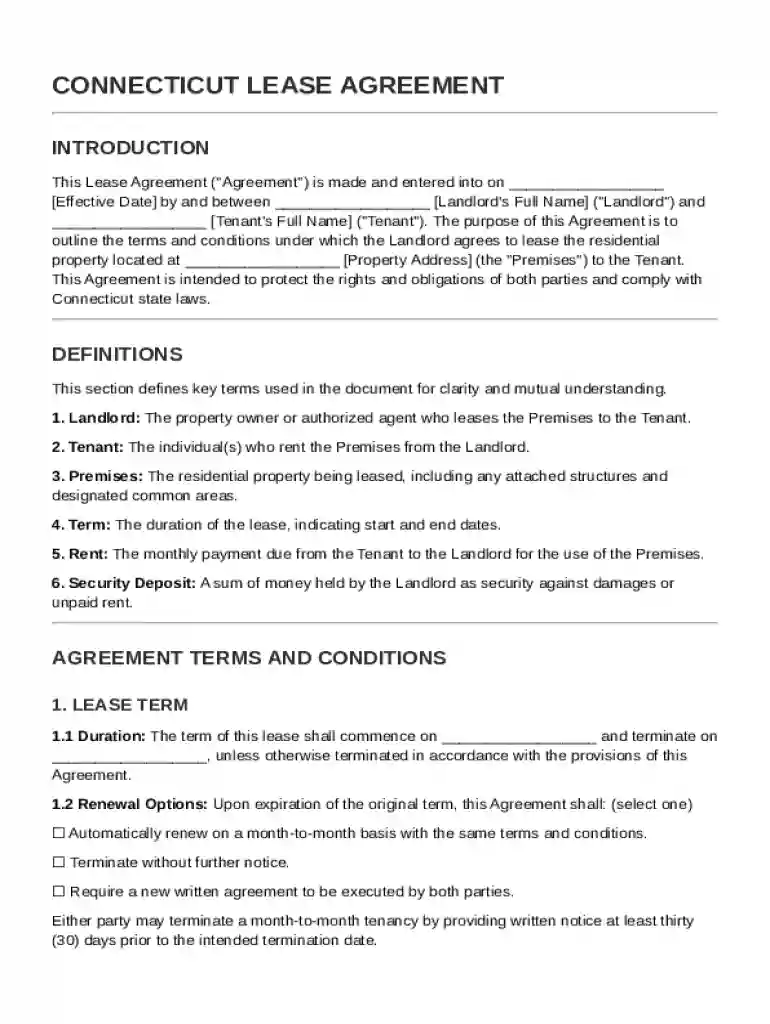
The Lease Connecticut Agreement Template serves as a comprehensive framework for delineating the terms of a residential tenancy between a landlord and tenant in the state of Connecticut. This legal document articulates the expectations and responsibilities of each party, ensuring clarity and protection under Connecticut law. Significant components include defining key terms like ‘premises’ and ‘parties,’ specifying the lease duration, and outlining procedures for rent payment and security deposits. Additionally, it includes provisions for property maintenance, permissible use, termination, and adherence to state-specific regulations, offering a robust basis for managing tenant-landlord relationships within Connecticut's jurisdiction.
Using the Lease Connecticut Agreement Template involves a systematic approach to populate and customize the document according to the specific terms agreed upon by the landlord and tenant. Initially, users will enter basic information such as the names of the involved parties and the address of the property. Next, the lease duration, rental amount, and due dates must be specified. Users should ensure that all applicable clauses regarding security deposits, maintenance obligations, and property usage restrictions are accurately completed. Reviewing the filled template with a legal professional is advisable to confirm compliance with Connecticut state laws.
The template encompasses various critical elements that cater to a comprehensive leasing arrangement. It highlights essential aspects such as:
Lease agreements in Connecticut must adhere to specific state laws designed to protect both landlords and tenants. For example, Connecticut’s reasonable notice requirements must be observed when entering rental premises or terminating a month-to-month lease. Moreover, landlords are obligated to maintain a safe and habitable property in compliance with health and safety regulations. This section of the template provides guidance on these state-specific legal requirements, ensuring that all terms align with local legislations to avoid legal disputes and misunderstandings.
Completing the Lease Connecticut Agreement Template requires methodical filling and review:
A comprehensive understanding of crucial terms used in the template is fundamental for the effective utilization of the agreement. These terms include:
Utilizing the Lease Connecticut Agreement Template in a legally sound manner involves adhering to statutory requirements and formatting guidelines outlined by Connecticut law. The template ensures that all lease terms are transparent, thereby reducing the potential for disputes. It facilitates legally binding agreements by capturing essential elements such as consent, legality of object, and adequate consideration. Properly executed, it represents a valid, enforceable contract and stands as a critical tool for protecting both landlord and tenant rights.
Real-world applications of the Lease Connecticut Agreement Template illustrate its versatility and necessity. For instance, a property owner leasing an apartment in Hartford can employ this template to prevent common disputes over rent payment timelines and security deposit deductions. Another example involves suburban landlords using the template to specify yard maintenance responsibilities, ensuring their properties are well-maintained. These scenarios demonstrate how a thoughtfully completed lease agreement can provide peace of mind and legal assurances for both landlords and tenants.
At DocHub, your data security is our priority. We follow HIPAA, SOC2, GDPR, and other standards, so you can work on your documents with confidence.


This sublease agreement incorporates and is subject to the original lease agreement between the sublessor and his lessor, a copy of which is attached hereto,
Mar 6, 1996 A rental agreement is a legally binding contract between you and your landlord. It should state the rights and responsibilities of both of the
Either Landlord or Tenant may terminate this lease at the end of the Term by giving [ ] 30 days [ ] 60 days [ ] Other written notice prior to the end


