
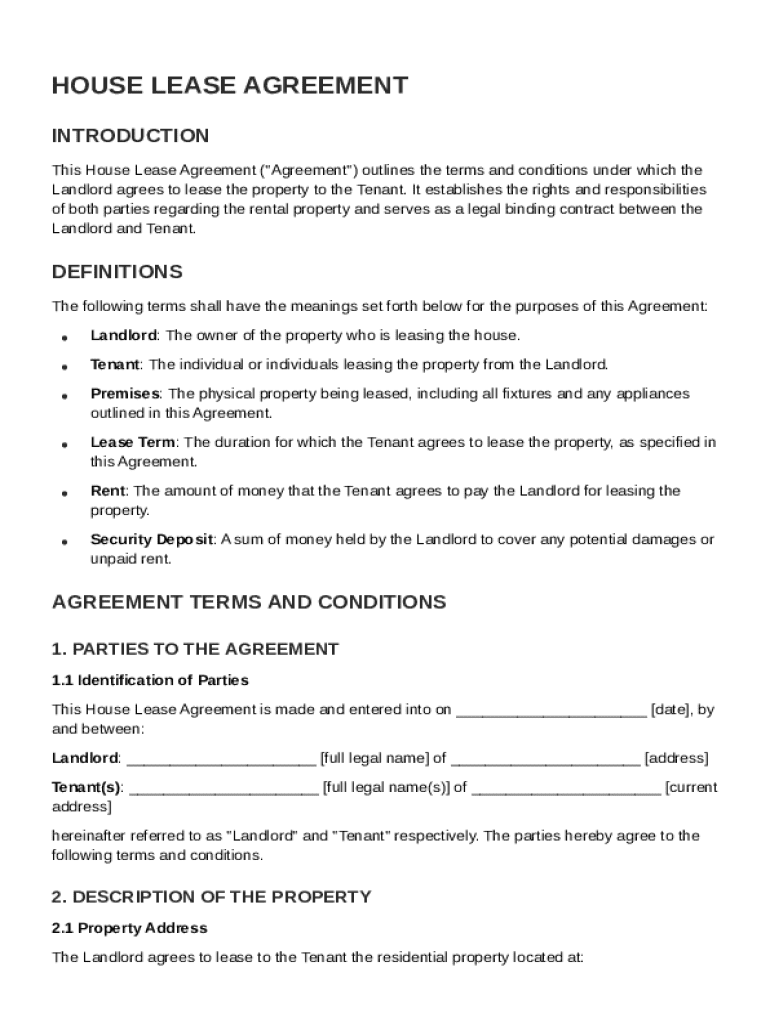







Definition & Meaning
A House Lease Agreement Template is a pre-designed legal document that outlines the essential terms and conditions during the leasing of a residential property from a landlord to a tenant. This template is a foundational tool to ensure that the rights and responsibilities of both parties are clearly defined. It includes provisions such as the lease term, rent payment procedures, security deposit details, maintenance obligations, and termination conditions. This standardized document serves to formalize the leasing process and minimize disputes by setting mutual expectations.
Important Terms in a House Lease Agreement Template
Understanding key terms in a lease agreement is crucial for both parties:
- Lease Term: Specifies the duration of the lease, including start and end dates.
- Rent Payment: Details the amount, due date, and payment method for rent.
- Security Deposit: Outlines the amount of the deposit, conditions for its return, and any deductions.
- Maintenance Obligations: Defines the duties of landlords and tenants regarding property upkeep.
- Use of Premises: Clarifies permissible activities within the property.
- Termination Conditions: Details circumstances under which the lease can be terminated early.
These terms help ensure transparency and protect the interests of everyone involved.
Key Elements of the House Lease Agreement Template
The House Lease Agreement Template contains several critical sections that must be completed accurately:
- Identification of Parties: Names and contact information of the landlord and tenant.
- Lease Duration: Clearly states when the lease begins and ends.
- Rent Amount and Payment Details: Specifies the monthly rent, payment schedule, and late fees if applicable.
- Rules for Property Use: Any restrictions on the property’s use, such as noise regulations or pet policies.
- Tenant and Landlord Obligations: Responsibilities towards repairs, maintenance, and other duties.
- Insurance Requirements: Whether tenant insurance is required and what it should cover.
- Legal Compliance: Acknowledges that the agreement must comply with pertinent local, state, and federal laws.
Each element provides structure to the lease and should be adapted to the specific property and jurisdiction.
How to Use the House Lease Agreement Template
Using the template effectively involves several steps:
- Review the Template: Understand the general structure and standard clauses included.
- Customize the Details: Input specific information such as names, addresses, rent amounts, and unique property rules.
- Consult Legal Advice: Before finalizing, it is wise to have the document reviewed by a legal professional to ensure compliance with local laws.
- Discuss Terms with the Tenant: Walk through the agreement with the tenant to clarify any ambiguities.
- Sign and Date: Once both parties agree, sign and date the document to make it legally binding.
Employ the template as a guideline but ensure customization to reflect the nuances of each leasing situation.
Legal Use of the House Lease Agreement Template
This template must comply with legal standards to be enforceable:
- Compliance with Housing Laws: Ensure the agreement aligns with federal laws like the Fair Housing Act and state-specific landlord-tenant laws.
- Non-Discriminatory Terms: Clauses should be free of discriminatory language.
- Amendments and Addenda: Document any changes in writing and have all parties initial amendments.
- E-Signatures: Documents signed electronically should meet the legal requirements as per the ESIGN Act for validity.
Using the template legally contributes to its enforceability and can prevent future legal disputes.
Steps to Complete the House Lease Agreement Template
Successfully completing the template involves several key steps:
- Gather Information: Collect all necessary information such as personal details of both parties, lease term, and rent amount.
- Complete Each Section: Fill in each part of the template accurately and thoroughly.
- Include Specific Provisions: Add any specific terms that pertain to the property's unique circumstances.
- Review by Both Parties: Both landlord and tenant should review the completed document.
- Print and Sign: Ensure all copies are signed by both parties and distributed accordingly. Retain a copy for personal records.
Detail-oriented completion of each stage ensures a comprehensive and binding agreement.
State-Specific Rules for the House Lease Agreement Template
Lease agreements can vary significantly depending on state laws:
- Security Deposit Limits: Different states set limits on the amount a landlord can charge.
- Notice Periods: States have varying requirements for notice before entry or termination.
- Disclosures Required: Some states require additional disclosures like lead paint or flood zone information.
- Rent Control Provisions: Only certain jurisdictions allow rent control, affecting how rent increases can be applied.
It's crucial to adjust the template to incorporate these state-specific rules to ensure compliance.
Who Typically Uses the House Lease Agreement Template
A diverse group of stakeholders utilizes these templates:
- Landlords: Use them to formalize residential leasing agreements with tenants.
- Real Estate Agents: Facilitate clear communication and formal agreements between property owners and renters.
- Property Management Companies: Manage multiple properties efficiently and standardize leases across their portfolio.
- Tenants: Understand their rights and responsibilities clearly through a formal agreement process.
These templates are key tools for simplifying the complex leasing process in residential real estate.


Examples of Using the House Lease Agreement Template
Real-world scenarios highlight the template's utility:
- Single Family Home Lease: A landlord leases out a home for a one-year term, using the template to specify unique provisions like prohibiting subletting.
- Condominium Leasing: Adapted to include HOA rules the tenants must adhere to.
- Short-Term Rental Lease: Modified for a six-month term with provisions for early termination in case of sale.
- Lease for Property with Shared Facilities: Includes terms on maintenance and use of shared spaces.
These examples demonstrate the template’s adaptability to various residential lease situations.




