




Definition and Meaning
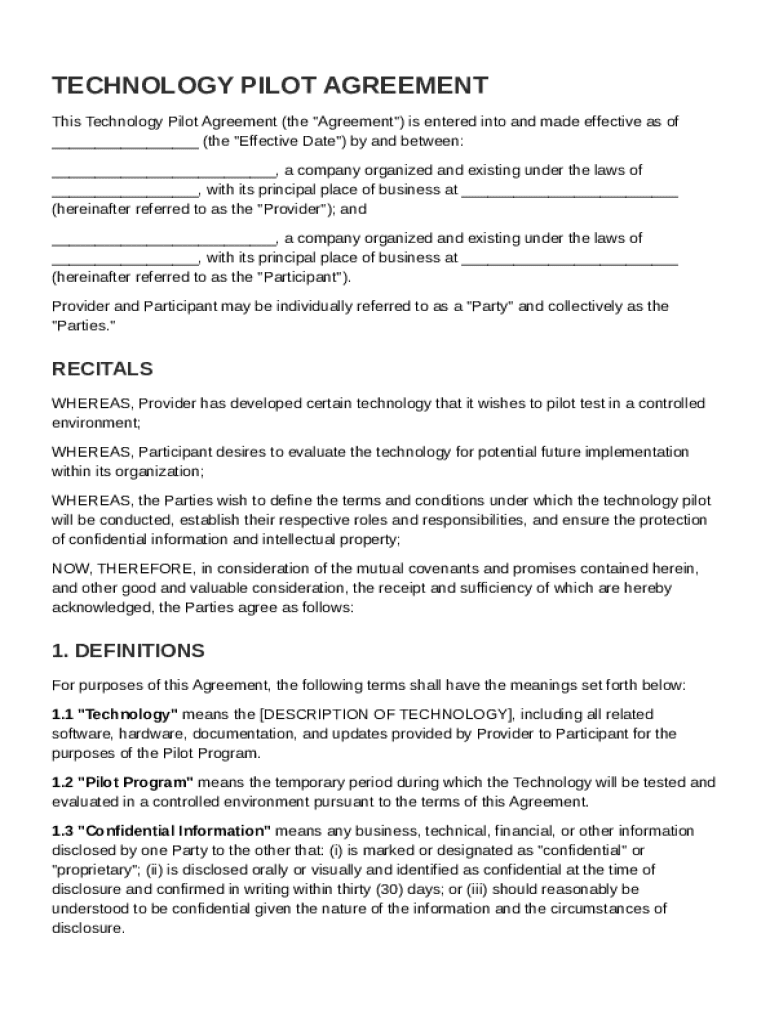
A Technology Pilot Agreement Template is a formal document that outlines the specific terms and conditions for implementing a pilot test of new technology. This template is commonly used by organizations seeking to evaluate potential technologies developed by a provider before fully implementing them. It serves as a legally binding agreement between the provider (the developer of the technology) and the participant (the entity evaluating the technology). The template details critical aspects such as roles and responsibilities, confidentiality obligations, data management practices, intellectual property rights, and mechanisms for dispute resolution. By structuring these elements clearly, the Technology Pilot Agreement Template ensures that both parties understand their rights and obligations during the pilot phase.
Key Elements of the Technology Pilot Agreement Template
The Technology Pilot Agreement Template includes several key components essential for establishing a clear and effective pilot test:
-
Scope of the Pilot: Clearly defines the objectives, limitations, and extent of the pilot test. This section outlines what the pilot will cover and any activities or areas explicitly excluded.
-
Roles and Responsibilities: Identifies the duties of both the provider and the participant, including the allocation of resources and personnel involved in the pilot.
-
Confidentiality Clauses: Specifies how confidential information will be handled, restricting access and protecting sensitive data shared between the parties.
-
Intellectual Property Rights: Outlines the ownership and usage rights of any intellectual property created or utilized during the technology pilot. This ensures that rights are protected for both parties.
-
Evaluation Criteria: Establishes the criteria and metrics for assessing the technology’s performance during the pilot phase. This might include specific technical benchmarks or business outcomes.
-
Termination Conditions: Describes the conditions under which either party may terminate the agreement and the steps required to do so.
How to Use the Technology Pilot Agreement Template
Using a Technology Pilot Agreement Template effectively involves several critical steps:
-
Customize the Template: Tailor the template to reflect the specifics of the pilot test, including participant names, technology details, and unique requirements.
-
Review and Revise: Collaborate with legal and technical experts to ensure all provisions align with organizational goals and industry standards.
-
Discuss with Stakeholders: Engage with all relevant stakeholders to gather input, confirm understanding, and address any concerns prior to finalization.
-
Sign and Execute: Once all parties agree on the terms, secure signatures from authorized representatives to formally execute the agreement.
-
Monitor and Adjust: Keep track of the pilot’s progress against the agreement’s terms. Make adjustments as necessary based on performance data and feedback.
Legal Use of the Technology Pilot Agreement Template
The Technology Pilot Agreement Template is a legally binding document that provides a framework for the fair and controlled execution of a technology pilot. Legal use includes:
-
Compliancy with Laws: Ensuring that all provisions comply with local, state, and federal laws applicable to both parties, especially concerning data protection and intellectual property.
-
Dispute Resolution: Incorporating clauses that define how disputes will be resolved, typically through mediation or arbitration, to prevent costly litigation.
-
Signature Legitimacy: Ensuring that all signatories have the legal authority to enter into the agreement, thereby making the document enforceable.
Steps to Complete the Technology Pilot Agreement Template
Completing a Technology Pilot Agreement Template requires a structured approach:
-
Information Gathering: Collect all necessary data regarding the technology, involved parties, and specific objectives of the pilot test.
-
Drafting Details: Fill in the template with tailored information, emphasizing sections such as project scope, roles, and evaluation criteria.
-
Internal Review: Conduct a thorough review with internal stakeholders, including legal counsel, to pinpoint any areas needing clarification or amendment.
-
Negotiation: Discuss potential changes with the provider or participant until both parties are satisfied with the terms.
-
Finalization: Incorporate any negotiated changes, then proceed with signing the document to commence the pilot.
Important Terms Related to Technology Pilot Agreement Template
Understanding the terminology used in a Technology Pilot Agreement is crucial:
-
Pilot Test: A small-scale, preliminary study to evaluate the feasibility, time, cost, risk, and adverse events involved in a particular technology.
-
Provider: The entity offering the technology for evaluation.
-
Participant: The organization or individual testing the technology to assess its efficacy.
-
Intellectual Property (IP): Creations of the mind for which exclusive rights are recognized, such as inventions or proprietary processes.
Examples of Using the Technology Pilot Agreement Template
The Technology Pilot Agreement Template is applicable in various scenarios across industries:
-
Healthcare: Pilot testing new medical devices or software platforms to improve patient outcomes.
-
Manufacturing: Evaluating automation technology to enhance production efficiency.
-
Education: Testing novel e-learning tools to boost student engagement and learning outcomes.
In these cases, the agreement helps manage expectations and reduce risks associated with deploying untested technology.
State-Specific Rules for the Technology Pilot Agreement Template
When using a Technology Pilot Agreement Template, it’s essential to consider state-specific regulations, especially those concerning data protection and intellectual property:
-
California: Compliance with the California Consumer Privacy Act (CCPA) may necessitate adjustments to confidentiality and data handling clauses.
-
New York: State-specific laws may affect dispute resolution processes, requiring inclusion of particular arbitration or mediation protocols.
-
Texas: Unique stipulations concerning technology trade secrets could impact sections related to intellectual property rights.
Each state may have distinctive requirements, and it's crucial to adapt the template to comply with local laws and guidelines.