
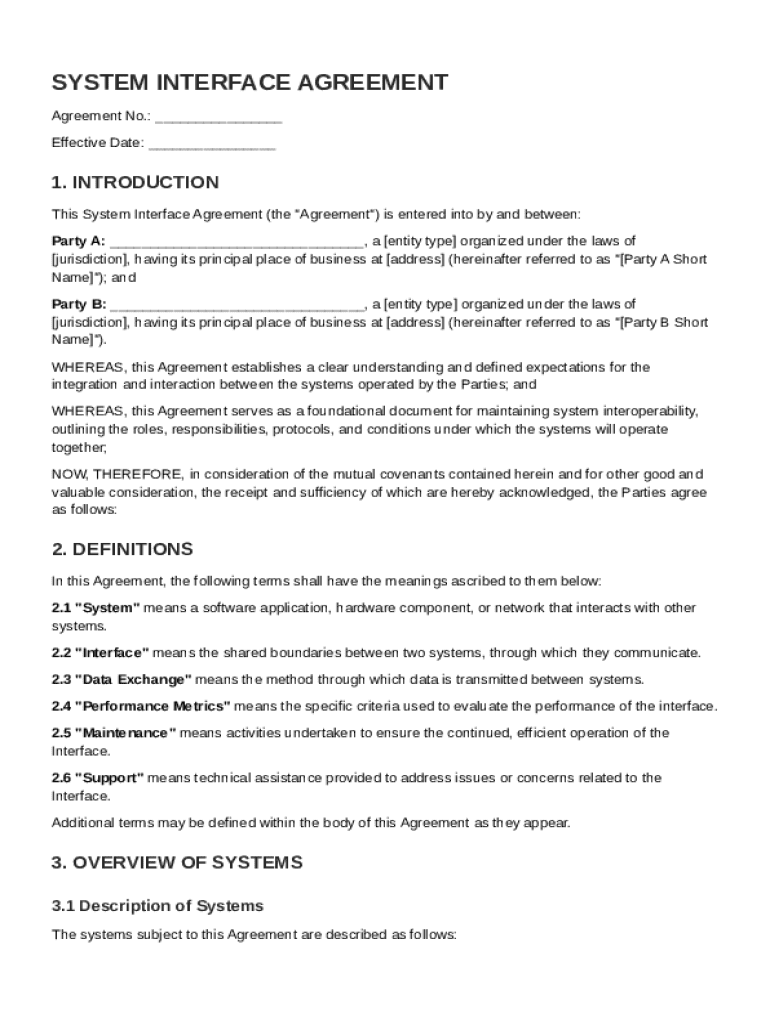






Definition and Purpose of a System Interface Agreement Template
A System Interface Agreement Template is a document that establishes the framework for integration and interaction between two or more separate systems owned by different entities. Its primary role is to ensure that the systems communicate seamlessly, maintain interoperability, and comply with relevant regulations. By clearly defining roles, responsibilities, and technical requirements, this template minimizes the risk of miscommunication and helps streamline system interactions.
Key Concepts Explained
- System: Refers to the individual technological infrastructures or software platforms managed and operated by distinct parties.
- Interface: The points of interaction or data exchange between these systems, often involving APIs or other communication protocols.
- Data Exchange: The process through which data is transmitted between the systems, including the format, frequency, and security measures associated with it.
Using the System Interface Agreement Template
Implementing the System Interface Agreement Template involves understanding its structure and customizing it to suit specific integration scenarios. The template typically comprises sections where parties define their expectations, technical specifications, and management strategies.
Comprehensive Steps to Follow
- Review Template Structure: Examine the template’s outline to understand its elements like introduction, technical details, and legal terms.
- Customization: Adapt the sections to reflect the unique aspects of the systems involved and the nature of their interaction.
- Define Technical Requirements: Specify interface protocols, data formats, and performance metrics essential for system integration.
- Assign Roles and Responsibilities: Clearly delineate what each party is responsible for during the integration and maintenance phases.
Important Terms and Clauses in the System Interface Agreement Template
Understanding the critical terms and clauses within this agreement template is crucial for effective implementation.
Essential Clauses
- Roles and Responsibilities: Clarifies each party’s duties in managing and supporting the interface.
- Performance Metrics: Outlines the standards for data exchange speed, accuracy, and reliability.
- Maintenance Schedules: Sets forth the routine checks and maintenance required to sustain the interface’s efficiency.
Legal Considerations and Compliance
Adhering to U.S.-centric legal standards ensures the agreement's enforceability and compliance with applicable regulations. The System Interface Agreement must align with federal and state laws governing digital communications and data protection.
Critical Legal Components
- Data Privacy Laws: Compliance with data protection regulations such as the GDPR for international data exchange or state-specific laws like the CCPA.
- Dispute Resolution: Mechanisms outlined for resolving disagreements, either through mediation, arbitration, or courts.
Examples and Use Cases of a System Interface Agreement Template
Illustrating how a System Interface Agreement Template is applied can demystify its practical significance.
Real-World Scenarios
- Healthcare Systems: Integrating patient record systems across different hospitals to ensure comprehensive care.
- Financial Institutions: Connecting banking software with third-party financial product providers for seamless customer transactions.
Steps to Complete the System Interface Agreement Template
Filling out the System Interface Agreement Template involves several critical actions that ensure a thorough and effective process.
- Initial Discussion: Engaging both parties in a preliminary discussion to outline goals and expectations.
- Draft Agreement: Creating an initial draft incorporating all system technical specs and legal obligations.
- Review and Feedback: Circulating the draft to stakeholders for input and necessary amendments.
- Finalization and Signatures: Final approval and the gathering of signatures to formalize the agreement.
Who Typically Utilizes the System Interface Agreement Template?
The template is used across various business sectors that rely heavily on digital systems interacting seamlessly.
Primary Users
- IT Departments: Particularly those managing enterprise resource planning tools or customer relationship management systems.
- Legal Teams: Ensuring the contractual elements comply with jurisdictional norms and corporate policies.
- Project Managers: Overseeing the integration process and maintaining communication between the involved parties.
Key Elements Every System Interface Agreement Should Include
To secure functional integration, the following elements must be present in every System Interface Agreement Template:
- Technical Specifications: Detailed technical requirements for compatible system operation.
- Communication Protocols: Established methods for information interchange between systems.
- Liabilities and Warranty: Statements defining the boundaries of each party’s liability and any warranties offered for system uptime or performance.
By thoroughly covering these aspects, the System Interface Agreement Template serves as a robust framework for seamless system integration, facilitating effective collaboration, data exchange, and problem resolution between disparate digital systems.