
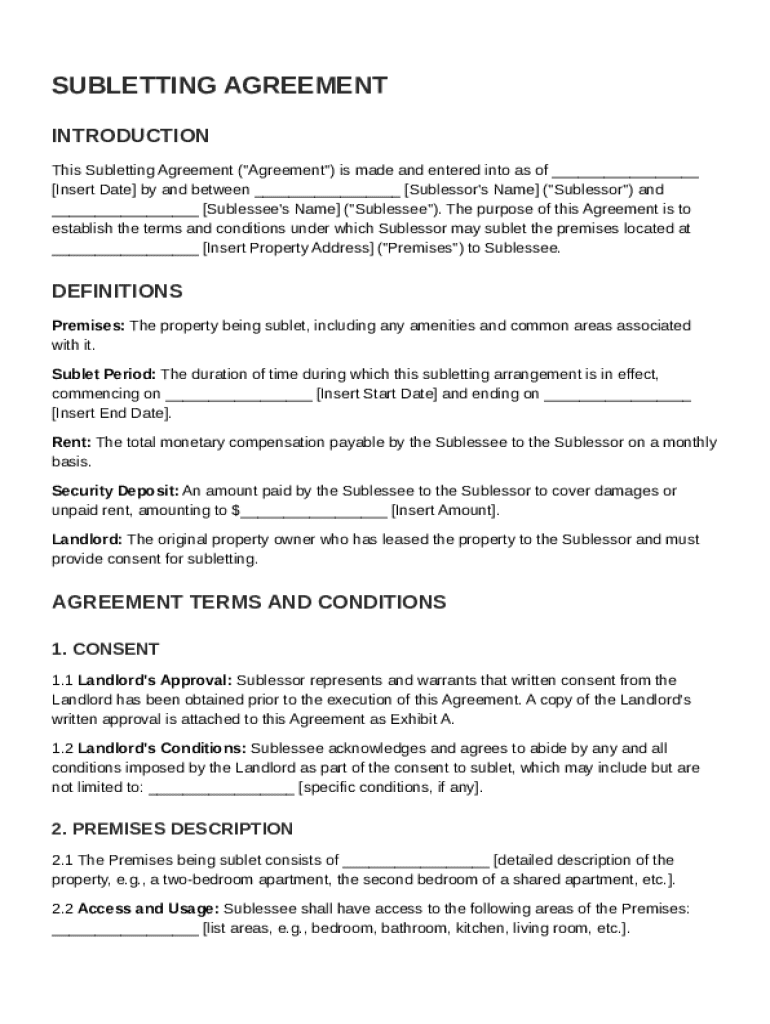







Definition & Meaning
A Sub Letting Agreement Template outlines the arrangement between a sublessor, the original tenant, and a sublessee, the new tenant seeking to occupy the rental property. This document formalizes the subletting process, ensuring that both parties understand their rights, responsibilities, and the terms of the agreement. It typically includes crucial elements such as rent details, consent from the original landlord, and any special conditions or requirements tied to the property. By providing a clear framework and reference for both parties, it helps in preventing potential disputes and ensuring compliance with existing leases and legal obligations.
Key Components
- Parties Involved: Identification of the sublessor and sublessee, along with consent from the landlord, if applicable.
- Financial Terms: Rent amount, payment schedule, and security deposit stipulations.
- Lease Duration: Commencement and termination dates, renewal options, if any.
- Property Condition: Maintenance responsibilities and inventory of existing condition.
- Terms and Conditions: Rules and obligations regarding utilities, appliances, and shared areas.
How to Use the Sub Letting Agreement Template
Implementing the Sub Letting Agreement Template involves several steps, which ensure that all parties have a clear understanding and agree on the terms laid out. This template serves as a comprehensive guide to drafting an enforceable agreement that protects both the sublessor's and sublessee's interests.
Step-by-Step Instructions
- Initial Negotiations: Discuss terms between the sublessor and sublessee, ensuring both parties agree on key aspects like rent and duration.
- Template Customization: Fill in specific details pertinent to the arrangement, such as personal information, rent figures, and property specifics.
- Landlord Approval: Obtain written consent from the original landlord if required by the original lease agreement.
- Finalize and Review: Both parties should review the document to ensure clarity and thorough understanding.
- Sign and Date: Execute the agreement with signatures from all involved parties. Retain copies for personal records and legal reference.
Why Should You Use a Sub Letting Agreement Template
Using a Sub Letting Agreement Template is essential for ensuring legal clarity and protection for both sublessors and sublessees. It serves as a mutual point of reference that outlines the expectations and responsibilities of each party, helping to minimize the risk of misunderstandings or legal disputes.
Advantages
- Legal Protection: Provides evidence of agreed-upon terms should any disputes arise.
- Clarity and Understanding: Offers clear documentation that outlines each party's responsibilities and obligations.
- Streamlined Process: Simplifies the creation of a subletting agreement, saving time and reducing the complexity of negotiating terms.
Real-World Scenarios
- Temporary Transfer: Ideal for tenants who need to vacate temporarily but intend to return, enabling the property to remain occupied and rent obligations to be met.
- Shared Occupancy: Useful in situations where part of the property is rented out to cover costs while remaining in the premises.
Steps to Complete the Sub Letting Agreement Template
Completing the Sub Letting Agreement Template requires precision and attention to detail to ensure that it adequately reflects the agreed-upon terms. Following a structured process helps avoid critical errors that could invalidate the agreement.
Detailed Process
- Gather Information: Collect necessary details from both the sublessor and sublessee, including personal identification and contact details.
- Document Specifics: Clearly state property descriptions, rent amounts, and any unique stipulations relevant to the agreement.
- Define Period and Conditions: Specify the start and end dates along with any notice requirements for terminating the agreement.
- Include Additional Clauses: Add any relevant clauses or appendices that address unique conditions or exemptions.
- Legal Review: Consider having the agreement reviewed by a legal professional to ensure compliance with local laws and regulations.
Key Elements of the Sub Letting Agreement Template
Certain elements must be included in the Sub Letting Agreement Template to make it legally robust and comprehensive. These key elements ensure that the agreement is functional and enforceable.
Essential Components
- Agreement Date: Specific date on which the agreement is executed.
- Landlord’s Consent: Written consent where the primary lease mandates landlord approval for subletting.
- Tenant Obligations: Defined responsibilities for management of property and payments.
- Default Clauses: Procedures and consequences in the event either party fails to meet their obligations.
- Signatures: Legal signatures of all parties involved, including witnesses if necessary.
Legal Use of the Sub Letting Agreement Template
The Sub Letting Agreement Template is not only a practical document but also has legal significance. Understanding its legality ensures that the subletting arrangement is recognized and enforceable under respective jurisdictional laws.
Compliance and Legal Aspects
- Locally Compliant: Incorporates terms specific to state regulations regarding rental and tenant rights.
- Binding Terms: Once signed, the template becomes a legally binding document that courts can enforce.
- Rights Preservation: Outlines specific rights and duties, protecting both parties from potential legal pitfalls.
Important Terms Related to Sub Letting Agreement Template
Familiarizing oneself with the key terms related to the Sub Letting Agreement Template is crucial for a proper understanding and effective utilization of the document. These terms provide the foundational knowledge necessary to navigate subletting arrangements successfully.
Glossary of Terms
- Sublessor: Original tenant who authorizes another party to occupy the rental property temporarily.
- Sublessee: New occupant who enters the sublet arrangement and assumes responsibilities of the lease.
- Consent to Sublet: Approval required from the original landlord to sublease property, as applicable.
- Premises: Specific property or part of property being subletted.
- Lease Duration: Time frame for which the subletting is agreed.
State-Specific Rules for the Sub Letting Agreement Template
Different states have varying regulations that can affect the legality and terms of subletting agreements. It is crucial to tailor the Sub Letting Agreement Template according to specific state rules for compliance and validity.
Regional Variations
- California: Rent control laws may impact the maximum allowable rent increase in a sublease.
- New York: Tenants in buildings with three or more units have specific rights to request subletting permissions.
- Texas: Often requires landlord approval and might necessitate a signed, written agreement for any modifications.
Understanding these differences allows tenants and sublessors to draft agreements that are not just practically sound but also legally foolproof.




