




01. Edit your form online
Type text, add images, blackout confidential details, add comments, highlights and more.

Type text, add images, blackout confidential details, add comments, highlights and more.

Draw your signature, type it, upload its image, or use your mobile device as a signature pad.

Send it via email, link, or fax. You can also download it, export it or print it out.
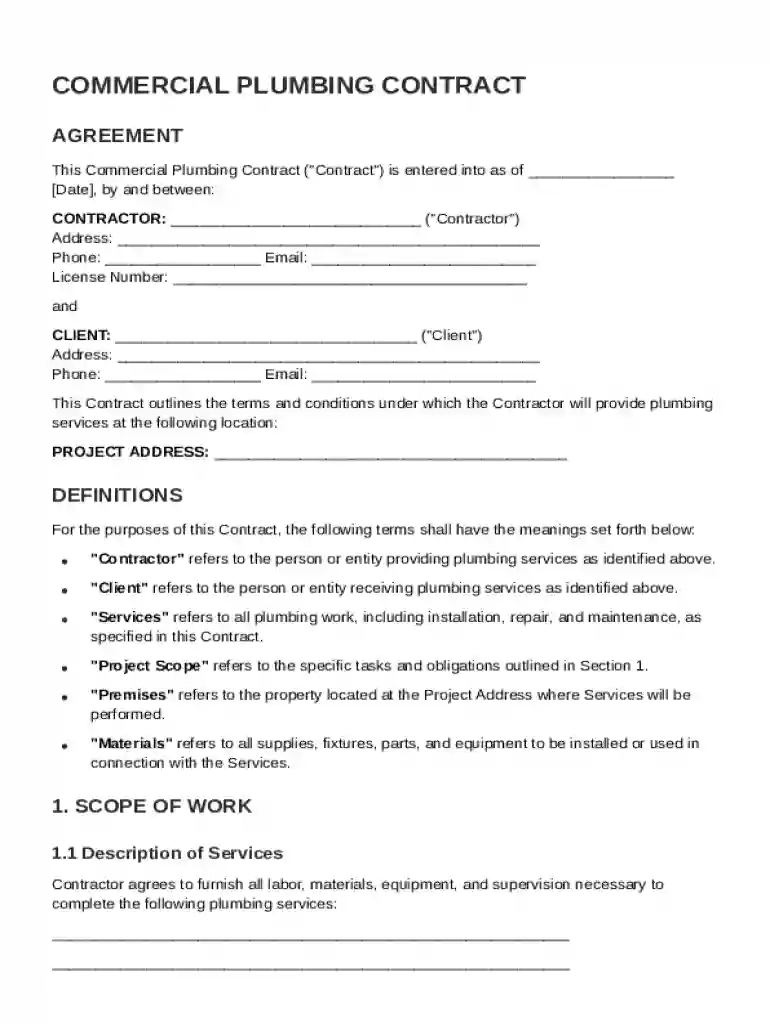
The Commercial Plumbing Contract Template is a standardized document outlining agreements between a contractor and a client for plumbing services. This legally binding agreement clarifies the scope of work, payment terms, and responsibilities of both parties. It ensures that both contractor and client have clear expectations, thus reducing potential legal disputes. This document typically includes sections on insurance requirements, warranties, dispute resolution procedures, and governing law, providing comprehensive legal protection and guidance throughout the project.
In practical scenarios, a commercial plumbing contract is often used in large commercial construction projects where multiple trades work simultaneously. For instance, when a new office building is being constructed, having a clear plumbing contract in place helps define when the plumbing work should begin and be completed in relation to other construction timelines. Another example is a property management company hiring a plumber for routine maintenance across several apartment complexes. The contract template ensures consistent service terms for each property.
To utilize the Commercial Plumbing Contract Template effectively, follow these steps to tailor it to your specific needs:
Review the Template:
Customize Contract Details:
Specify Legal Terms:
Finalize the Document:
In a typical use case, a plumbing contractor might use this template to prepare a proposal for a new client that outlines project specifics like fixture installations, estimated time of completion, and payment schedules. This contract might be adjusted further to specify terms like penalties for delays or bonuses for early completion.
The core components integral to the Commercial Plumbing Contract Template include:
Scope of Work:
Payment Terms:
Insurance and Warranties:
Conflict Resolution:
Depending on the client or project requirements, elements of the contract can vary. For example, a high-rise building project might have more exhaustive safety standard requirements compared to a small business renovation.
When applying the Commercial Plumbing Contract Template, ensure its legal validity through:
Compliance with Regional Laws:
Clauses for Legal Protection:
Legal considerations often include ensuring that all parties signing the contract have the legal capacity and authority to enter into a contractual agreement, which is especially important in corporate scenarios where multiple stakeholders may be involved.
Completing the template requires attention to detail and precise information. Here is a step-by-step guide:
Initiate Drafting:
Insert Custom Information:
Detail the Scope:
Define Financial Aspects:
Review and Confirm:
It's crucial to confirm that all stakeholders involved have reviewed and agreed to the terms before moving the contract to its final stage, with any amendments documented.
This template is widely used by:


A residential developer contracting a plumber for an entire subdivision would benefit from this template's clarity and uniformity. Similarly, a large business renovating its premises would use this contract to oversee various plumbing upgrades within budgetary constraints.
Different states may impose unique legal requirements on contracts, such as license numbers, insurance coverages, and compliance with specific local regulations.
When preparing the contract, consult with local legal experts to incorporate relevant state ordinances and ensure all necessary legal thresholds are met.
At DocHub, your data security is our priority. We follow HIPAA, SOC2, GDPR, and other standards, so you can work on your documents with confidence.



Follow applicable state or local plumbing codes requiring specific and dimensioned waterproofed areas for a shower system or other wet room installation.
This Contract MA-060-21011022 for Purchase and Delivery of Plumbing Supplies (hereinafter referred to as Contract) is made and entered into as of the date


